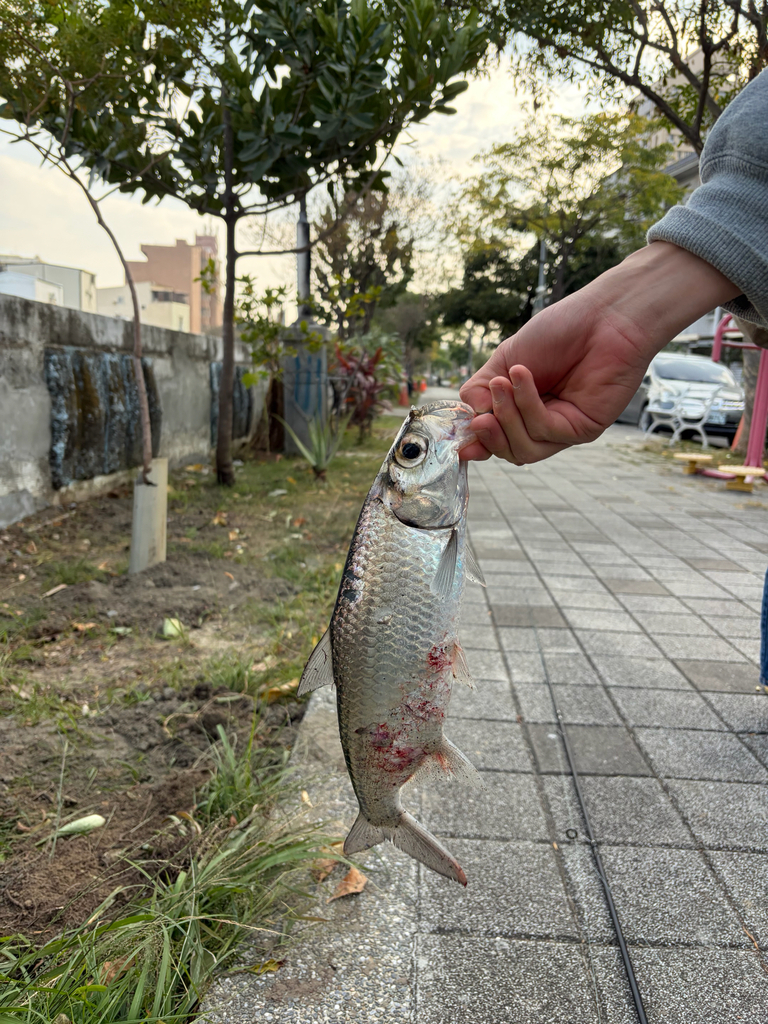
The Bastard mullet (Megalops cyprinoides) is a fish that lives in both fresh and salt water of the family Megalopidae that grows up to 150 cm.
Description
The Indo-Pacific tarpon is a large, silvery fish of the coastal waters of the Indian and Pacific Oceans. The species can reach about 1.5 metres and has a streamlined, laterally compressed body with large scales, large eyes and an upward-pointing mouth; the last dorsal-fin ray is greatly elongated. Adults usually live at sea, while juveniles enter river mouths, bays, mangroves and even fresh inland waters. With a richly vascularised swim bladder the species can gulp air and so tolerate low-oxygen water. It is fished locally and is harmless to humans.
Frequently asked questions
How do you recognise the Bastard mullet?
The Bastard mullet has an elongate, eel-like body, is mainly silver-grey and shows a plain pattern.
Where does the Bastard mullet live?
The Bastard mullet lives in both fresh and salt water and is mostly found around mixed bottom.
How big does the Bastard mullet get?
The Bastard mullet grows to a maximum of about 150 cm. On average the species is around 30 cm.
Is the Bastard mullet dangerous to humans?
No, the Bastard mullet is harmless to humans.
Is the Bastard mullet edible?
The Bastard mullet is rarely eaten.
Download Fin's Fish Guide
Identify fish in seconds, log your catches and dives. Join the TestFlight beta.
All data
Identification
Appearance
Habitat & distribution
Behaviour & biology
For anglers
Safety
Status & sources
Same genus Megalops
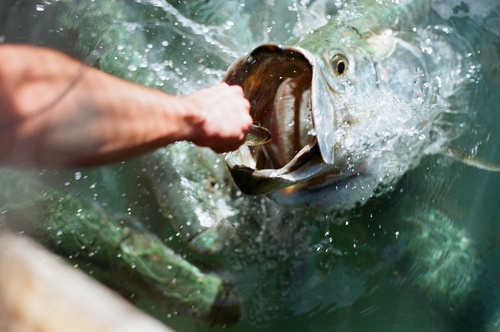
More from the family Megalopidae
Download Fin's Fish Guide
Identify fish in seconds, log your catches and dives. Join the TestFlight beta.