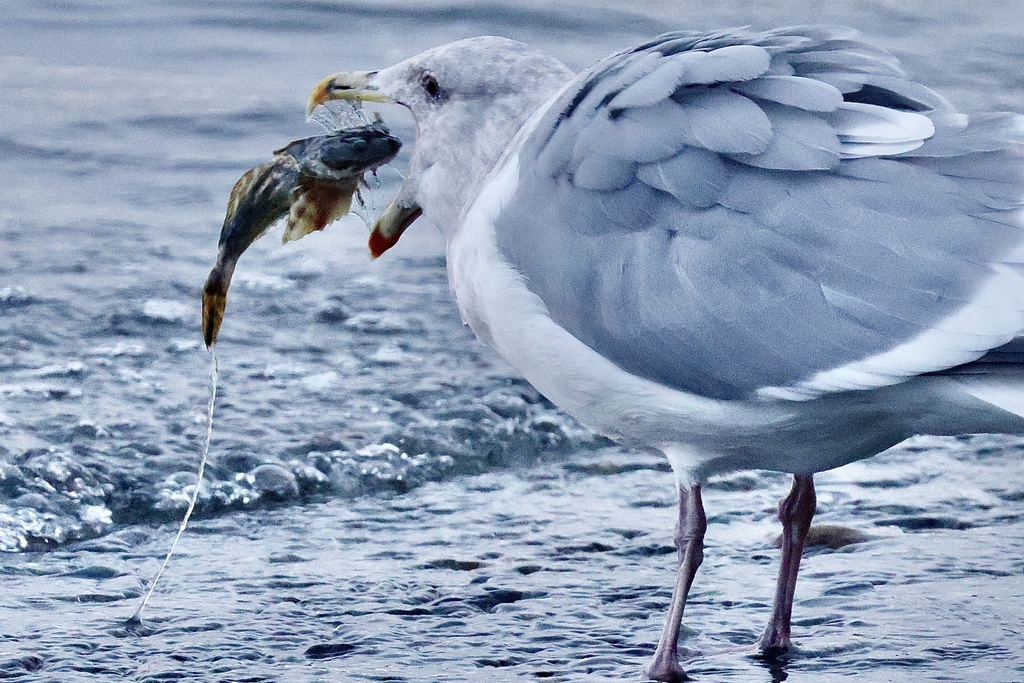
The Cabezon (Leptocottus armatus) is a brackish-water fish of the family Cottidae that grows up to 46 cm.
Description
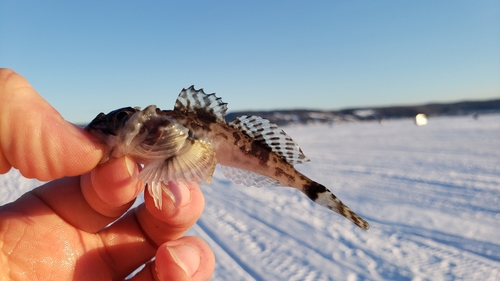
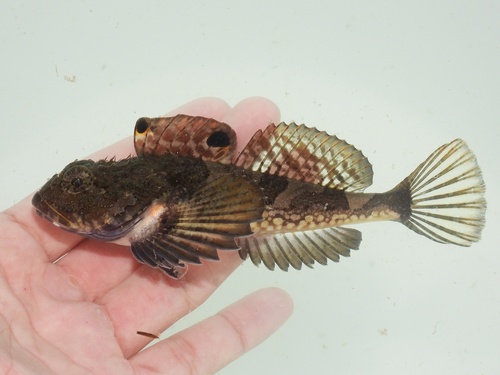
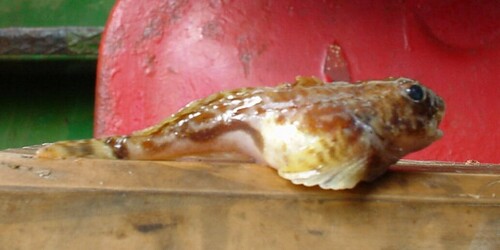
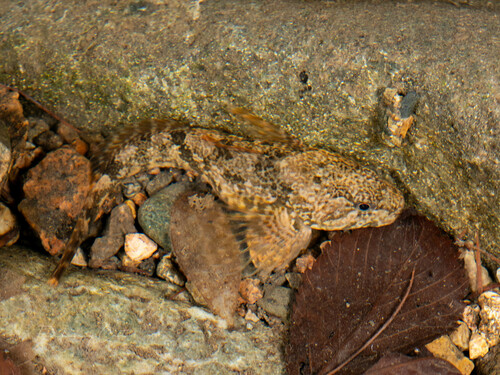
The Pacific staghorn sculpin (Leptocottus armatus) is a sculpin of the family Cottidae from the northeastern Pacific. The species has an elongate, scaleless body with a large head and owes its name to a conspicuous, antler-like branched spine on the gill cover. It is common in bays and estuaries, usually on sandy bottoms, and tolerates strongly varying salinities; when stranded it can breathe air for a short time. Young fish sometimes move into completely fresh water. The diet consists of crustaceans, worms and small fishes. The fish reaches about 46 cm.
Frequently asked questions
How do you recognise the Cabezon?
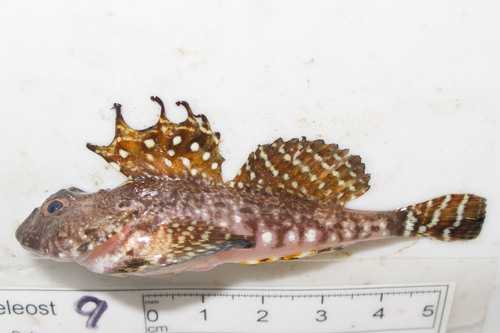
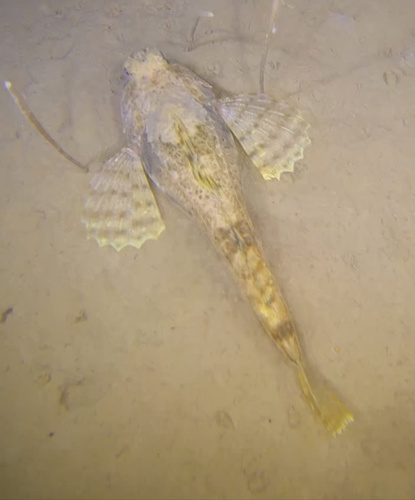
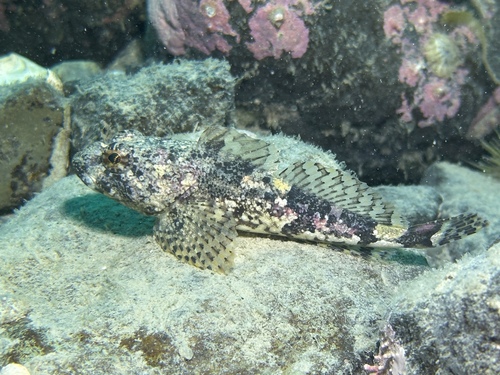
The Cabezon has an elongate, eel-like body, is mainly silver-grey and shows a marbled pattern.
Where does the Cabezon live?
The Cabezon lives in brackish water and is mostly found around sand or mud bottom.
How big does the Cabezon get?
The Cabezon grows to a maximum of about 46 cm. On average the species is around 36 cm.
Is the Cabezon dangerous to humans?
No, the Cabezon is harmless to humans.
Is the Cabezon edible?
Yes, the Cabezon is commonly eaten.
Download Fin's Fish Guide
Identify fish in seconds, log your catches and dives. Join the TestFlight beta.
All data
Identification
Appearance
Habitat & distribution
Behaviour & biology
For anglers
Safety
Status & sources
More from the family Cottidae

Download Fin's Fish Guide
Identify fish in seconds, log your catches and dives. Join the TestFlight beta.