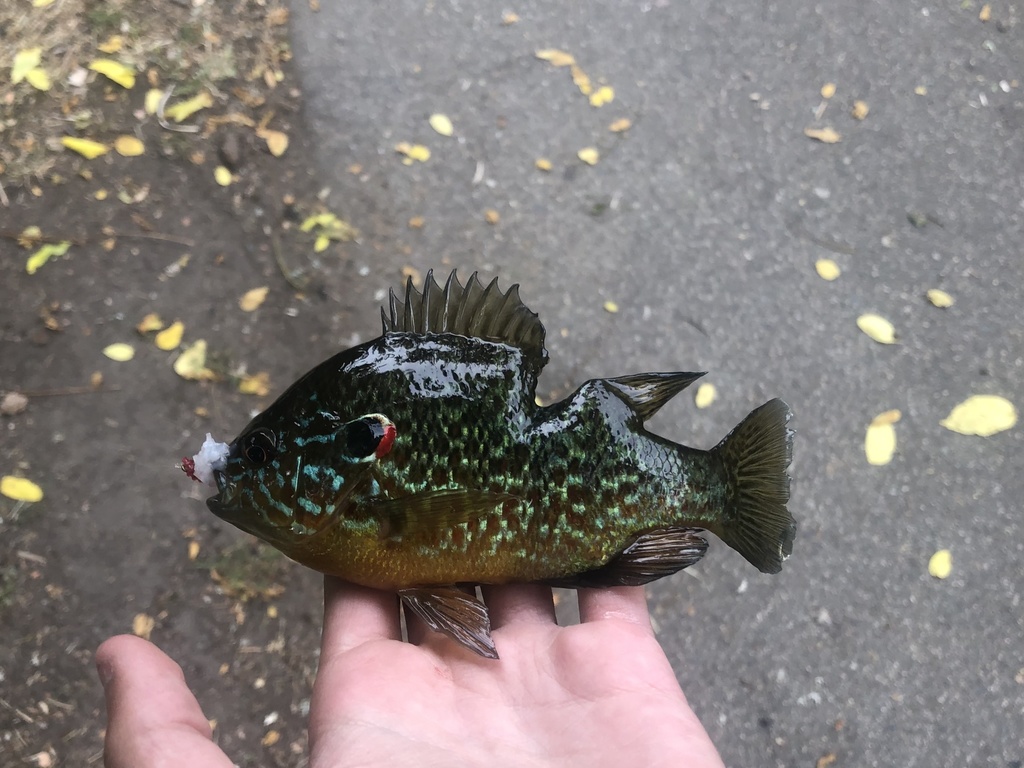
The Common sunfish (Lepomis gibbosus) is a brackish-water fish of the family Centrarchidae that grows up to 40 cm.
Description
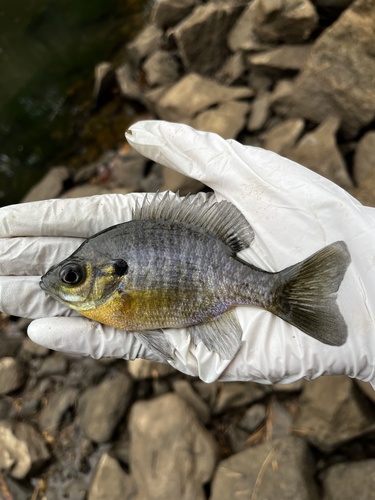
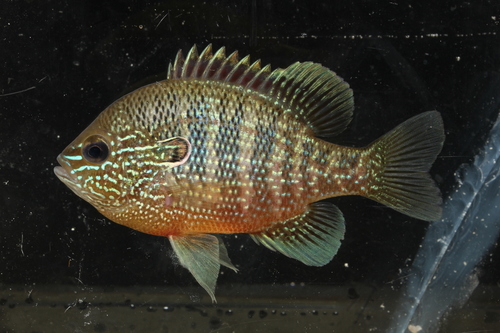
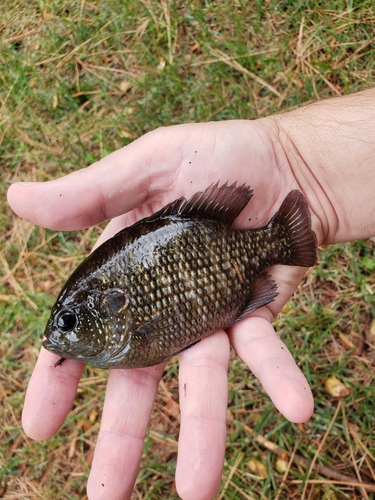
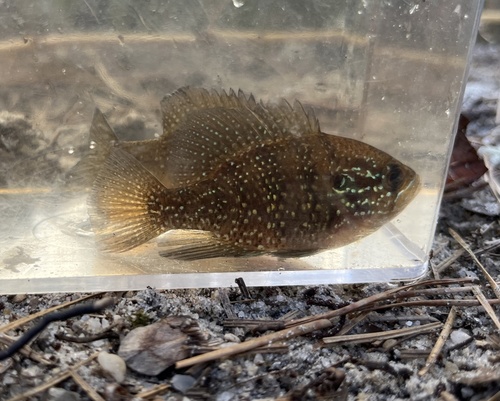
The pumpkinseed is a colourful freshwater fish of the family Centrarchidae reaching about 40 cm but usually much smaller. The body is deep and laterally compressed, marked with green, yellow and orange tones and a conspicuous red or orange spot on the gill-cover margin. The dorsal fin bears stiff spines. Native to North America, the species has been widely introduced across Europe, where it is regarded as invasive. Males are territorial and build shallow nests near the shore in spring and summer, guarding the eggs and young. Pumpkinseed feed on invertebrates, fish eggs and small fishes, and can disrupt native communities.
Frequently asked questions
How do you recognise the Common sunfish?
The Common sunfish has a flattened, disc-shaped body, is mainly multicoloured and shows a spots pattern.
Where does the Common sunfish live?
The Common sunfish lives in brackish water and is mostly found around mixed bottom.
How big does the Common sunfish get?
The Common sunfish grows to a maximum of about 40 cm. On average the species is around 10 cm.
Is the Common sunfish dangerous to humans?
No, the Common sunfish is harmless to humans.
Is the Common sunfish edible?
The Common sunfish is rarely eaten.
Download Fin's Fish Guide
Identify fish in seconds, log your catches and dives. Join the TestFlight beta.
All data
Identification
Appearance
Habitat & distribution
Behaviour & biology
For anglers
Safety
Status & sources
Same genus Lepomis
More from the family Centrarchidae
Download Fin's Fish Guide
Identify fish in seconds, log your catches and dives. Join the TestFlight beta.