Home · Cichlidae · Cichlid
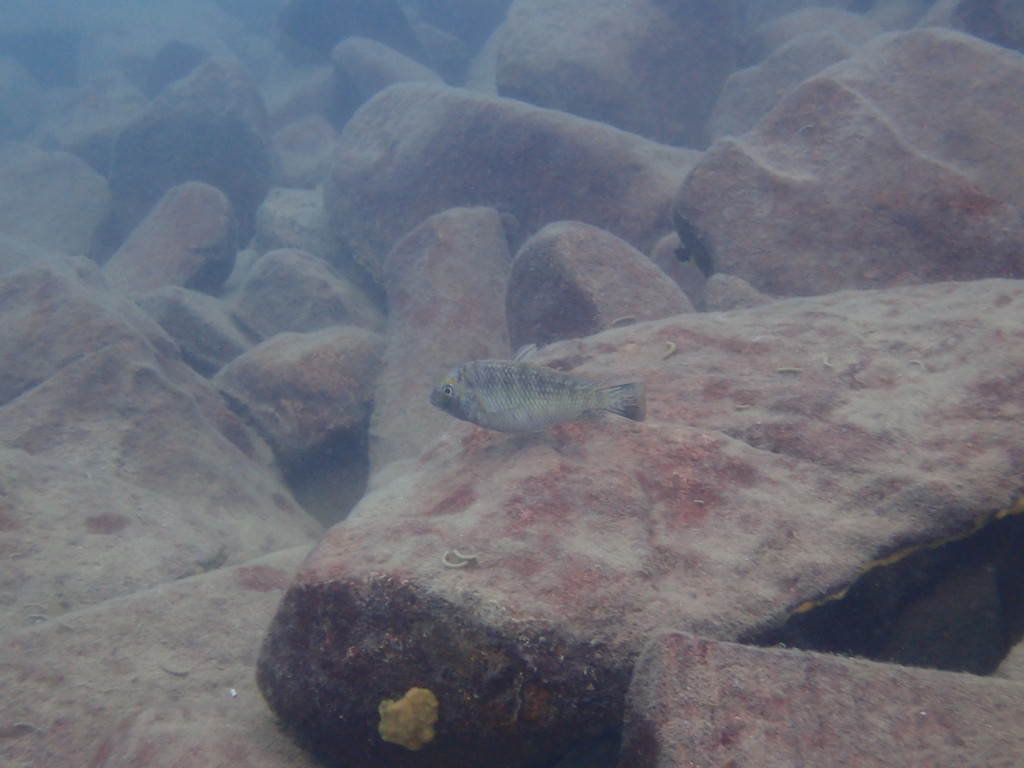
Cichlid (Interochromis loocki) — Cichlidae

Cichlid

Interochromis loocki
Family: Cichlidae
LC · Least Concern

The Cichlid (Interochromis loocki) is a freshwater fish of the family Cichlidae that grows up to 11 cm.

Length
10.5 cm
Water
Freshwater
Diet
Herbivore
Behaviour
Small groups
Body shape
Elongated (eel-like)
Substrate
Sand / mud bottom
Danger
Harmless
Edibility
Rarely eaten

Description

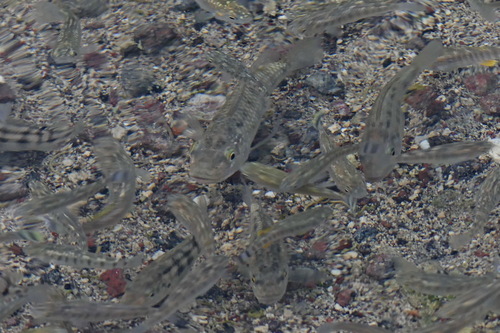
Loock's cichlid is a cichlid endemic to Lake Tanganyika in East Africa. The species has a stocky body with a blunt head and is well adapted to the surge-swept rocky shallows. With its broad mouth and teeth it rasps growth, algae and detritus from the surface of rocks. As a cichlid it is a maternal mouthbrooder. The species is harmless to humans.

Frequently asked questions

How do you recognise the Cichlid?

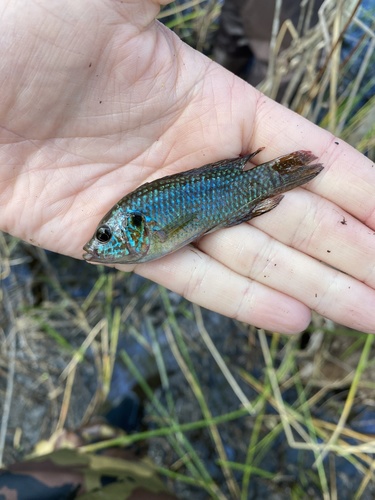
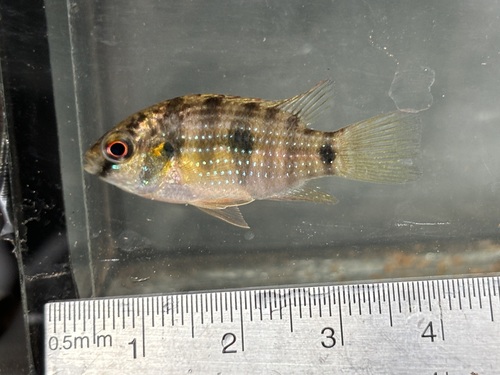
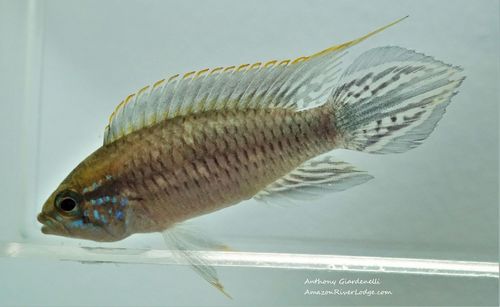
The Cichlid has an elongate, eel-like body, is mainly brown and shows a plain pattern.

Where does the Cichlid live?

The Cichlid lives in fresh water and is mostly found around sand or mud bottom.

How big does the Cichlid get?

The Cichlid grows to a maximum of about 11 cm.

Is the Cichlid dangerous to humans?

No, the Cichlid is harmless to humans.

Is the Cichlid edible?

The Cichlid is rarely eaten.

Download Fin's Fish Guide

Identify fish in seconds, log your catches and dives. Join the TestFlight beta.

Get the beta →

All data

Identification

Dutch name
Loocks Tanganyikacichlide sourced
English name
Cichlid sourced
Scientific name
Interochromis loocki
Family
Cichlidae

Appearance

Size class
Small verified
Max length (cm)
10.5 verified
Body shape
Elongated (eel-like) sourced
Dominant colour
Brown inferred
Pattern
Plain inferred
Tail shape
Rounded inferred
Mouth position
Inferior (downward) inferred
Lips
Thick / fleshy inferred
Barbels
No sourced
Dorsal fins
One continuous inferred
Dorsal spines
Yes sourced

Habitat & distribution

Water type
Freshwater sourced
Substrate
Sand / mud bottom sourced
Origin
Native sourced

Behaviour & biology

Diet
Herbivore sourced
Social behaviour
Small groups inferred
Territorial
Yes inferred
Reproduction
Separate sexes sourced
Sexual dimorphism
Yes inferred

For anglers

Edibility
Rarely eaten sourced
Fishing method
Klein van stuk en nauwelijks een hengelsportdoel; wordt vooral incidenteel of als aasvis gevangen. inferred
Regulations source
FishBase ↗ inferred

Safety

Danger to humans
Harmless sourced

Status & sources

Sources
FishBase via GBIF (DwC-A), CC-BY-NC 4.0

More from the family Cichlidae

Download Fin's Fish Guide

Identify fish in seconds, log your catches and dives. Join the TestFlight beta.

Get the beta →