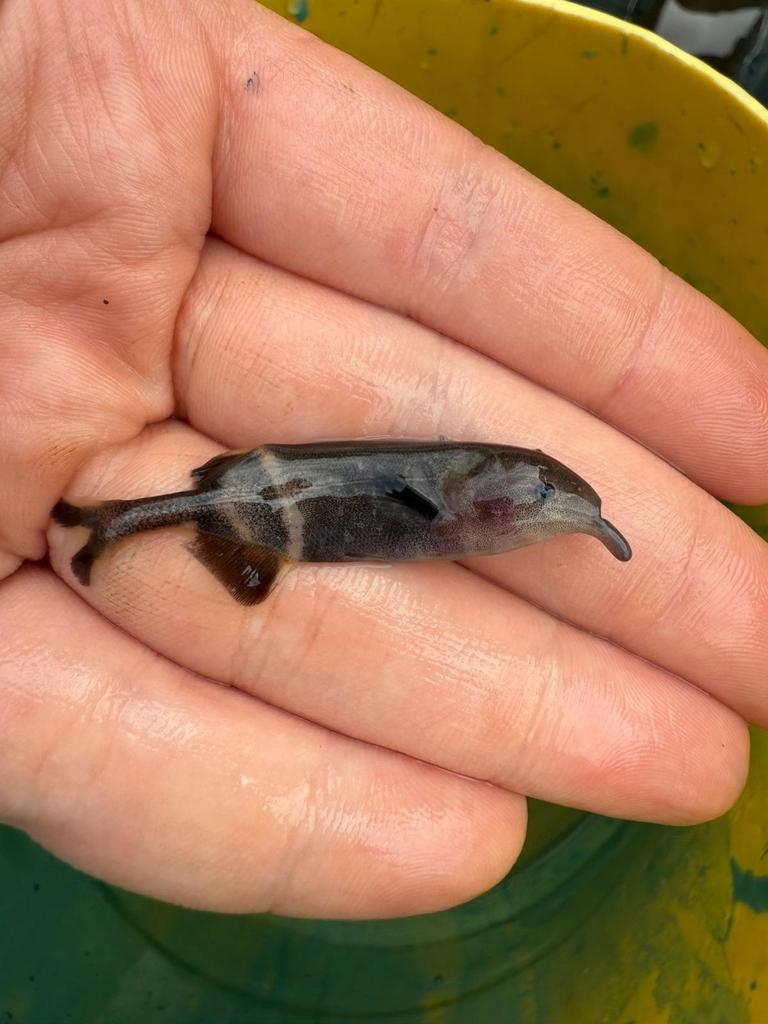
The Lake Tanganyika sardine (Gnathonemus longibarbis) is a freshwater fish of the family Mormyridae that grows up to 36 cm.
Description
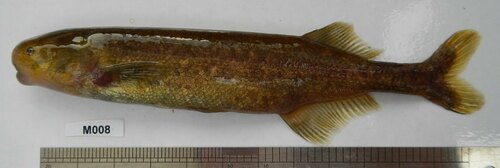
Gnathonemus longibarbis is an African elephantfish of the family Mormyridae from the Nile basin and the East African lakes. The species has an elongate, dark body and bears a sensitive, finger-like appendage on the chin. Like other mormyrids it has a weak electric organ; with the chin appendage and the electric sense it probes mud, papyrus roots and crevices between stones to find hidden insects. The diet consists of insect larvae, worms and other small bottom animals. The fish reaches about 36 cm and has no fishery value.
Frequently asked questions
How do you recognise the Lake Tanganyika sardine?
The Lake Tanganyika sardine has a torpedo-shaped body, is mainly black and shows a plain pattern.
Where does the Lake Tanganyika sardine live?
The Lake Tanganyika sardine lives in fresh water and is mostly found around sand or mud bottom.
How big does the Lake Tanganyika sardine get?
The Lake Tanganyika sardine grows to a maximum of about 36 cm.
Is the Lake Tanganyika sardine dangerous to humans?
No, the Lake Tanganyika sardine is harmless to humans.
Is the Lake Tanganyika sardine edible?
The Lake Tanganyika sardine is not usually eaten.
Download Fin's Fish Guide
Identify fish in seconds, log your catches and dives. Join the TestFlight beta.
All data
Identification
Appearance
Habitat & distribution
Behaviour & biology
For anglers
Safety
Status & sources
Same genus Gnathonemus

More from the family Mormyridae



Download Fin's Fish Guide
Identify fish in seconds, log your catches and dives. Join the TestFlight beta.