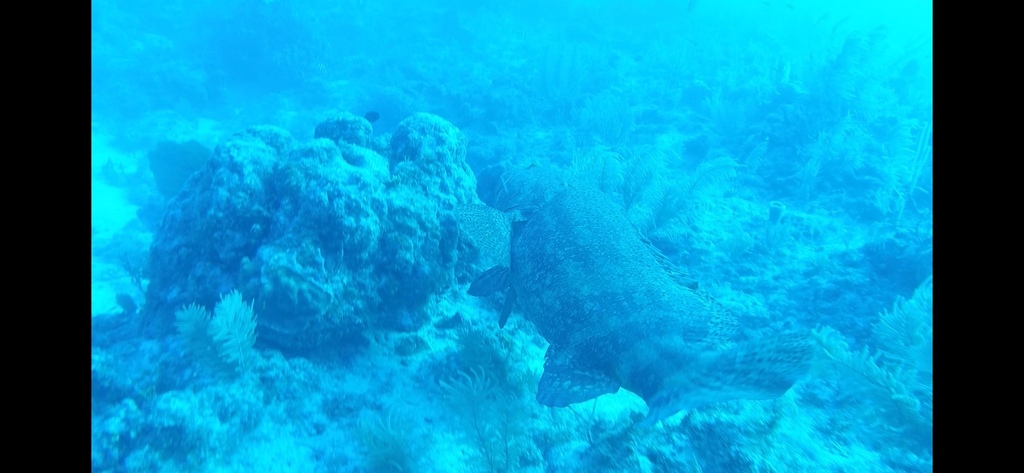
The Atlantic goliath grouper (Epinephelus itajara) is a saltwater fish of the family Serranidae that grows up to 250 cm.
Description
The Atlantic goliath grouper is a giant grouper of the family Serranidae reaching about 2.5 metres and over 300 kg, one of the largest reef fish of the Atlantic. The brown-yellow body is dotted with small dark spots and has a broad head with small eyes. The species lives near reefs, wrecks and in mangroves of the Atlantic on both sides, along the western Atlantic coast and the West African coast; young fish grow up among mangrove roots. As an ambush predator it engulfs mainly crabs and crustaceans, but also fish and young sea turtles. It gathers in large spawning aggregations, which made it highly vulnerable to overfishing; it is assessed as Vulnerable (VU) and is strictly protected.
Frequently asked questions
How do you recognise the Atlantic goliath grouper?
The Atlantic goliath grouper has a torpedo-shaped body, is mainly brown and shows a spots pattern.
Where does the Atlantic goliath grouper live?
The Atlantic goliath grouper lives in the sea (marine waters) and is mostly found around stony or rocky ground.
How big does the Atlantic goliath grouper get?
The Atlantic goliath grouper grows to a maximum of about 250 cm. On average the species is around 150 cm.
Is the Atlantic goliath grouper dangerous to humans?
No, the Atlantic goliath grouper is harmless to humans.
Is the Atlantic goliath grouper edible?
The Atlantic goliath grouper is rarely eaten.
Download Fin's Fish Guide
Identify fish in seconds, log your catches and dives. Join the TestFlight beta.
All data
Identification
Appearance
Habitat & distribution
Behaviour & biology
For anglers
Safety
Status & sources
Same genus Epinephelus
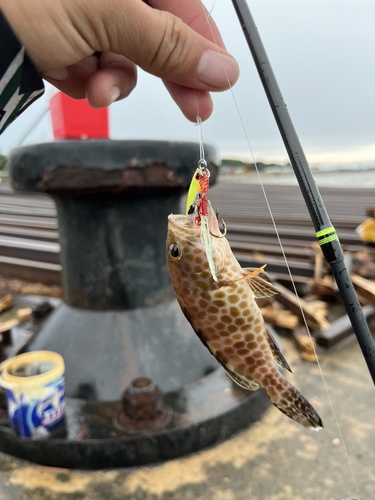
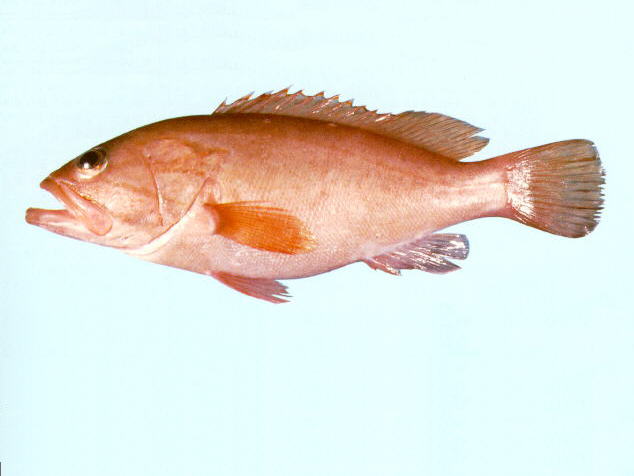
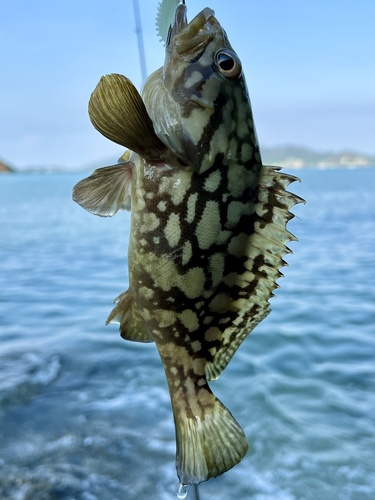
More from the family Serranidae


Download Fin's Fish Guide
Identify fish in seconds, log your catches and dives. Join the TestFlight beta.