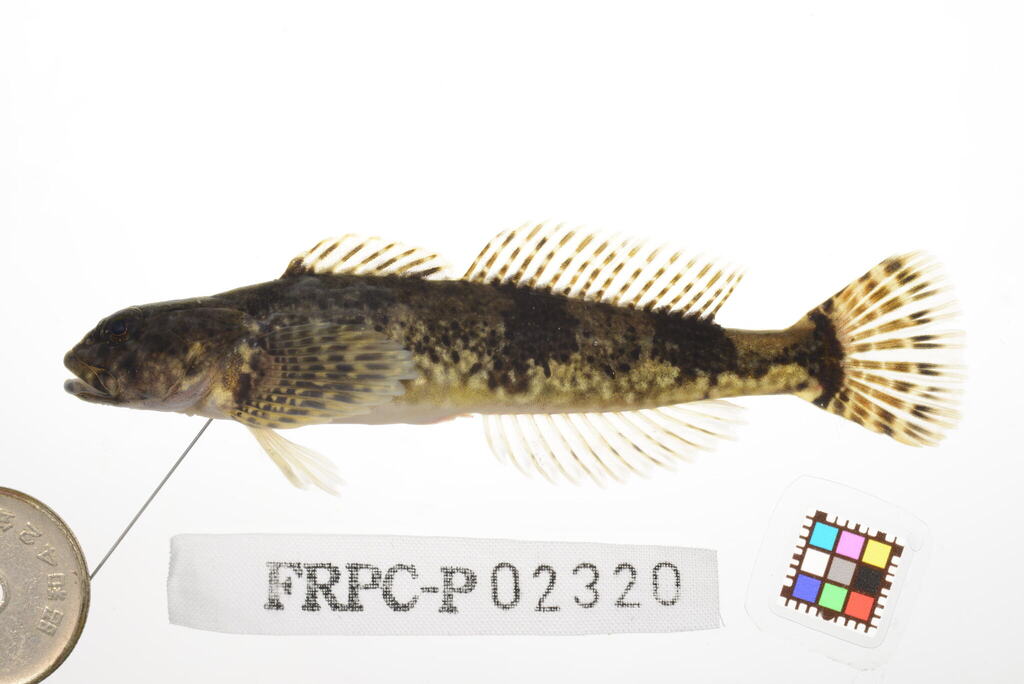
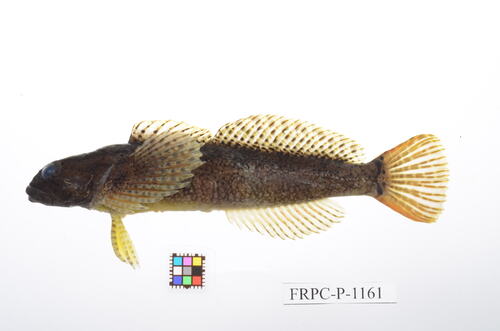
The Japanese sculpin (Cottus pollux) is a freshwater fish of the family Cottidae that grows up to 15 cm.
Description
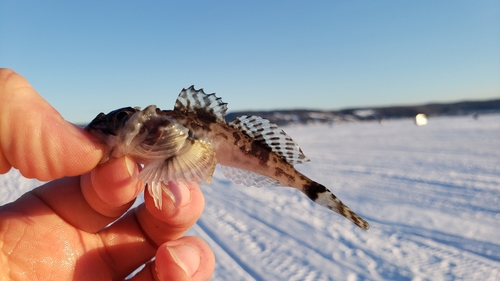
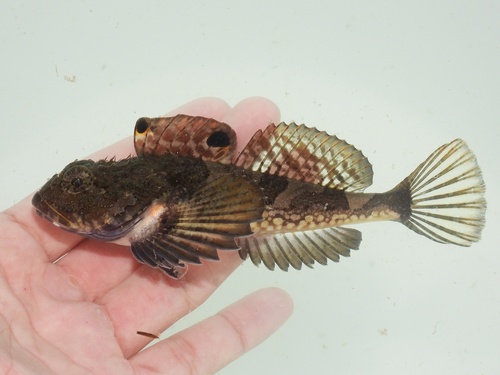
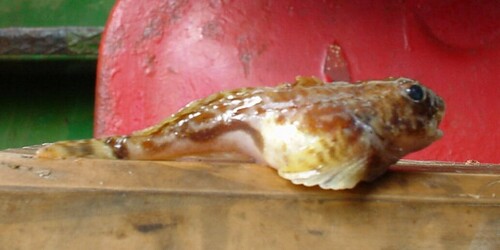
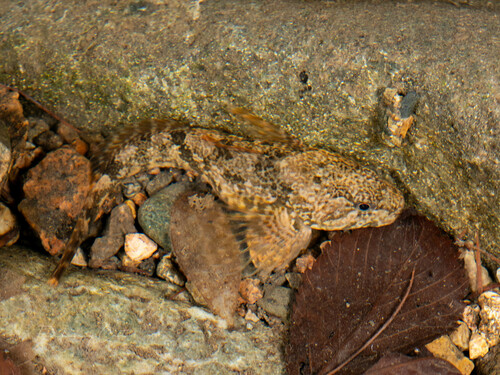
The Japanese sculpin is a small, stocky bottom fish of the family Cottidae (sculpins) reaching about 15 cm. The broad, flattened head bears spines on the gill cover and the fish has large, fan-shaped pectoral fins and a brown, marbled camouflage that makes it nearly invisible on the bottom. It lacks a swim bladder and so rests heavily on the bottom of clear, fast-flowing streams and rivers with stone and gravel in Japan. As a bottom hunter it takes, mainly at night, insect larvae, small crustaceans and small fish. In reproduction the male guards the eggs laid under a stone. Because of its sensitivity to water quality it serves as an indicator of clean mountain streams.
Frequently asked questions
How do you recognise the Japanese sculpin?
The Japanese sculpin has an elongate, eel-like body, is mainly brown and shows a marbled pattern.
Where does the Japanese sculpin live?
The Japanese sculpin lives in fresh water and is mostly found around stony or rocky ground.
How big does the Japanese sculpin get?
The Japanese sculpin grows to a maximum of about 15 cm.
Is the Japanese sculpin dangerous to humans?
No, the Japanese sculpin is harmless to humans.
Is the Japanese sculpin edible?
The Japanese sculpin is rarely eaten.
Download Fin's Fish Guide
Identify fish in seconds, log your catches and dives. Join the TestFlight beta.
All data
Identification
Appearance
Habitat & distribution
Behaviour & biology
For anglers
Safety
Status & sources
Same genus Cottus
More from the family Cottidae

Download Fin's Fish Guide
Identify fish in seconds, log your catches and dives. Join the TestFlight beta.