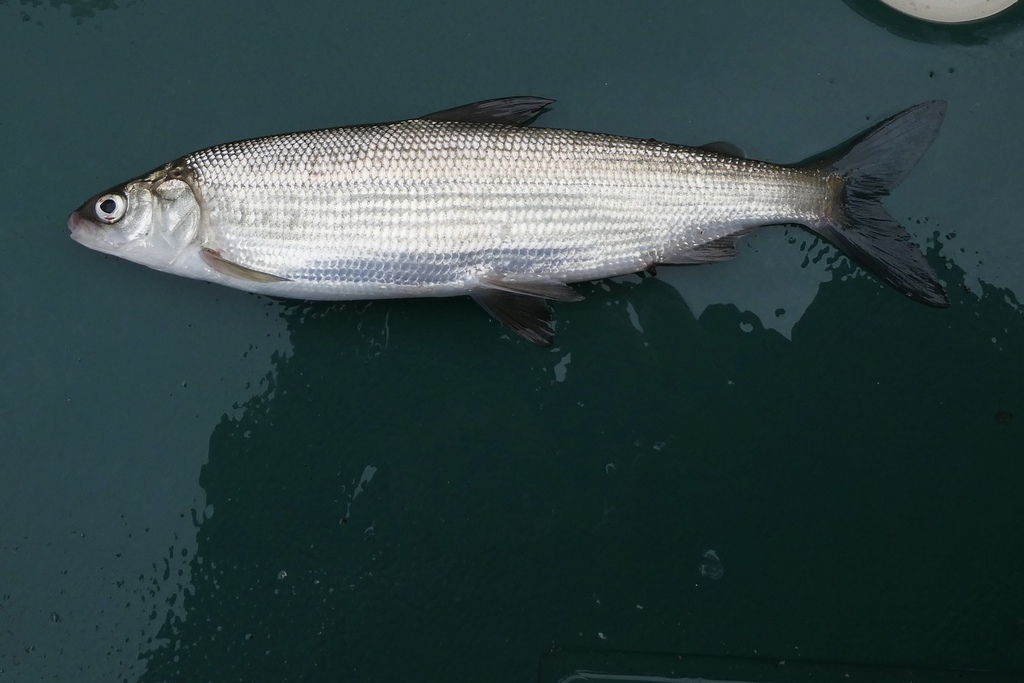
The Common whitefish (Coregonus lavaretus) is a freshwater fish of the family Salmonidae that grows up to 73 cm.
Description
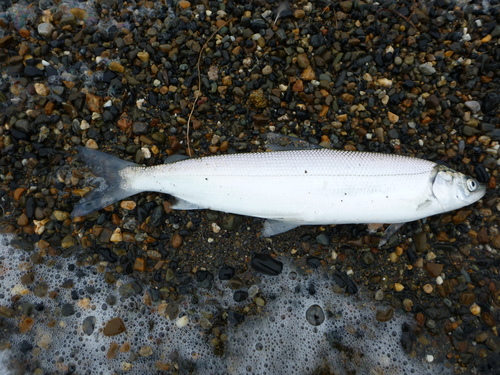
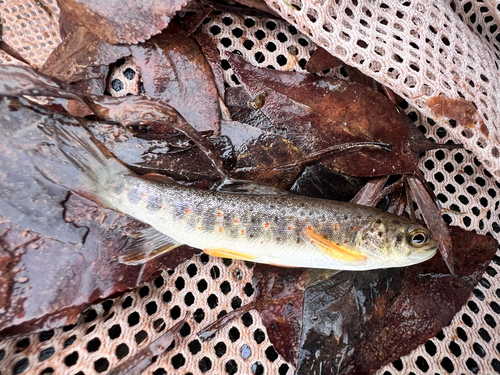
The common whitefish is a slender salmonid of the family Salmonidae reaching about 73 cm. The streamlined, silvery body has a blue-grey back, an adipose fin between the dorsal and tail fins and a slightly inferior mouth with a blunt snout, with which it searches the bottom. The species lives in schools in cool, deep, oxygen-rich lakes and large rivers of northern and central Europe, locally also in the brackish water of the Baltic. It feeds on zooplankton, bottom invertebrates and insect larvae, and spawns in late autumn and winter on gravel banks. The whitefish form a taxonomically difficult, highly variable complex. With its fine flesh the common whitefish is a valued commercial and sport fish; through habitat loss it is assessed as Vulnerable (VU).
Frequently asked questions
How do you recognise the Common whitefish?
The Common whitefish has a torpedo-shaped body, is mainly silver-grey and shows a plain pattern.
Where does the Common whitefish live?
The Common whitefish lives in fresh water and is mostly found around open water.
How big does the Common whitefish get?
The Common whitefish grows to a maximum of about 73 cm.
Is the Common whitefish dangerous to humans?
No, the Common whitefish is harmless to humans.
Is the Common whitefish edible?
Yes, the Common whitefish is commonly eaten.
Download Fin's Fish Guide
Identify fish in seconds, log your catches and dives. Join the TestFlight beta.
All data
Identification
Appearance
Habitat & distribution
Behaviour & biology
For anglers
Safety
Status & sources
Same genus Coregonus

More from the family Salmonidae



Download Fin's Fish Guide
Identify fish in seconds, log your catches and dives. Join the TestFlight beta.