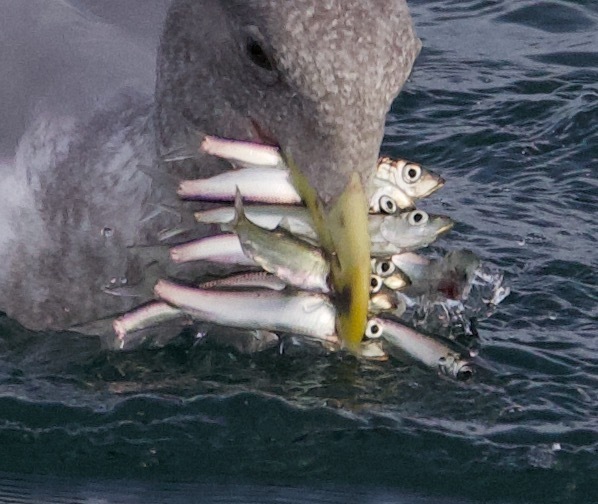
The Blue back (Clupea pallasii) is a fish that lives in both fresh and salt water of the family Clupeidae that grows up to 46 cm.
Description
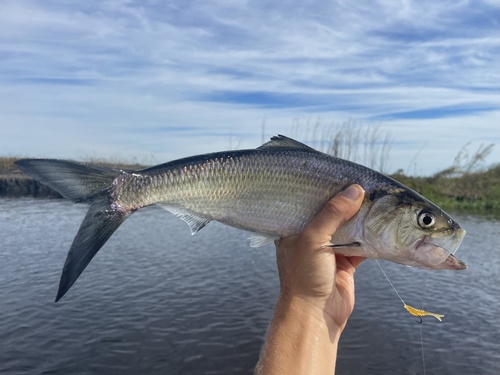
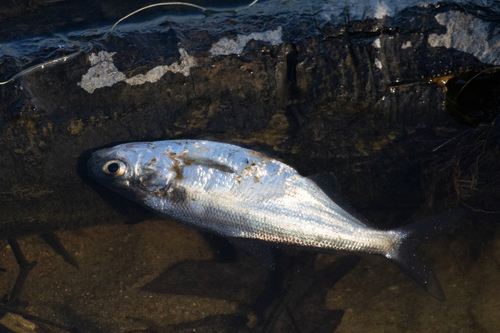
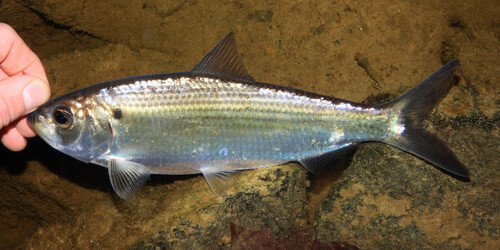
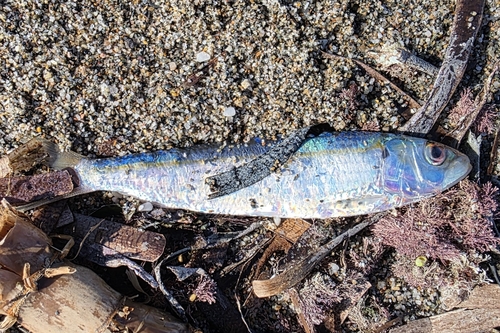
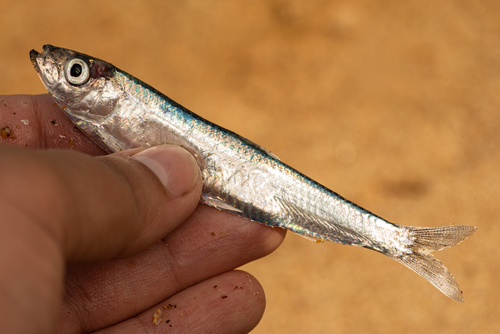
The Pacific herring (Clupea pallasii) is a silvery herring of the family Clupeidae from the North Pacific. The species has a streamlined, laterally compressed body with a blue-green back and silvery flanks and reaches about 46 cm. It is a coastal, schooling fish; adults migrate inshore and into estuaries in spring to spawn, the eggs being attached to weed and the bottom. Landlocked populations also exist. The fish feeds on zooplankton. The Pacific herring is very important for commercial fisheries and is widely eaten.
Frequently asked questions
How do you recognise the Blue back?
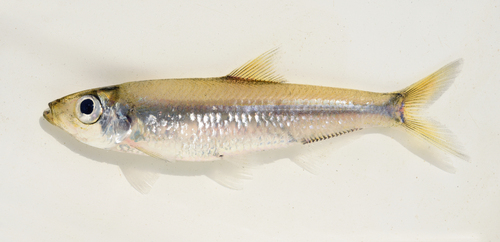
The Blue back has a torpedo-shaped body, is mainly silver-grey and shows a plain pattern.
Where does the Blue back live?
The Blue back lives in both fresh and salt water and is mostly found around open water.
How big does the Blue back get?
The Blue back grows to a maximum of about 46 cm. On average the species is around 25 cm.
Is the Blue back dangerous to humans?
No, the Blue back is harmless to humans.
Is the Blue back edible?
Yes, the Blue back is a highly prized food fish.
Download Fin's Fish Guide
Identify fish in seconds, log your catches and dives. Join the TestFlight beta.
All data
Identification
Appearance
Habitat & distribution
Behaviour & biology
For anglers
Safety
Status & sources
Same genus Clupea
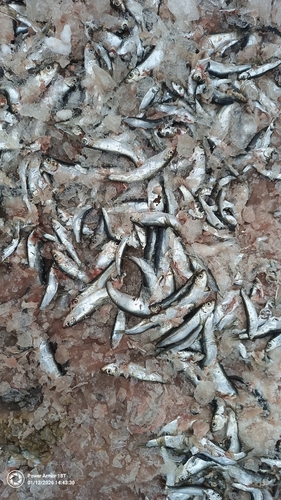
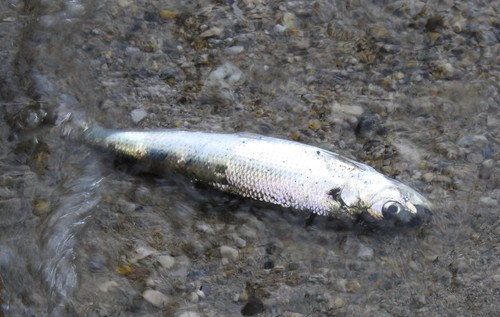
More from the family Clupeidae

Download Fin's Fish Guide
Identify fish in seconds, log your catches and dives. Join the TestFlight beta.