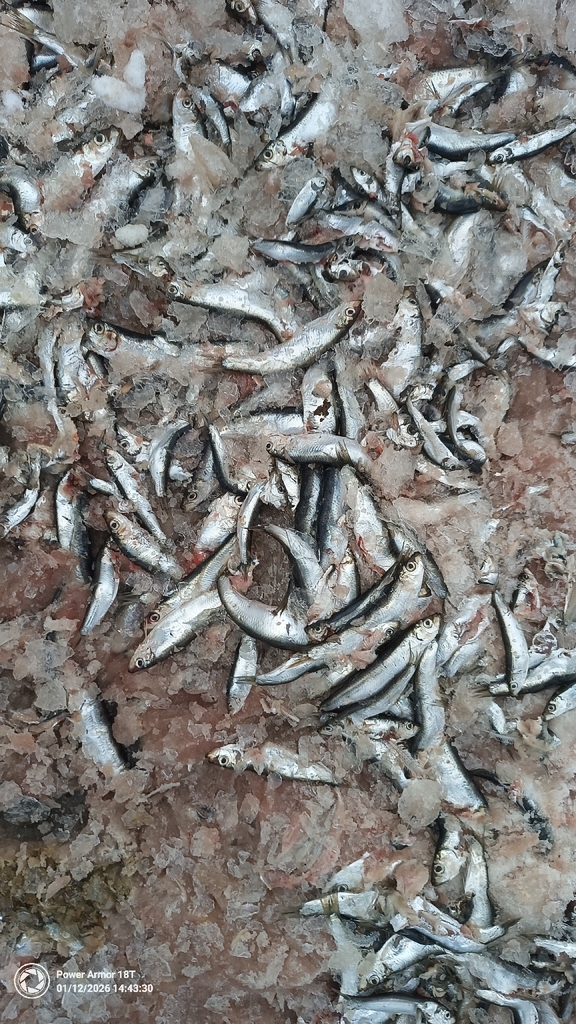
The Atlantic herring (Clupea harengus) is a brackish-water fish of the family Clupeidae that grows up to 45 cm.
Description
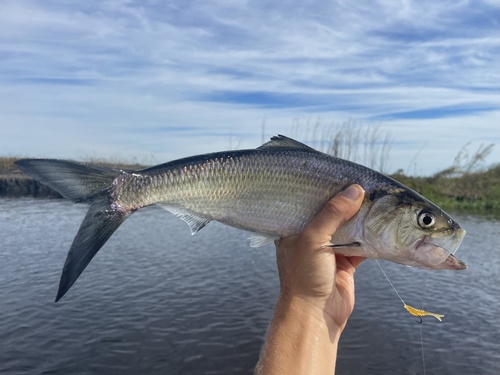
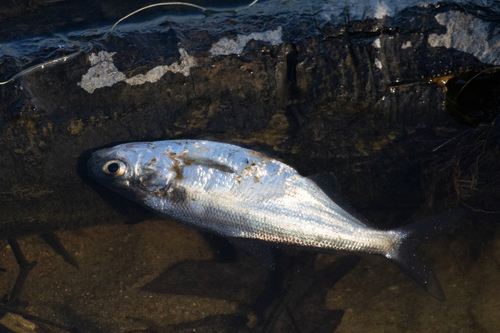
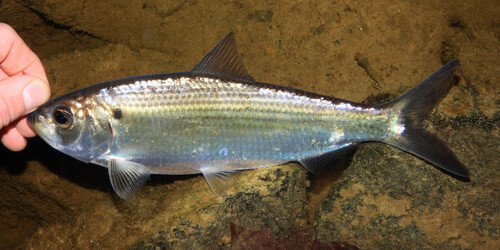
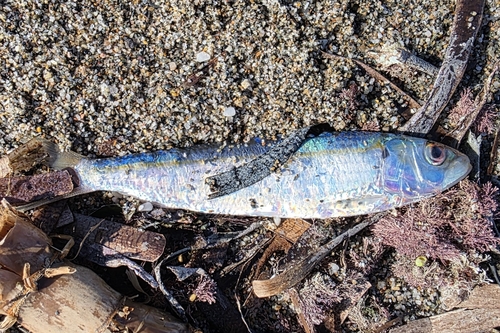
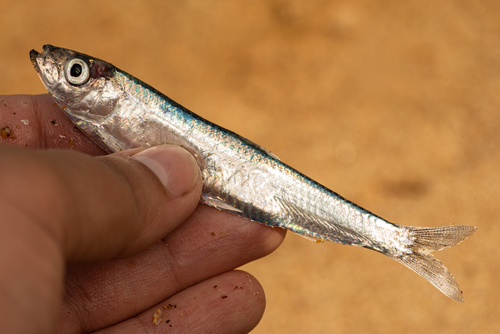
Atlantic herring is a slender, silvery schooling fish of the family Clupeidae, with a blue-green back and a streamlined body reaching 45 cm. It has a single spineless dorsal fin, a deeply forked tail and a slightly upturned mouth. The species lives pelagically across the northern Atlantic, the North Sea and the Baltic, feeding mainly on zooplankton such as copepods that it locates by sight. Herring form vast schools and spawn in spring, summer or autumn depending on the population, laying sticky eggs on the seabed. It is among the most commercially important fish in the world.
Frequently asked questions
How do you recognise the Atlantic herring?
The Atlantic herring has a torpedo-shaped body, is mainly silver-grey and shows a plain pattern.
Where does the Atlantic herring live?
The Atlantic herring lives in brackish water and is mostly found around mixed bottom.
How big does the Atlantic herring get?
The Atlantic herring grows to a maximum of about 45 cm. On average the species is around 30 cm.
Is the Atlantic herring dangerous to humans?
No, the Atlantic herring is harmless to humans.
Is the Atlantic herring edible?
Yes, the Atlantic herring is a highly prized food fish.
Download Fin's Fish Guide
Identify fish in seconds, log your catches and dives. Join the TestFlight beta.
All data
Identification
Appearance
Habitat & distribution
Behaviour & biology
For anglers
Safety
Status & sources
Same genus Clupea
More from the family Clupeidae

Download Fin's Fish Guide
Identify fish in seconds, log your catches and dives. Join the TestFlight beta.