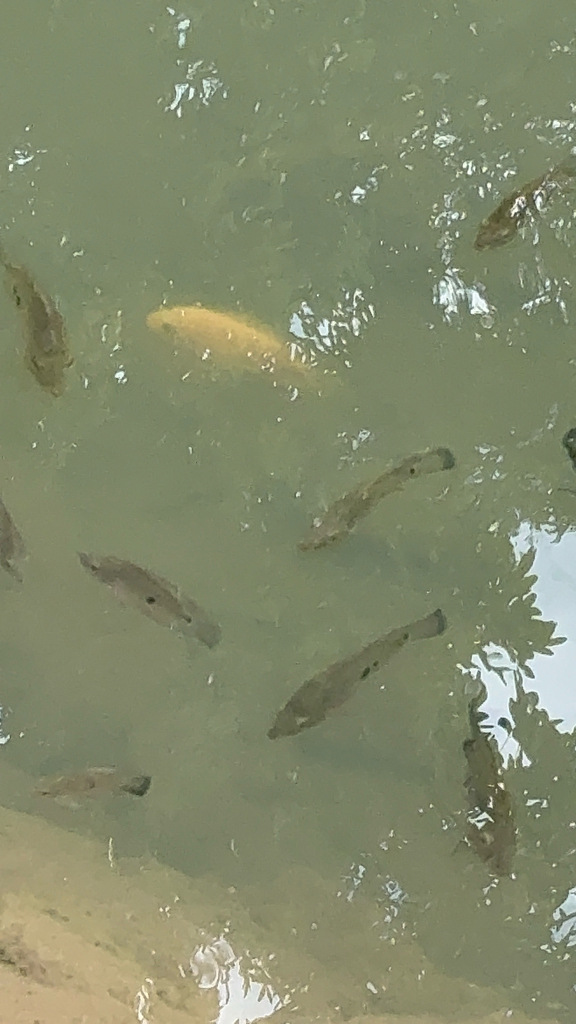
The Three-spot cichlid (Cichlasoma trimaculatum) is a freshwater fish of the family Cichlidae that grows up to 38 cm.
Description
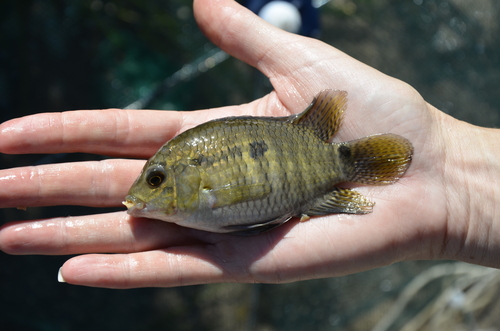
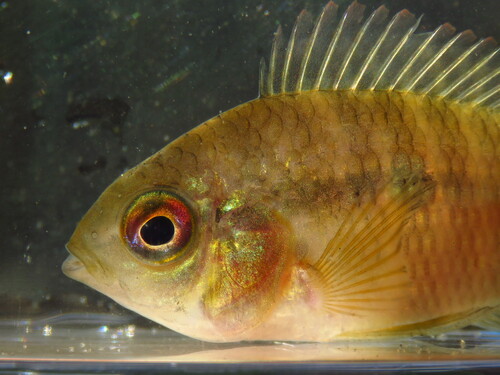
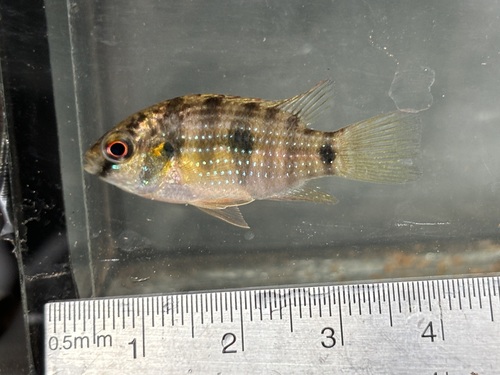
The three-spot cichlid is a robust Central American cichlid of the Pacific slope from Mexico to Central America. The species grows to about 38 cm and has a deep, powerful body; in the breeding season the fish turn bright orange-red with a few conspicuous dark blotches on the flank, to which the name refers. It inhabits rivers, lakes and pools with slow-flowing to standing water. As an omnivore it searches the bottom for small invertebrates, molluscs, small fishes, algae and plant matter. The pair forms a territory, lays the eggs on a hard surface and fiercely guards the brood. The species is a popular but aggressive aquarium fish and is harmless to humans.
Frequently asked questions
How do you recognise the Three-spot cichlid?
The Three-spot cichlid is mainly red-orange and shows a spots pattern.
Where does the Three-spot cichlid live?
The Three-spot cichlid lives in fresh water and is mostly found around mixed bottom.
How big does the Three-spot cichlid get?
The Three-spot cichlid grows to a maximum of about 38 cm.
Is the Three-spot cichlid dangerous to humans?
No, the Three-spot cichlid is harmless to humans.
Is the Three-spot cichlid edible?
The Three-spot cichlid is rarely eaten.
Download Fin's Fish Guide
Identify fish in seconds, log your catches and dives. Join the TestFlight beta.
All data
Identification
Appearance
Habitat & distribution
Behaviour & biology
For anglers
Safety
Status & sources
Same genus Cichlasoma

More from the family Cichlidae



Download Fin's Fish Guide
Identify fish in seconds, log your catches and dives. Join the TestFlight beta.