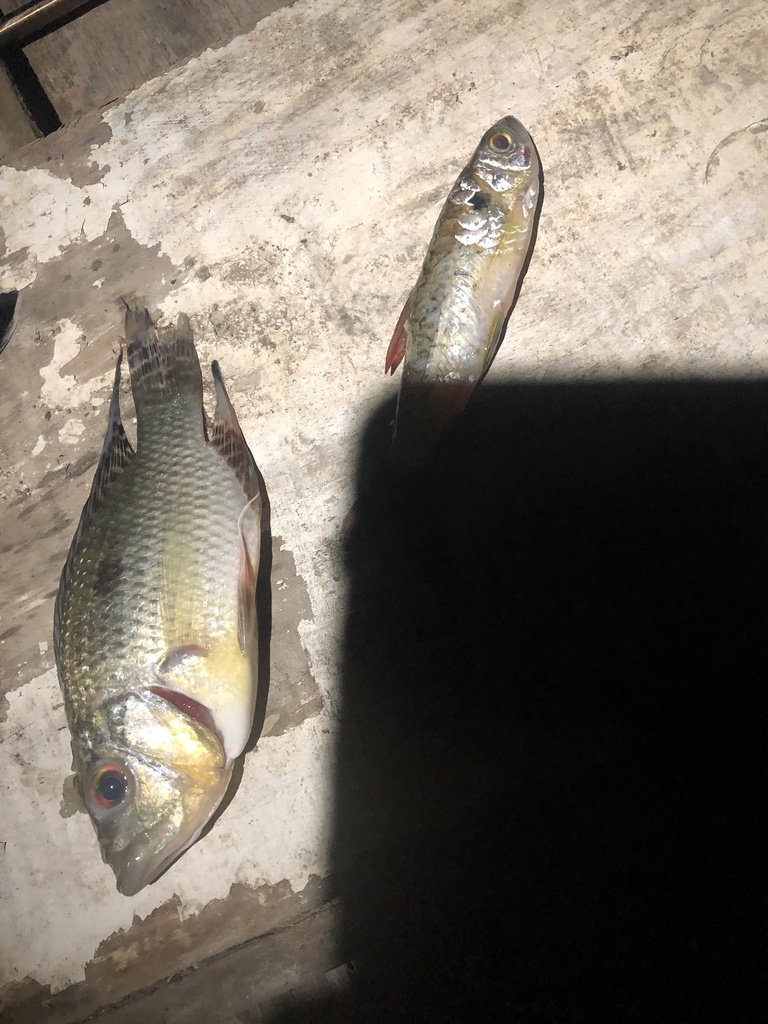
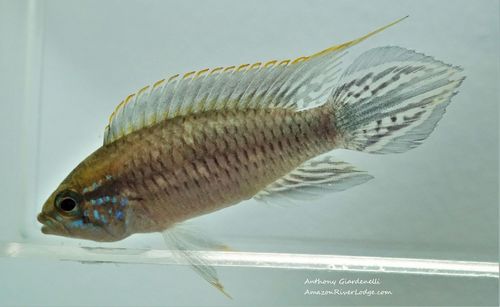
The River patwa (Chaetobranchus flavescens) is a freshwater fish of the family Cichlidae that grows up to 21 cm.
Description
The plankton-feeding cichlid is a South American cichlid from the Amazon and Orinoco basins. The species grows to about 21 cm and has a stocky, yellowish to silvery body. It occurs mainly in swamps and flooded parts of lowland areas, in both blackwater and clearwater. Unlike many predatory cichlids it is a plankton feeder: with fine gill rakers it filters small zooplankton from the water. Cichlids show brood care and guard their eggs and young. The plankton-feeding cichlid is a local food fish and is harmless to humans.
Frequently asked questions
How do you recognise the River patwa?
The River patwa has a torpedo-shaped body, is mainly yellow-gold and shows a plain pattern.
Where does the River patwa live?
The River patwa lives in fresh water and is mostly found around mixed bottom.
How big does the River patwa get?
The River patwa grows to a maximum of about 21 cm.
Is the River patwa dangerous to humans?
No, the River patwa is harmless to humans.
Is the River patwa edible?
The River patwa is rarely eaten.
Download Fin's Fish Guide
Identify fish in seconds, log your catches and dives. Join the TestFlight beta.
All data
Identification
Appearance
Habitat & distribution
Behaviour & biology
For anglers
Safety
Status & sources
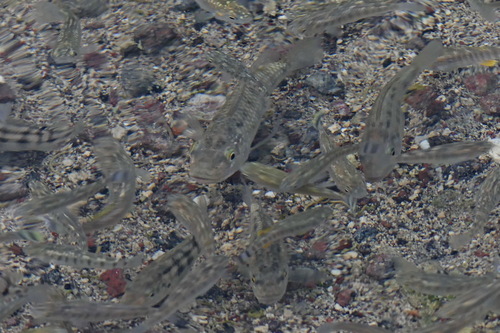
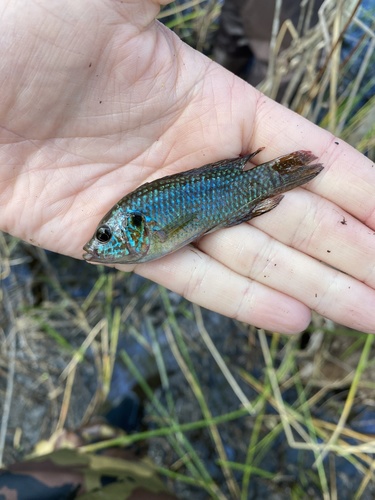
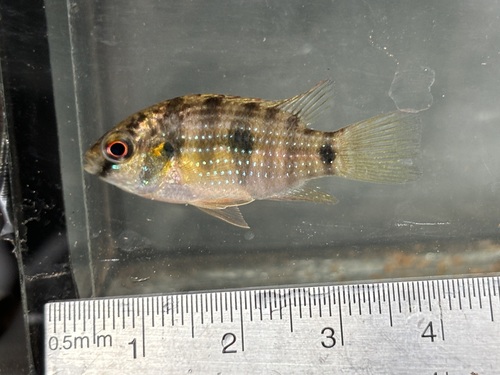
More from the family Cichlidae



Download Fin's Fish Guide
Identify fish in seconds, log your catches and dives. Join the TestFlight beta.