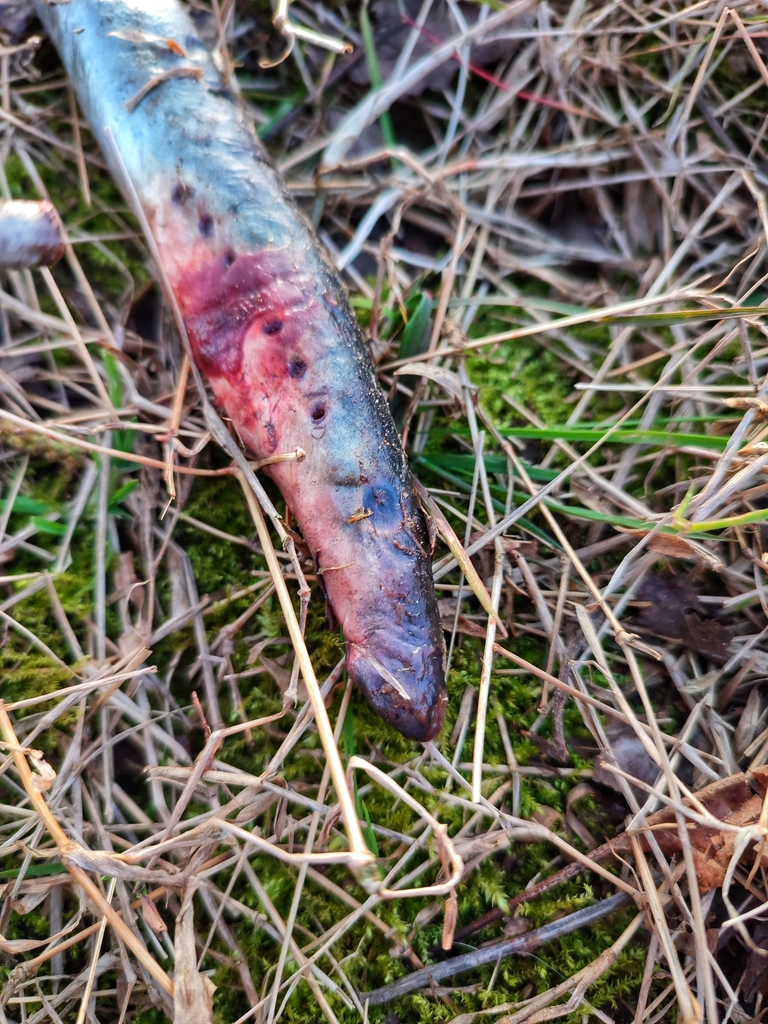
The Caspian lamprey (Caspiomyzon wagneri) is a fish that lives in both fresh and salt water of the family Petromyzontidae that grows up to 55 cm.
Description
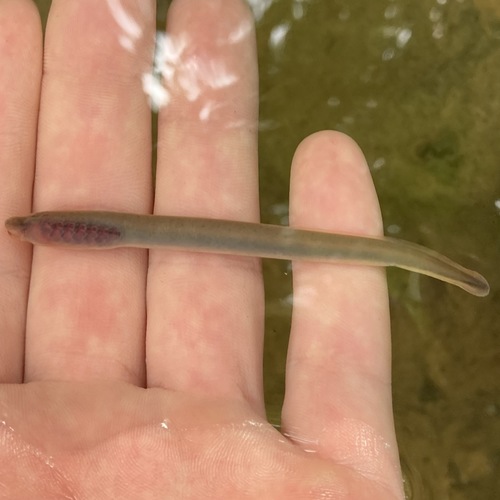
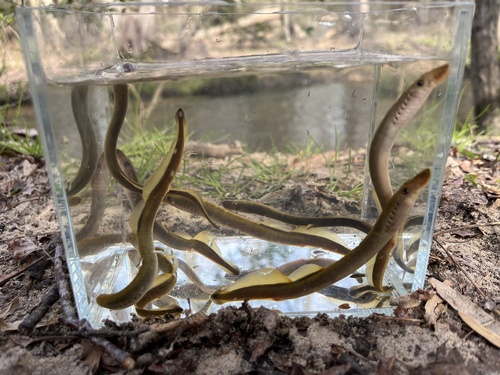
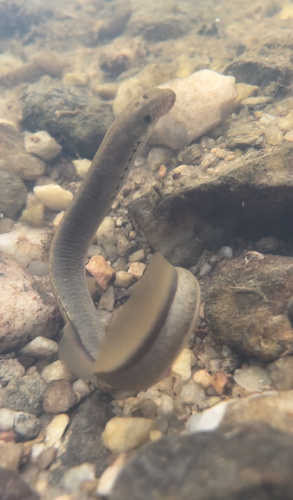
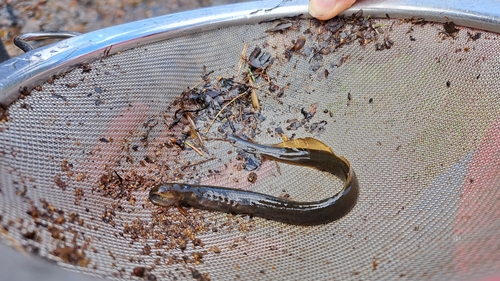
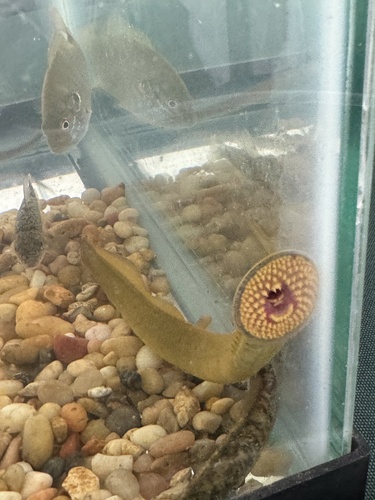
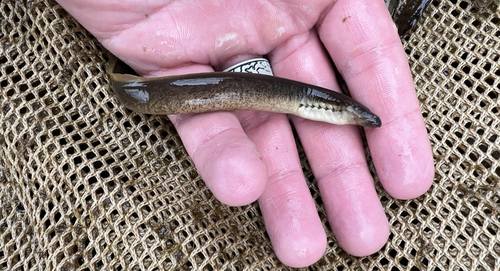
The Caspian lamprey is an eel-shaped, jawless lamprey of the family Petromyzontidae reaching about 55 cm. Instead of jaws it has a round sucking mouth; behind the head lie seven gill openings, and pectoral and pelvic fins are absent. The species is an anadromous migrant of the Caspian Sea: the worm-like larvae live buried in the river bottom for years, filtering organic matter, while the adults grow up at sea. In autumn and winter they ascend the great rivers such as the Volga and Ural; in spring they spawn on gravel and then die. Formerly the Caspian lamprey was caught in large numbers. Through dams, pollution and overfishing it has declined sharply and is assessed as Near Threatened (NT).
Frequently asked questions
How do you recognise the Caspian lamprey?
The Caspian lamprey has a snake-like body, is mainly silver-grey and shows a plain pattern.
Where does the Caspian lamprey live?
The Caspian lamprey lives in both fresh and salt water and is mostly found around sand or mud bottom.
How big does the Caspian lamprey get?
The Caspian lamprey grows to a maximum of about 55 cm. On average the species is around 36 cm.
Is the Caspian lamprey dangerous to humans?
No, the Caspian lamprey is harmless to humans.
Is the Caspian lamprey edible?
Yes, the Caspian lamprey is commonly eaten.
Download Fin's Fish Guide
Identify fish in seconds, log your catches and dives. Join the TestFlight beta.
All data
Identification
Appearance
Habitat & distribution
Behaviour & biology
For anglers
Safety
Status & sources
More from the family Petromyzontidae

Download Fin's Fish Guide
Identify fish in seconds, log your catches and dives. Join the TestFlight beta.