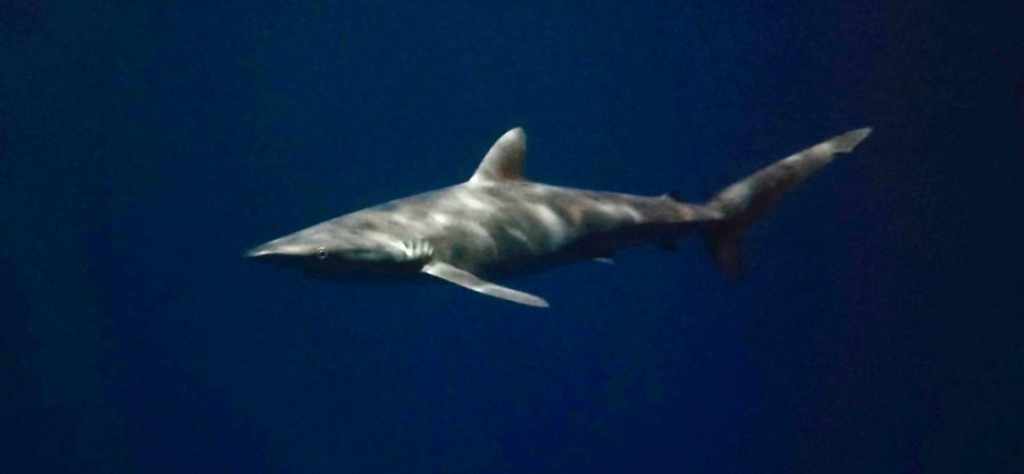
The Blackspot shark (Carcharhinus falciformis) is a saltwater fish of the family Carcharhinidae that grows up to 350 cm.
Description
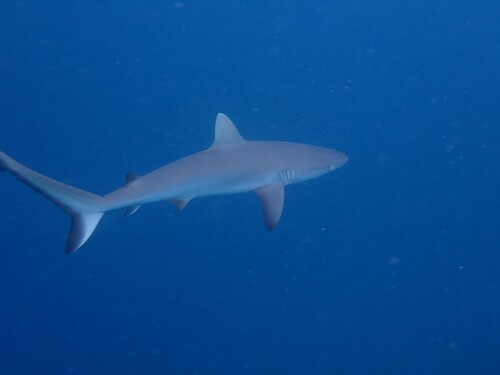
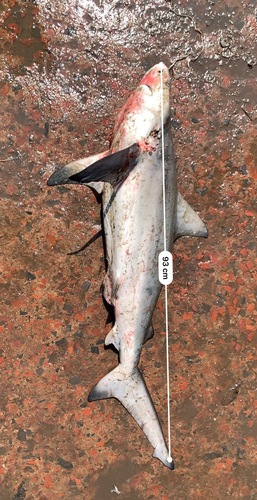
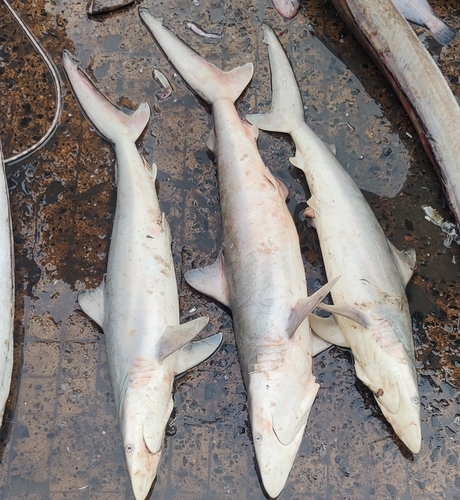
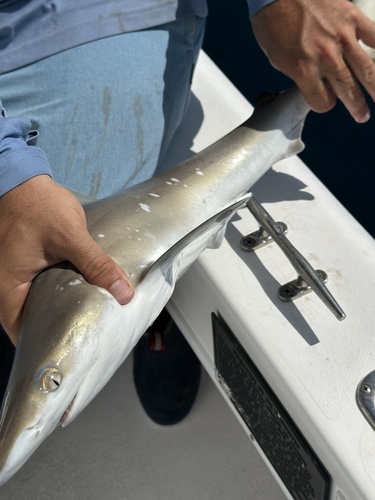
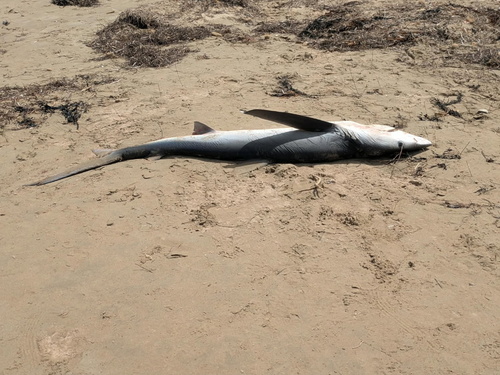
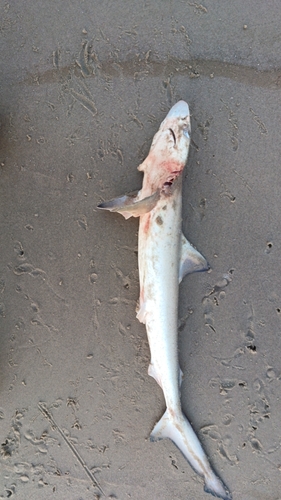
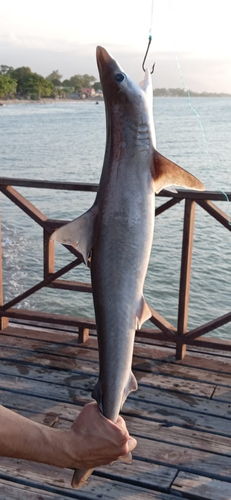
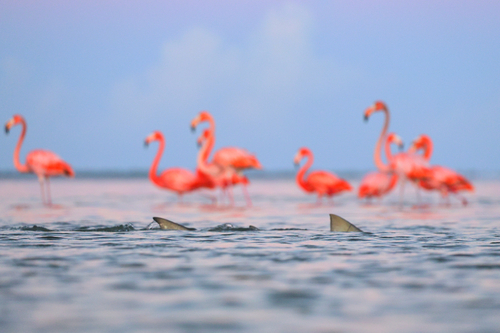
The silky shark (Carcharhinus falciformis) is a large requiem shark of the family Carcharhinidae occurring worldwide in tropical seas. The species owes its name to its smooth, silky skin and has a slender, streamlined, grey-brown body that can reach several metres. It lives mainly near the edge of continental and insular shelves, but also in the open sea, and is a fast, active hunter of fishes and squid. Owing to the high value of its fins and flesh the species is heavily fished, making it Vulnerable (VU). Large individuals can be dangerous to humans.
Frequently asked questions
How do you recognise the Blackspot shark?
The Blackspot shark has a torpedo-shaped body, is mainly silver-grey and shows a plain pattern.
Where does the Blackspot shark live?
The Blackspot shark lives in the sea (marine waters) and is mostly found around stony or rocky ground.
How big does the Blackspot shark get?
The Blackspot shark grows to a maximum of about 350 cm. On average the species is around 250 cm.
Is the Blackspot shark dangerous to humans?
The Blackspot shark can cause injury; handle it with care.
Is the Blackspot shark edible?
Yes, the Blackspot shark is a highly prized food fish.
Download Fin's Fish Guide
Identify fish in seconds, log your catches and dives. Join the TestFlight beta.
All data
Identification
Appearance
Habitat & distribution
Behaviour & biology
For anglers
Safety
Status & sources
Same genus Carcharhinus
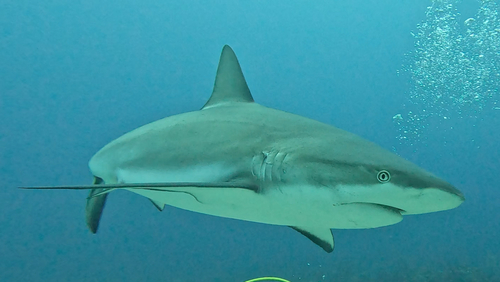
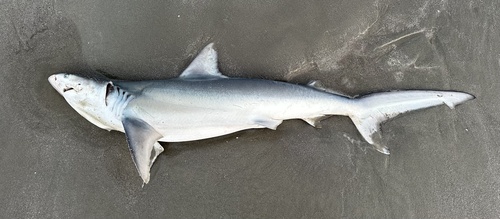
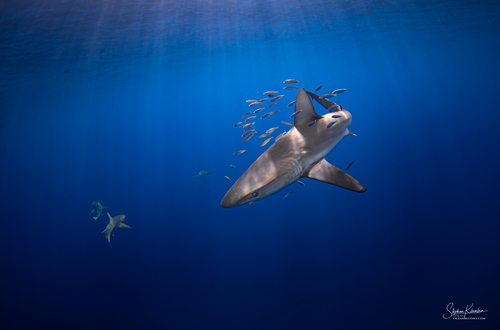
More from the family Carcharhinidae
Download Fin's Fish Guide
Identify fish in seconds, log your catches and dives. Join the TestFlight beta.