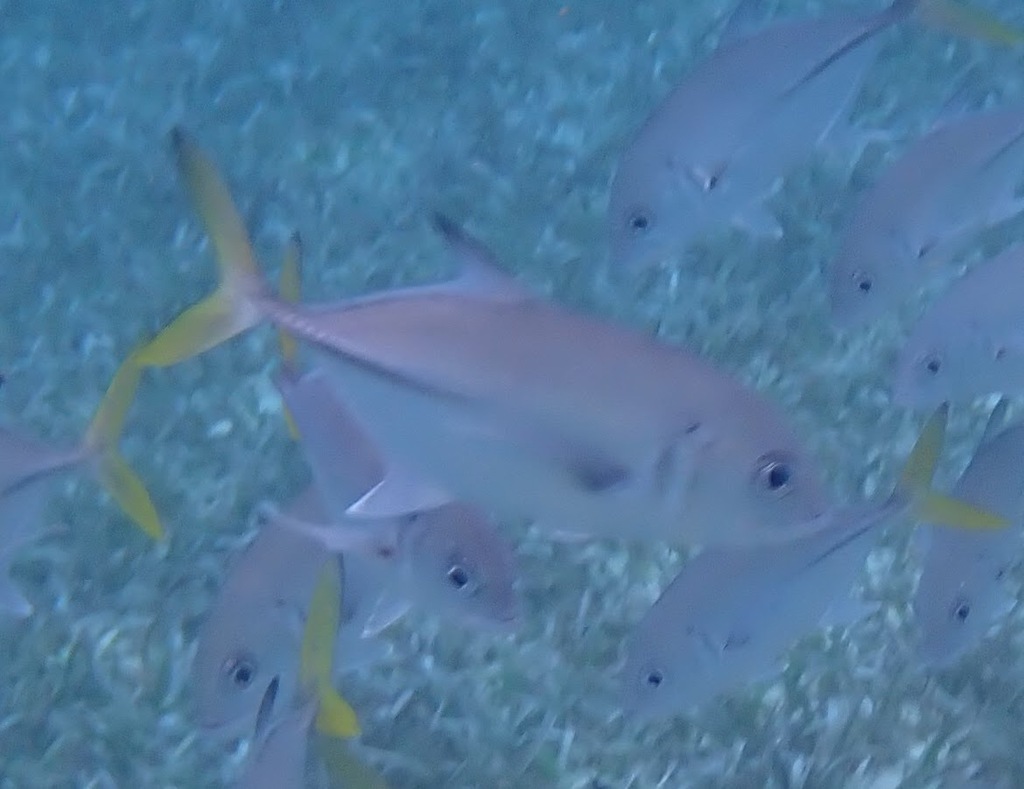
The Horse-eye jack (Caranx latus) is a fish that lives in both fresh and salt water of the family Carangidae that grows up to 101 cm.
Description
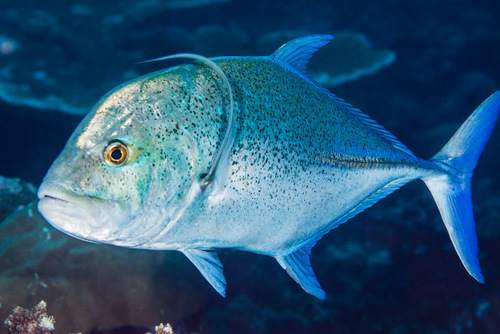
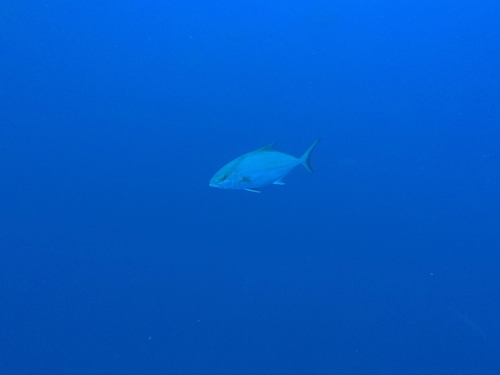
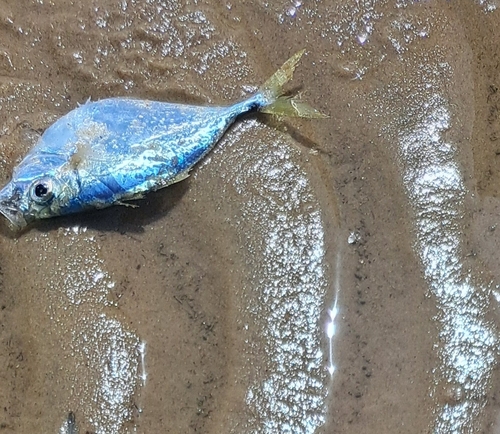
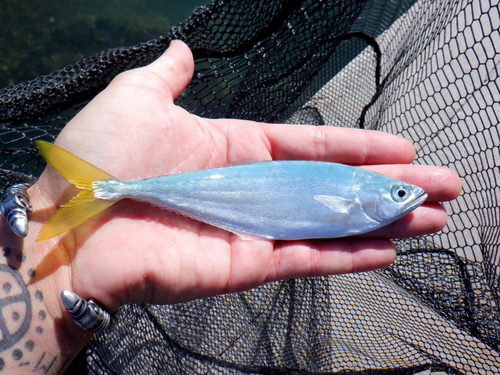
The horse-eye jack is a powerful, silvery jack of the family Carangidae reaching about 1 metre. The streamlined, laterally compressed body has conspicuously large eyes - hence the name - a high, steep forehead and a row of stout bony scutes along the tail base, characteristic of the family. The species lives pelagically in coastal water on both sides of the Atlantic, especially the west; young fish enter estuaries and rivers and tolerate brackish water. In fast schools it hunts schooling fish, shrimps and crustaceans. It is a prized, hard-fighting sport fish; its flesh can carry ciguatera in some areas, which calls for caution.
Frequently asked questions
How do you recognise the Horse-eye jack?
The Horse-eye jack has a torpedo-shaped body, is mainly silver-grey and shows a plain pattern.
Where does the Horse-eye jack live?
The Horse-eye jack lives in both fresh and salt water and is mostly found around open water.
How big does the Horse-eye jack get?
The Horse-eye jack grows to a maximum of about 101 cm. On average the species is around 60 cm.
Is the Horse-eye jack dangerous to humans?
No, the Horse-eye jack is harmless to humans.
Is the Horse-eye jack edible?
Yes, the Horse-eye jack is commonly eaten.
Download Fin's Fish Guide
Identify fish in seconds, log your catches and dives. Join the TestFlight beta.
All data
Identification
Appearance
Habitat & distribution
Behaviour & biology
For anglers
Safety
Status & sources
Same genus Caranx
More from the family Carangidae

Download Fin's Fish Guide
Identify fish in seconds, log your catches and dives. Join the TestFlight beta.