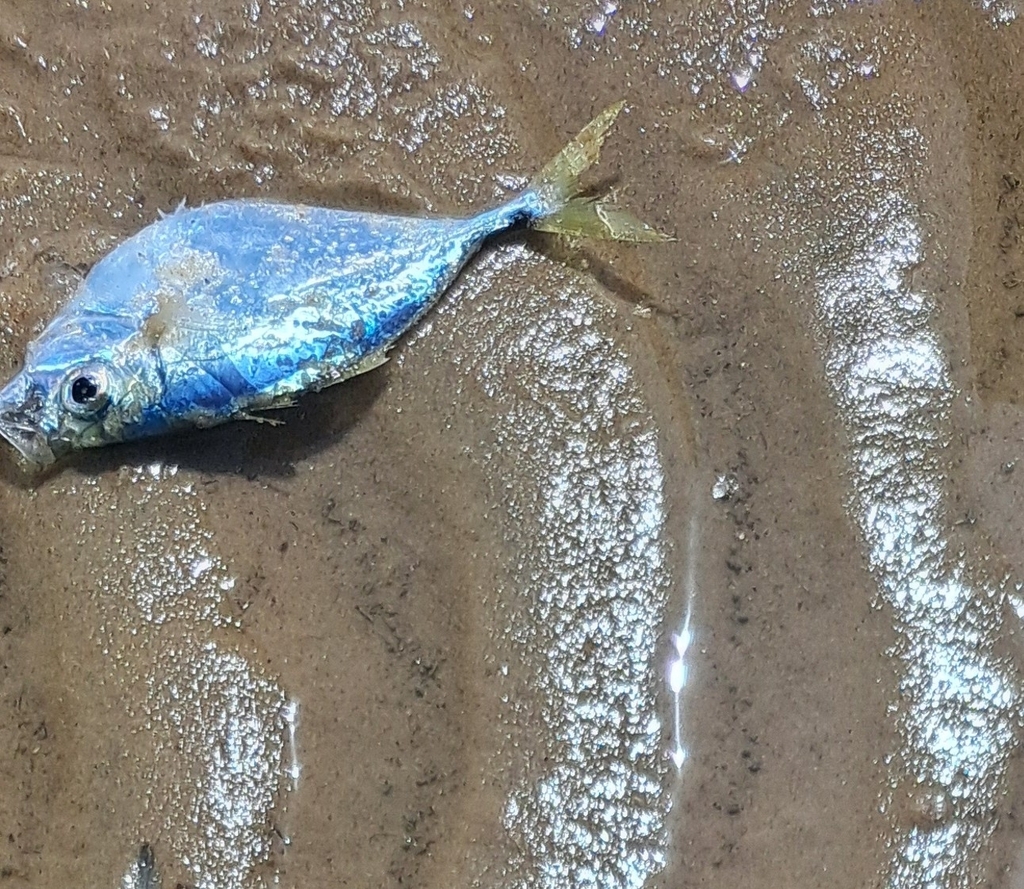
The Atlantic bumper (Chloroscombrus chrysurus) is a saltwater fish of the family Carangidae that grows up to 65 cm.
Description
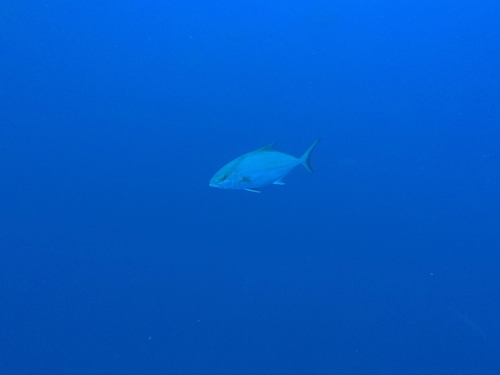
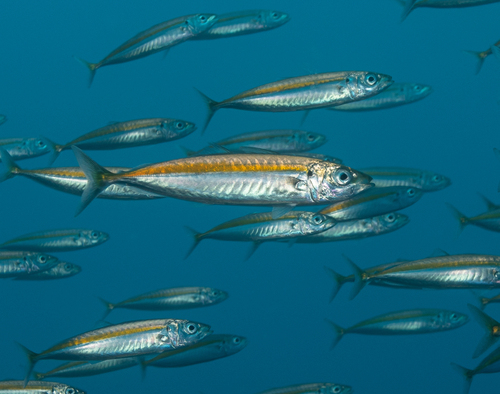
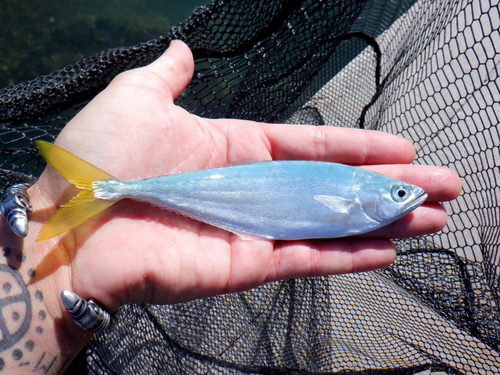
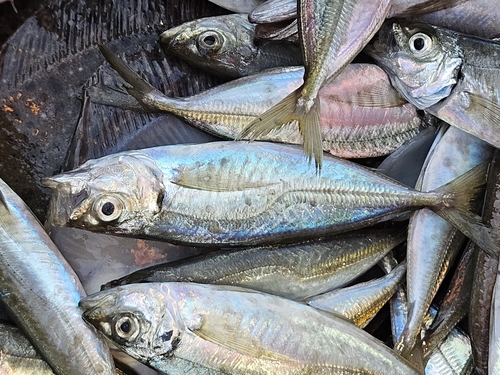
The Atlantic bumper is a silvery jack of the family Carangidae reaching about 65 cm, though usually smaller. The strongly compressed body stands out for an almost straight back and a strikingly strongly curved underside, giving the fish a lopsided, asymmetric shape; a black spot sits on the caudal peduncle. The species lives pelagically in coastal and surface water of the Atlantic on both sides, in the east along the West African coast, often in turbid river mouths. In schools it feeds on zooplankton, small fish and crustaceans. Locally it is a common fish landed by coastal fisheries; young bumpers sometimes shelter under jellyfish.
Frequently asked questions
How do you recognise the Atlantic bumper?
The Atlantic bumper has a torpedo-shaped body, is mainly silver-grey and shows a plain pattern.
Where does the Atlantic bumper live?
The Atlantic bumper lives in the sea (marine waters) and is mostly found around open water.
How big does the Atlantic bumper get?
The Atlantic bumper grows to a maximum of about 65 cm. On average the species is around 25 cm.
Is the Atlantic bumper dangerous to humans?
No, the Atlantic bumper is harmless to humans.
Is the Atlantic bumper edible?
Yes, the Atlantic bumper is commonly eaten.
Download Fin's Fish Guide
Identify fish in seconds, log your catches and dives. Join the TestFlight beta.
All data
Identification
Appearance
Habitat & distribution
Behaviour & biology
For anglers
Safety
Status & sources
Same genus Chloroscombrus
More from the family Carangidae

Download Fin's Fish Guide
Identify fish in seconds, log your catches and dives. Join the TestFlight beta.