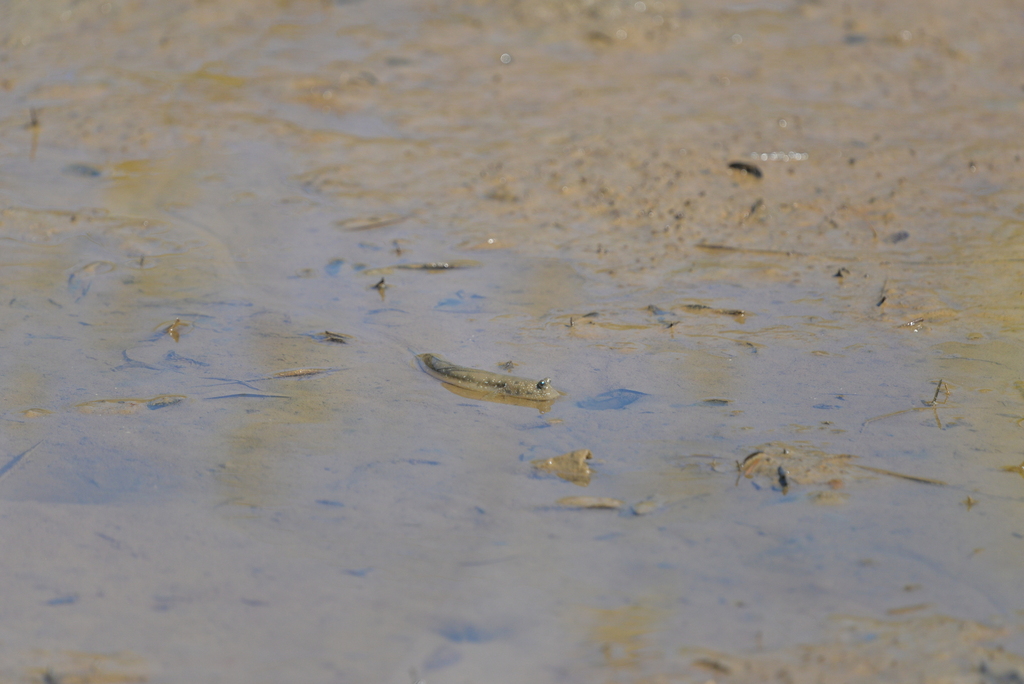
The Great blue spotted mudskipper (Boleophthalmus pectinirostris) is a fish that lives in both fresh and salt water of the family Gobiidae that grows up to 18 cm.
Description
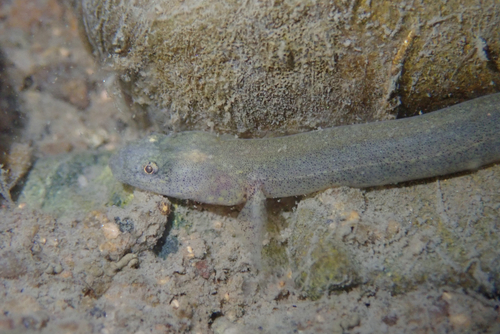
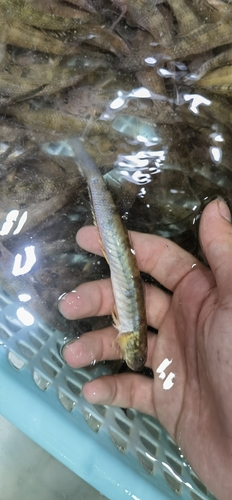
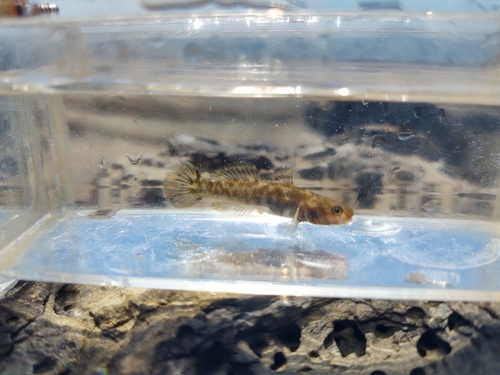
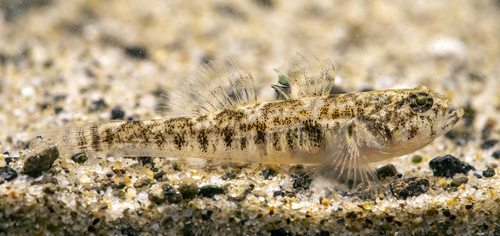
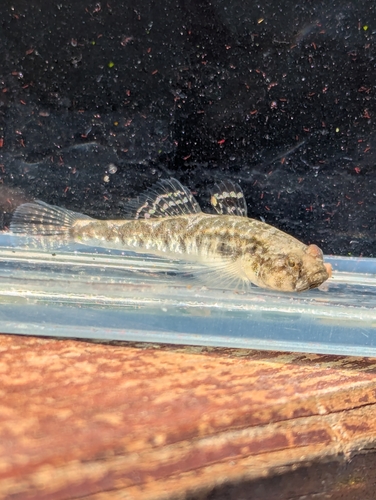
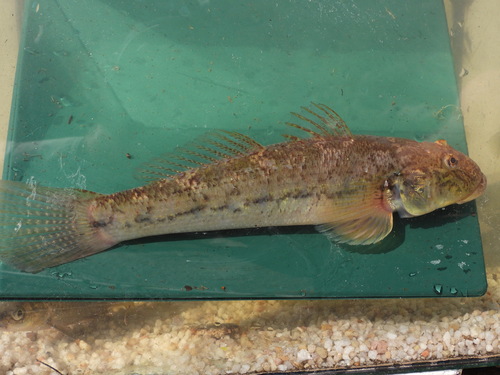
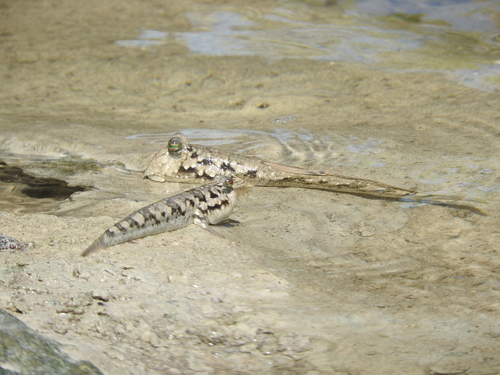
The great blue-spotted mudskipper is a mudskipper (Gobiidae, Oxudercinae) from East Asia. The species grows to about 15 cm and has an elongate body with eyes set high on the head and blue speckles on the flanks and dorsal fin. It is an amphibious, air-breathing fish that shuttles back and forth on mud flats between tide pools and the air; it moves 'walking' over the mud with its pectoral fins. With its mouth it scrapes diatoms and algae from the mud surface. It is known in Asian cuisine. The species is harmless to humans.
Frequently asked questions
How do you recognise the Great blue spotted mudskipper?
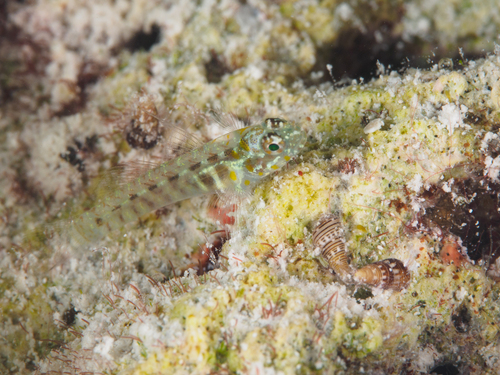
The Great blue spotted mudskipper has an elongate, eel-like body, is mainly brown and shows a spots pattern.
Where does the Great blue spotted mudskipper live?
The Great blue spotted mudskipper lives in both fresh and salt water and is mostly found around sand or mud bottom.
How big does the Great blue spotted mudskipper get?
The Great blue spotted mudskipper grows to a maximum of about 18 cm.
Is the Great blue spotted mudskipper dangerous to humans?
No, the Great blue spotted mudskipper is harmless to humans.
Is the Great blue spotted mudskipper edible?
Yes, the Great blue spotted mudskipper is commonly eaten.
Download Fin's Fish Guide
Identify fish in seconds, log your catches and dives. Join the TestFlight beta.
All data
Identification
Appearance
Habitat & distribution
Behaviour & biology
For anglers
Safety
Status & sources
Same genus Boleophthalmus
More from the family Gobiidae
Download Fin's Fish Guide
Identify fish in seconds, log your catches and dives. Join the TestFlight beta.