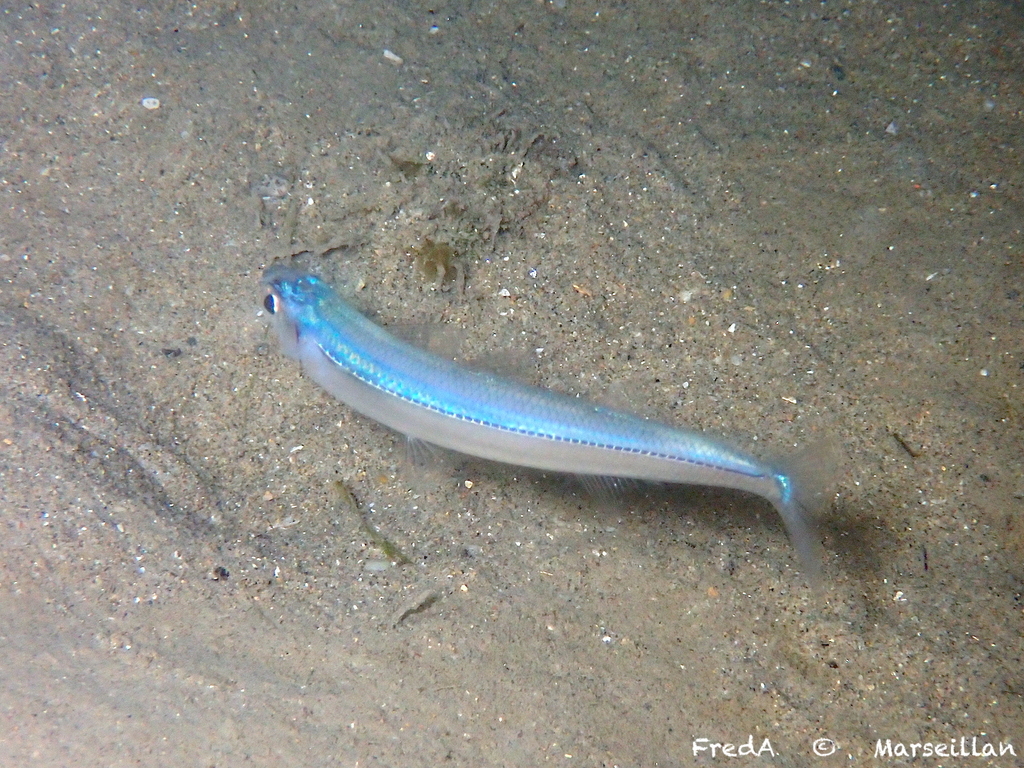
The Mediterranean sand smelt (Atherina hepsetus) is a fish that lives in both fresh and salt water of the family Atherinidae that grows up to 20 cm.
Description
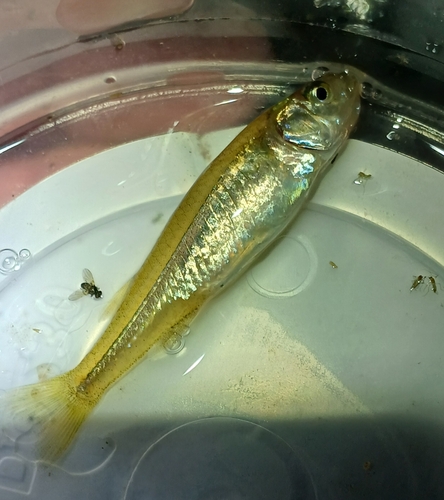
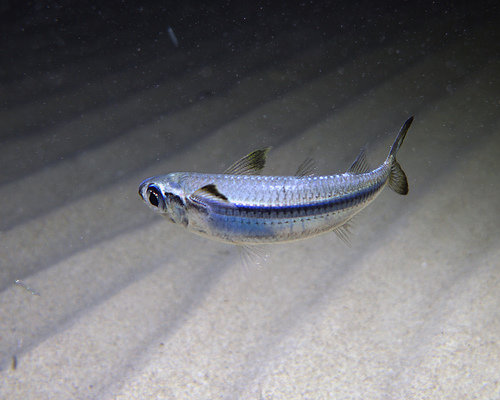
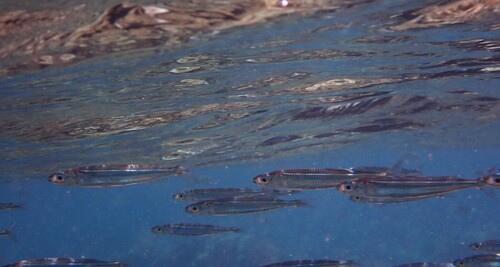
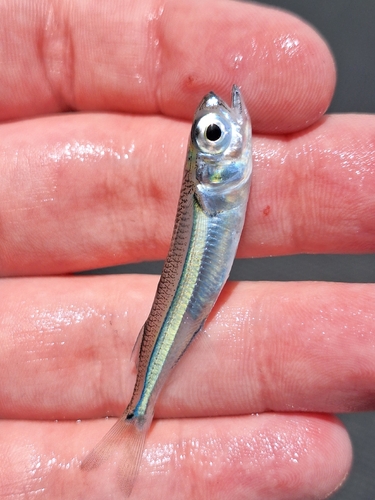
The Mediterranean sand smelt is a slender, translucent silvery fish of the family Atherinidae reaching about 20 cm. Characteristic are the large eyes, two separate dorsal fins and a broad, gleaming silver band along the flank. The species is euryhaline and lives in shallow coastal and brackish water of the Mediterranean, the Black Sea and the adjacent eastern Atlantic coast. In the warm months it forms large schools in the surf, in harbours and around piers, often just below the surface. It hunts zooplankton, small crustaceans and larvae. In spring and summer it spawns, the eggs attaching with fine threads to weeds. As an abundant prey fish it is important food for larger fish and seabirds, and it is locally eaten fried.
Frequently asked questions
How do you recognise the Mediterranean sand smelt?
The Mediterranean sand smelt has an elongate, eel-like body, is mainly silver-grey and shows a horizontal stripes pattern.
Where does the Mediterranean sand smelt live?
The Mediterranean sand smelt lives in both fresh and salt water and is mostly found around open water.
How big does the Mediterranean sand smelt get?
The Mediterranean sand smelt grows to a maximum of about 20 cm. On average the species is around 15 cm.
Is the Mediterranean sand smelt dangerous to humans?
No, the Mediterranean sand smelt is harmless to humans.
Is the Mediterranean sand smelt edible?
Yes, the Mediterranean sand smelt is commonly eaten.
Download Fin's Fish Guide
Identify fish in seconds, log your catches and dives. Join the TestFlight beta.
All data
Identification
Appearance
Habitat & distribution
Behaviour & biology
For anglers
Safety
Status & sources
Same genus Atherina


More from the family Atherinidae



Download Fin's Fish Guide
Identify fish in seconds, log your catches and dives. Join the TestFlight beta.