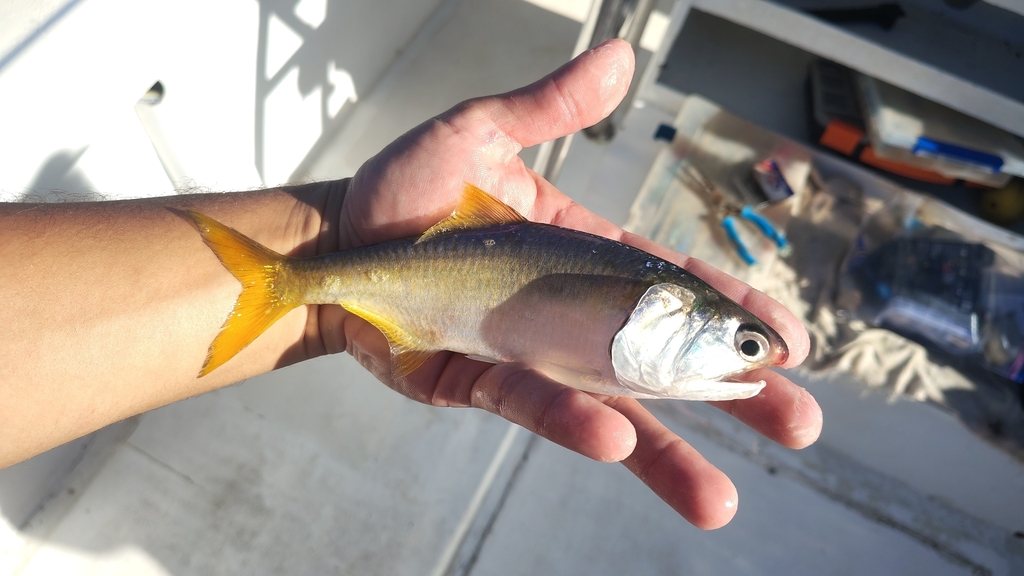
The Anchovy (Anchovia macrolepidota) is a brackish-water fish of the family Engraulidae that grows up to 25 cm.
Description
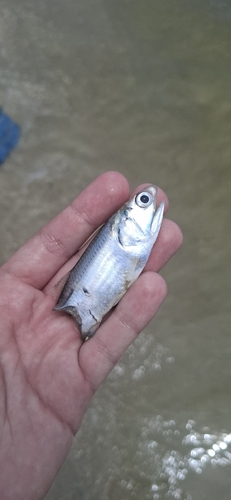
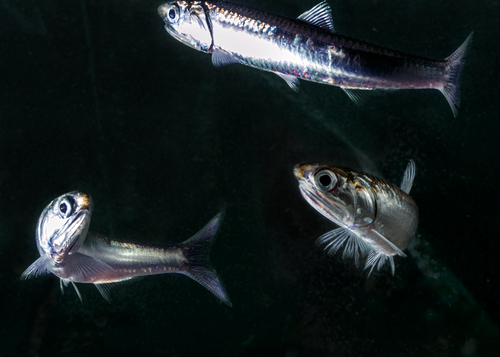
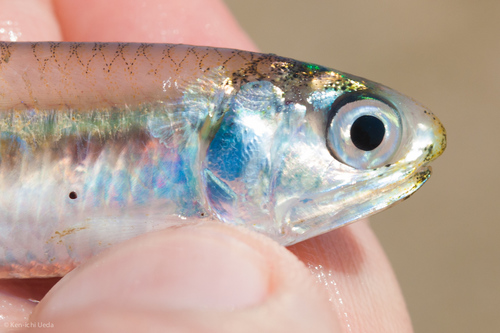
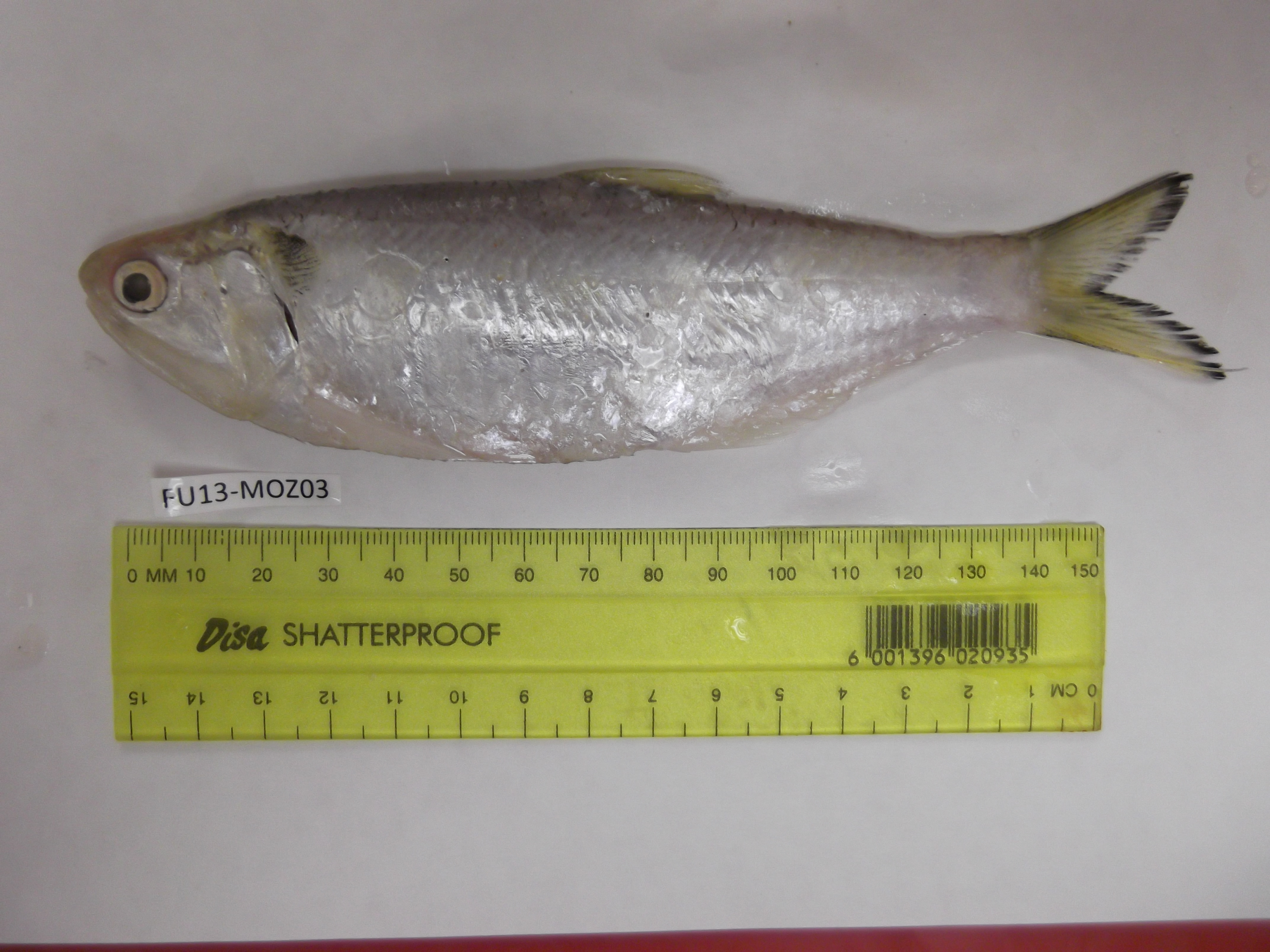
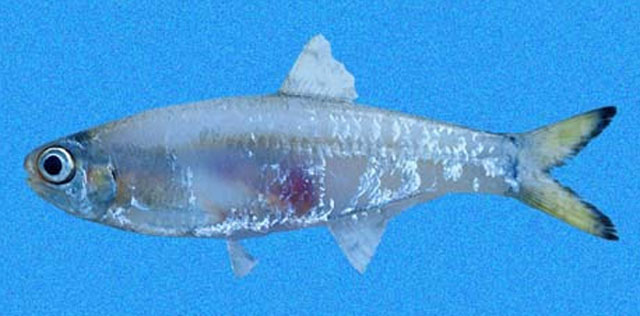
The bigscale anchovy (Anchovia macrolepidota) is an anchovy of the family Engraulidae from coastal waters of the eastern Pacific. The species has a slender, silvery body with relatively large scales and a shining lateral stripe, and reaches about 25 cm. It occurs close inshore along sandy beaches and in tide streams, where it forms large schools. Juveniles to about 7 cm stay on beaches and in bays and afterwards move further offshore. As a plankton feeder it filters plankton from the water. The species is an important prey for larger fishes and seabirds and is caught locally in coastal fisheries.
Frequently asked questions
How do you recognise the Anchovy?
The Anchovy has an elongate, eel-like body, is mainly silver-grey and shows a horizontal stripes pattern.
Where does the Anchovy live?
The Anchovy lives in brackish water and is mostly found around open water.
How big does the Anchovy get?
The Anchovy grows to a maximum of about 25 cm. On average the species is around 13 cm.
Is the Anchovy dangerous to humans?
No, the Anchovy is harmless to humans.
Is the Anchovy edible?
The Anchovy is rarely eaten.
Download Fin's Fish Guide
Identify fish in seconds, log your catches and dives. Join the TestFlight beta.
All data
Identification
Appearance
Habitat & distribution
Behaviour & biology
For anglers
Safety
Status & sources
Same genus Anchovia


More from the family Engraulidae
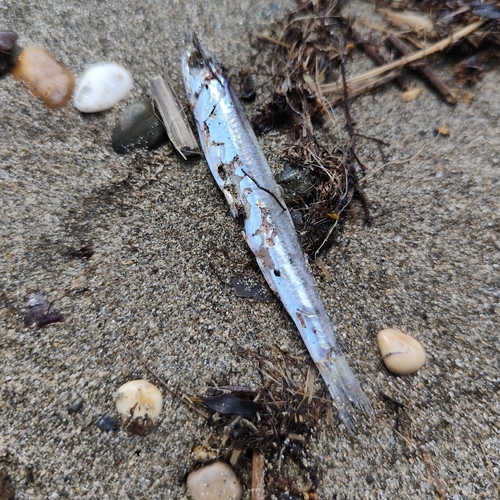
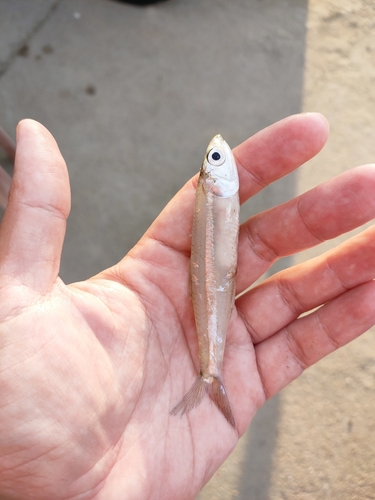
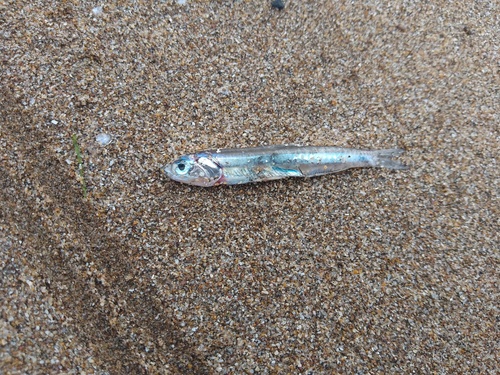
Download Fin's Fish Guide
Identify fish in seconds, log your catches and dives. Join the TestFlight beta.