
The Indian threadfish (Alectis indica) is a saltwater fish of the family Carangidae that grows up to 165 cm.
Description
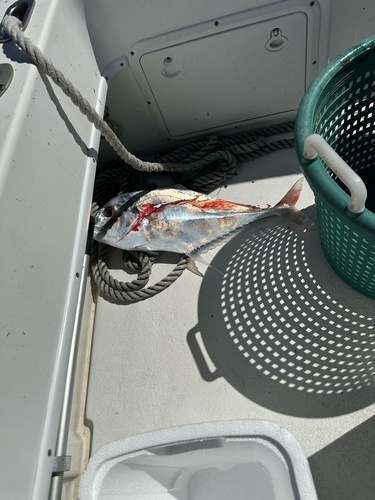
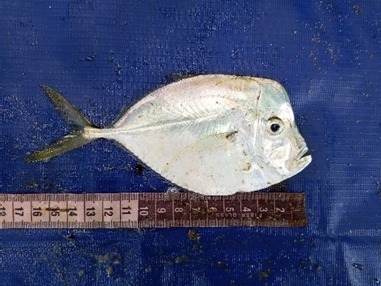
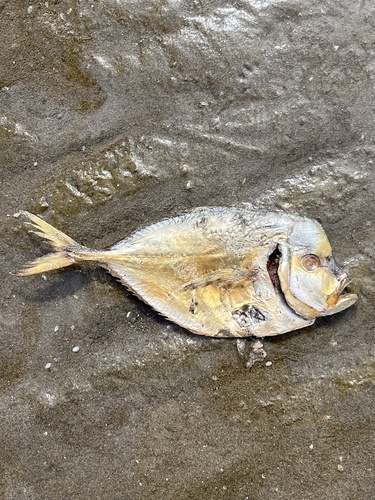
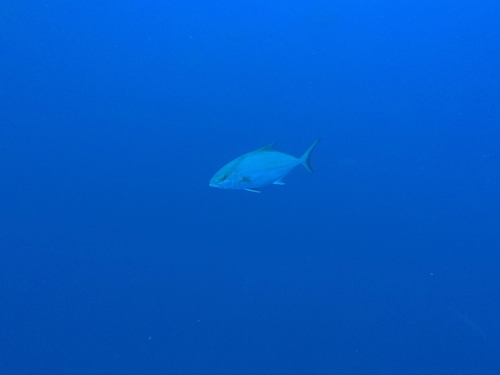
The Indian threadfish is a large jack of the family Carangidae from the Indo-West Pacific. The species grows to about 1.65 metres. Juveniles have a very deep, strongly compressed body with thread-like elongated anterior fin rays, to which the name refers; with growth the body lengthens and the threads are lost. It lives pelagically over soft bottoms and around reefs on the continental shelf. As a fast predator it hunts fishes and crustaceans. The Indian threadfish is a valued sport and food fish. It is harmless to humans.
Frequently asked questions
How do you recognise the Indian threadfish?
The Indian threadfish has a flattened, disc-shaped body, is mainly silver-grey and shows a plain pattern.
Where does the Indian threadfish live?
The Indian threadfish lives in the sea (marine waters) and is mostly found around open water.
How big does the Indian threadfish get?
The Indian threadfish grows to a maximum of about 165 cm.
Is the Indian threadfish dangerous to humans?
No, the Indian threadfish is harmless to humans.
Is the Indian threadfish edible?
Yes, the Indian threadfish is commonly eaten.
Download Fin's Fish Guide
Identify fish in seconds, log your catches and dives. Join the TestFlight beta.
All data
Identification
Appearance
Habitat & distribution
Behaviour & biology
Safety
Status & sources
Same genus Alectis
More from the family Carangidae

Download Fin's Fish Guide
Identify fish in seconds, log your catches and dives. Join the TestFlight beta.