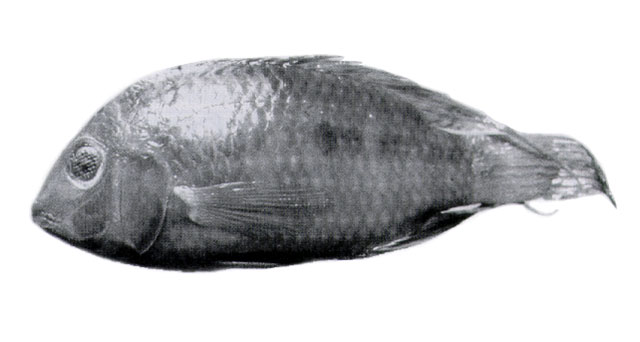
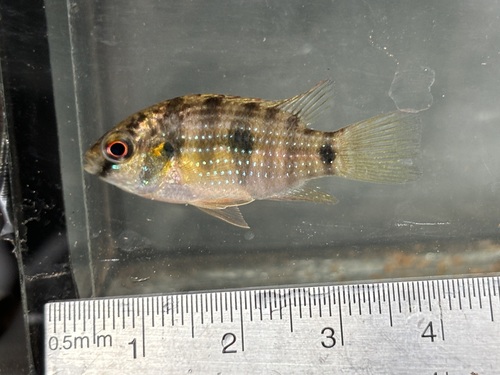
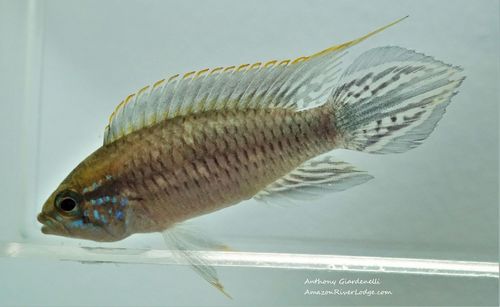
The Chimanta acara (Aequidens chimantanus) is a freshwater fish of the family Cichlidae that grows up to 10 cm.
Description
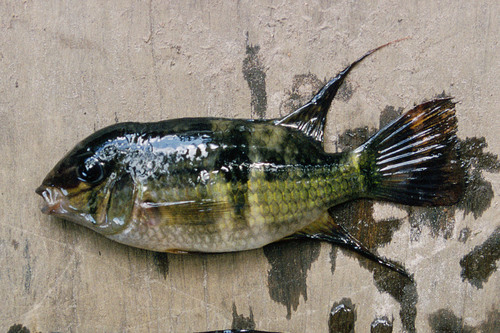
The Chimanta acara is a cichlid (Cichlidae) from slow-flowing rivers, pools and flooded forest of the Orinoco basin in Venezuela. The species grows to about 13 cm and has a deep, laterally compressed body with a large mouth; dominant individuals colour up more brightly in the breeding season. As a bottom-oriented omnivore it searches for small invertebrates, small fish, worms and plant matter. It is a caring parental brooder that fiercely defends the eggs and young. The fish is harmless to humans.
Frequently asked questions
How do you recognise the Chimanta acara?
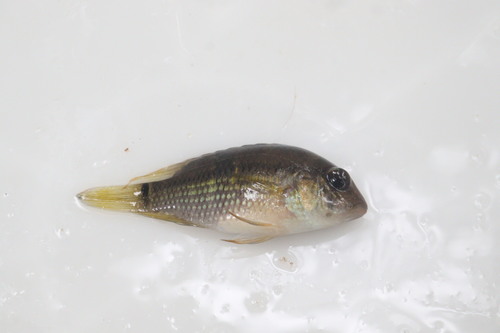
The Chimanta acara has a torpedo-shaped body and is mainly brown.
Where does the Chimanta acara live?
The Chimanta acara lives in fresh water and is mostly found around sand or mud bottom.
How big does the Chimanta acara get?
The Chimanta acara grows to a maximum of about 10 cm.
Is the Chimanta acara dangerous to humans?
No, the Chimanta acara is harmless to humans.
Download Fin's Fish Guide
Identify fish in seconds, log your catches and dives. Join the TestFlight beta.
All data
Identification
Appearance
Habitat & distribution
Behaviour & biology
For anglers
Safety
Status & sources
Same genus Aequidens
More from the family Cichlidae



Download Fin's Fish Guide
Identify fish in seconds, log your catches and dives. Join the TestFlight beta.