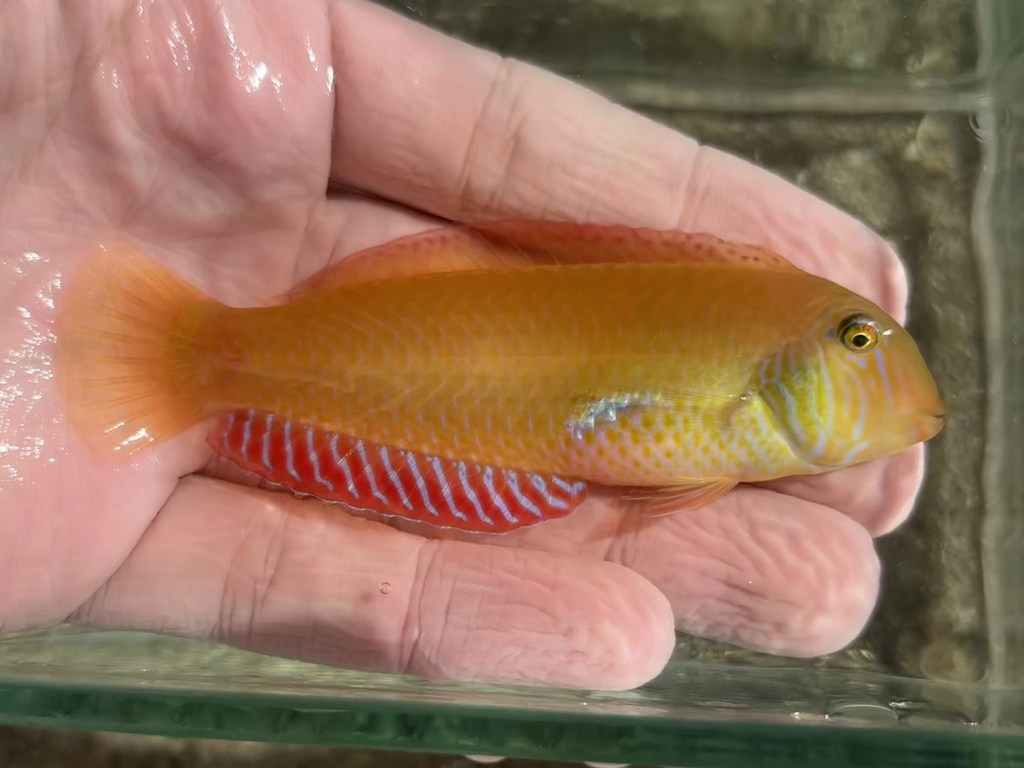
The Cleaver wrasse (Xyrichtys novacula) is a saltwater fish of the family Labridae that grows up to 38 cm.
Description
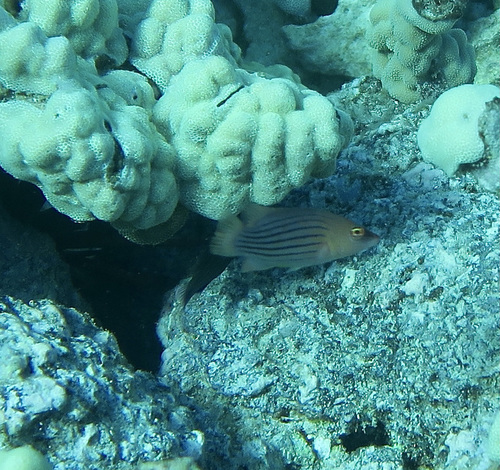
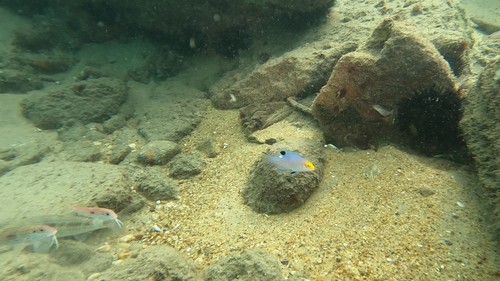
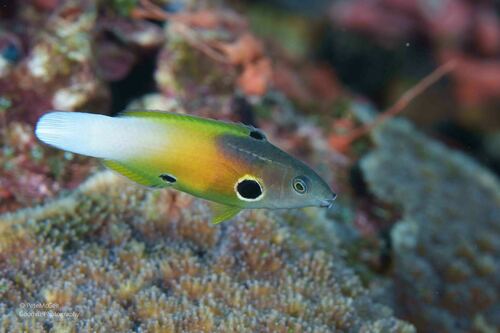
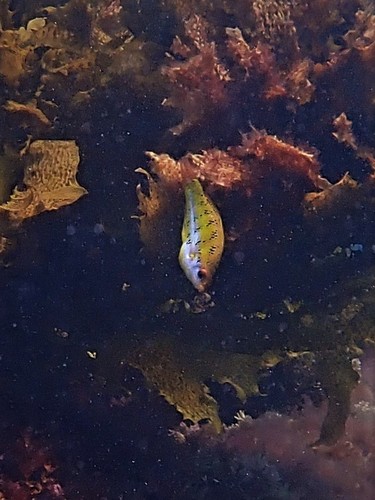
The pearly razorfish is a wrasse of the family Labridae reaching about 38 cm. The strongly compressed body ends in a very blunt, knife-like head with a sharp leading edge. The colour is pale green, with alternating light-blue and yellow-orange lines on the head. When threatened the fish dives head-first into the sand. The species is a protogynous hermaphrodite: individuals begin as females and may later become males, differing in head shape and pelvic fin length. The pearly razorfish lives over clear, sandy bottoms near seagrass and coral in the Atlantic and Mediterranean, feeding on molluscs, crabs and shrimps, and is a regular food fish.
Frequently asked questions
How do you recognise the Cleaver wrasse?
The Cleaver wrasse has an elongate, eel-like body, is mainly green and shows a plain pattern.
Where does the Cleaver wrasse live?
The Cleaver wrasse lives in the sea (marine waters) and is mostly found around stony or rocky ground.
How big does the Cleaver wrasse get?
The Cleaver wrasse grows to a maximum of about 38 cm. On average the species is around 20 cm.
Is the Cleaver wrasse dangerous to humans?
No, the Cleaver wrasse is harmless to humans.
Is the Cleaver wrasse edible?
Yes, the Cleaver wrasse is commonly eaten.
Download Fin's Fish Guide
Identify fish in seconds, log your catches and dives. Join the TestFlight beta.
All data
Identification
Appearance
Habitat & distribution
Behaviour & biology
For anglers
Safety
Status & sources
Same genus Xyrichtys
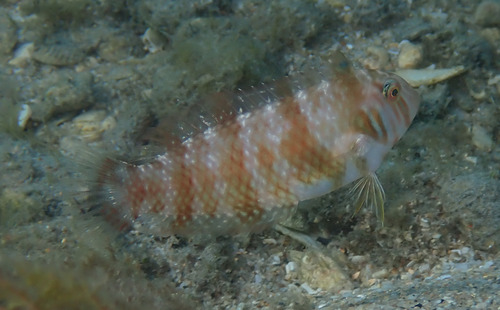
More from the family Labridae
Download Fin's Fish Guide
Identify fish in seconds, log your catches and dives. Join the TestFlight beta.