
The Catemaco platyfish (Xiphophorus milleri) is a brackish-water fish of the family Poeciliidae that grows up to 3 cm.
Description
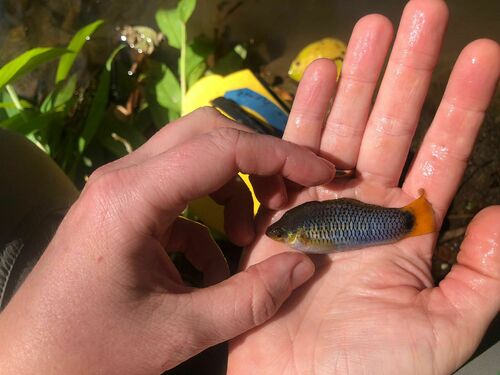
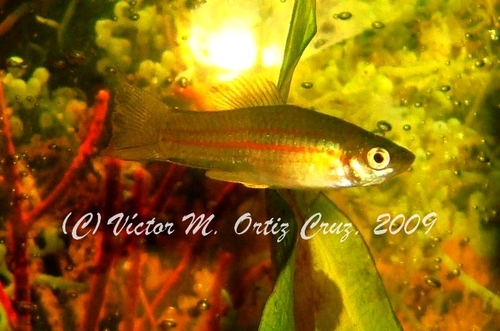
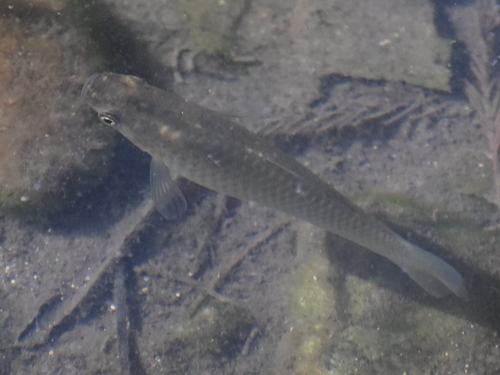
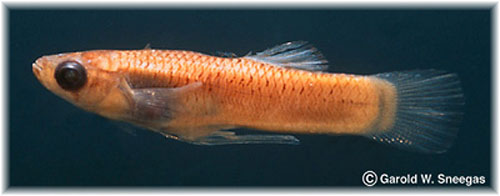
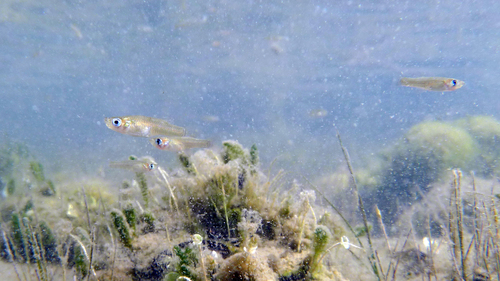
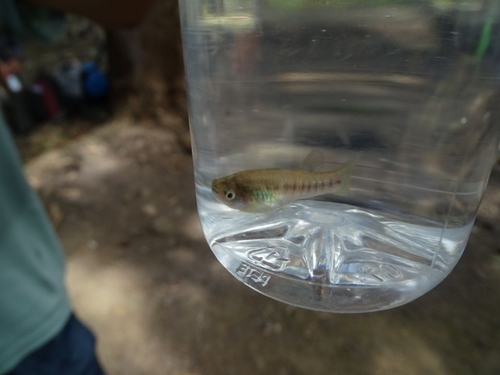
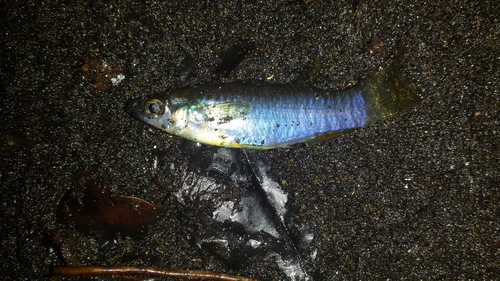
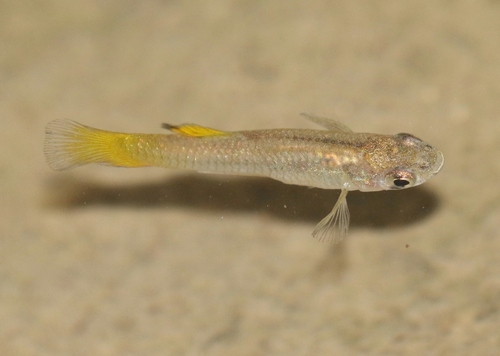
The Catemaco platyfish is a small livebearing toothcarp endemic to Lake Catemaco and the Papaloapan basin in Veracruz, Mexico. Males stay around 3 cm, while females reach up to 4.5 cm. The fish has an olive to yellowish body with fine black speckling and an upturned mouth for surface feeding. It lives in very shallow, warm water along shores and tributaries, sometimes gathering in large aggregations, and shares its range with the green swordtail Xiphophorus hellerii. After a gestation of 24 to 28 days the female bears 15 to 50 live young. The species is popular in the aquarium trade.
Frequently asked questions
How do you recognise the Catemaco platyfish?
The Catemaco platyfish has a torpedo-shaped body, is mainly yellow-gold and shows a spots pattern.
Where does the Catemaco platyfish live?
The Catemaco platyfish lives in brackish water and is mostly found around mixed bottom.
How big does the Catemaco platyfish get?
The Catemaco platyfish grows to a maximum of about 3 cm.
Is the Catemaco platyfish dangerous to humans?
No, the Catemaco platyfish is harmless to humans.
Is the Catemaco platyfish edible?
The Catemaco platyfish is not usually eaten.
Download Fin's Fish Guide
Identify fish in seconds, log your catches and dives. Join the TestFlight beta.
All data
Identification
Appearance
Habitat & distribution
Behaviour & biology
For anglers
Safety
Status & sources
Same genus Xiphophorus


More from the family Poeciliidae

Download Fin's Fish Guide
Identify fish in seconds, log your catches and dives. Join the TestFlight beta.