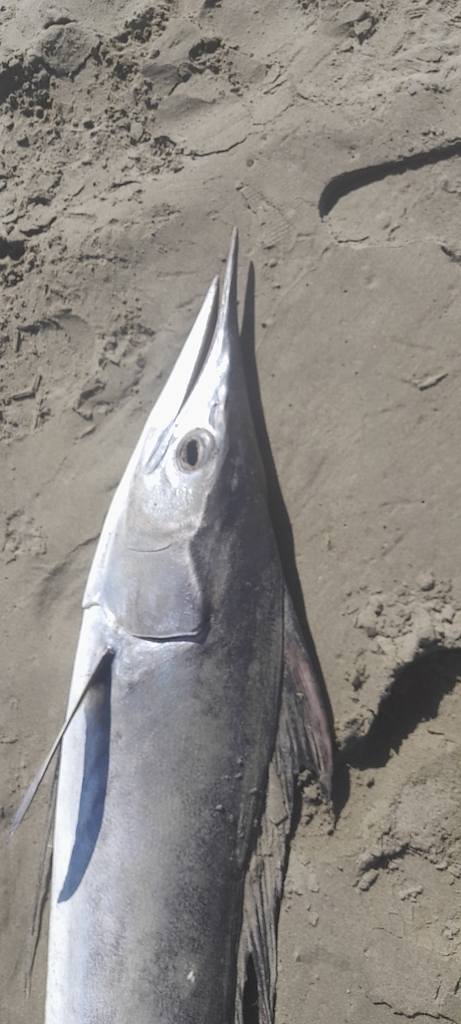
The Hatchet marlin (Tetrapturus angustirostris) is a saltwater fish of the family Istiophoridae that grows up to 230 cm.
Description
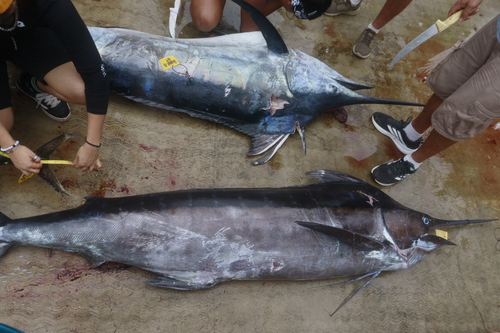
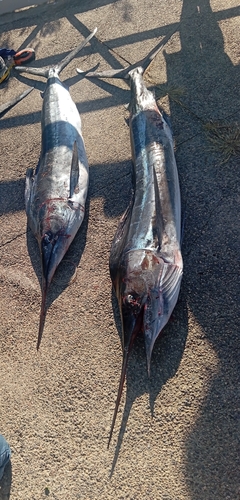
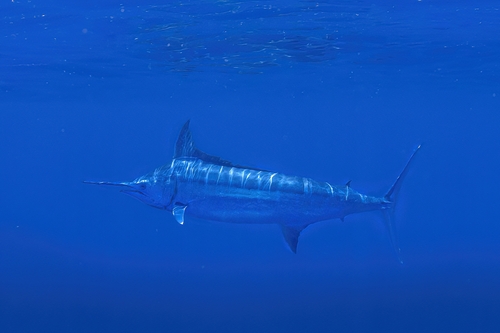
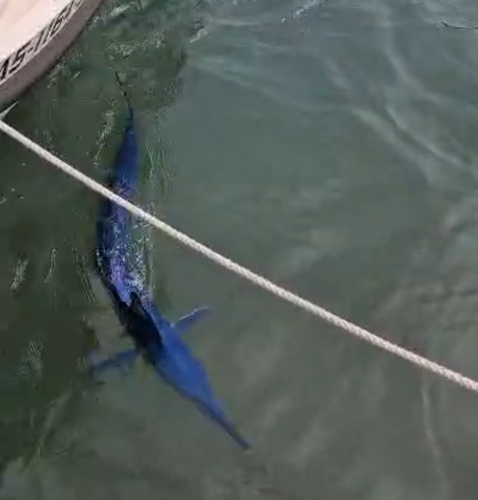
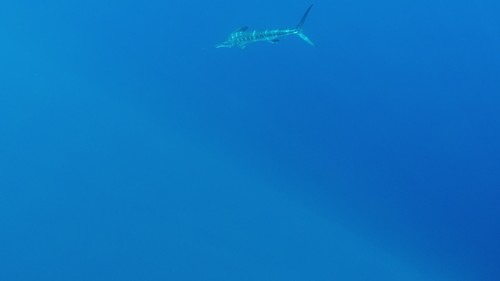
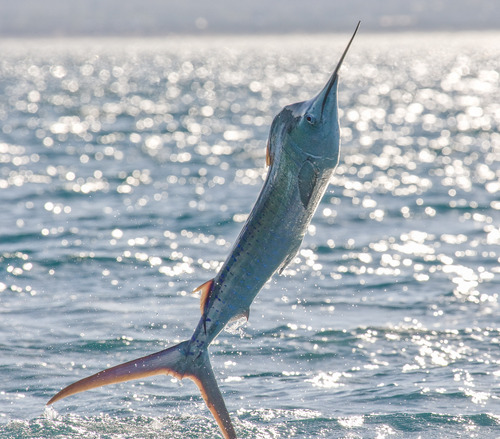
The shortbill spearfish is a large, fast predatory fish of the billfish family (Istiophoridae) found worldwide in tropical and subtropical oceans. The species reaches about 230 cm and has a streamlined, blue-black body with a long dorsal fin and a short, spear-shaped upper jaw, the shortest bill of all billfishes. It is oceanic and epipelagic, staying above the thermocline. The fish hunts fishes, squid and crustaceans. It is caught mainly as bycatch of tuna longline fisheries and processed in Japan into fish cakes, sashimi and sausages. The IUCN has insufficient data (DD).
Frequently asked questions
How do you recognise the Hatchet marlin?
The Hatchet marlin has an elongate, eel-like body, is mainly blue and shows a plain pattern.
Where does the Hatchet marlin live?
The Hatchet marlin lives in the sea (marine waters) and is mostly found around open water.
How big does the Hatchet marlin get?
The Hatchet marlin grows to a maximum of about 230 cm. On average the species is around 190 cm.
Is the Hatchet marlin dangerous to humans?
No, the Hatchet marlin is harmless to humans.
Is the Hatchet marlin edible?
The Hatchet marlin is rarely eaten.
Download Fin's Fish Guide
Identify fish in seconds, log your catches and dives. Join the TestFlight beta.
All data
Identification
Appearance
Habitat & distribution
Behaviour & biology
For anglers
Safety
Status & sources
Same genus Tetrapturus
More from the family Istiophoridae

Download Fin's Fish Guide
Identify fish in seconds, log your catches and dives. Join the TestFlight beta.