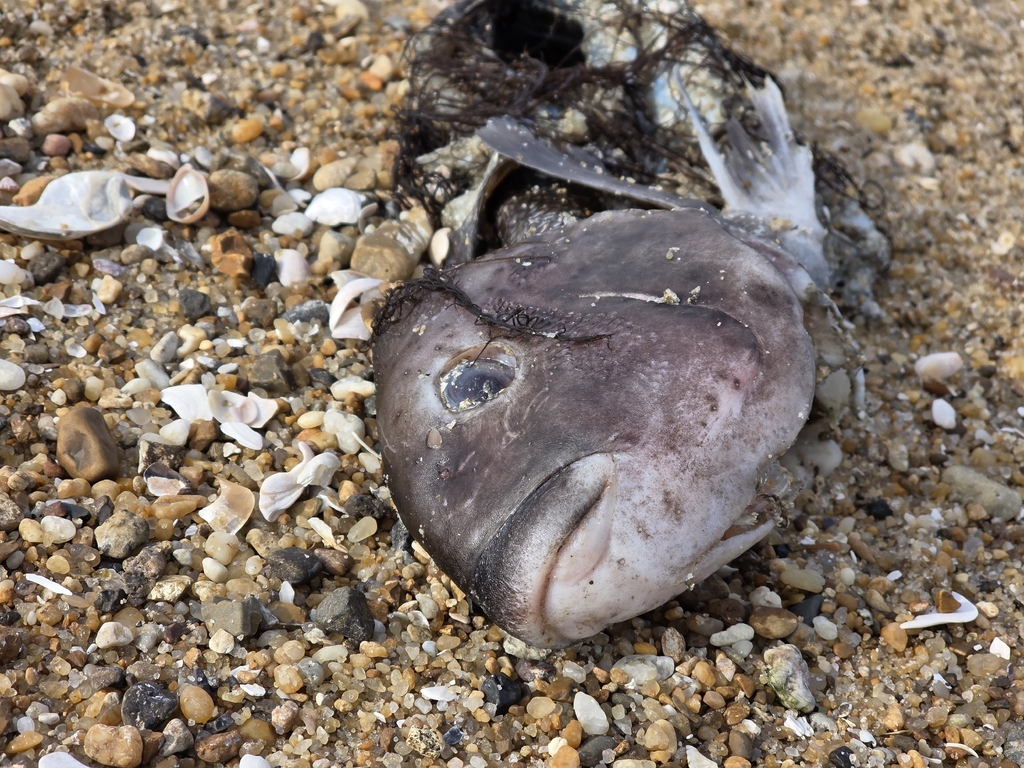
The Black-fish (Tautoga onitis) is a brackish-water fish of the family Labridae that grows up to 91 cm.
Description
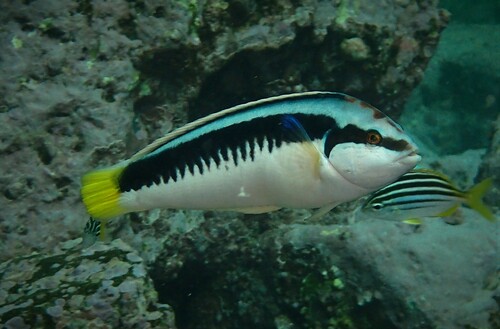
The tautog (Tautoga onitis), or blackfish, is a robust wrasse of the family Labridae from the northwestern Atlantic. The species has a stocky, dark grey-black, mottled body with a blunt head, thick lips and powerful teeth, and can reach about 90 cm. It lives close inshore on hard bottoms such as rocks, reefs and wrecks, and sometimes enters brackish water. Adult males are territorial during the day and rest in crevices at night. With its strong teeth and pharyngeal jaws it crushes shellfish such as mussels and crabs. The tautog is a prized sport fish but, owing to slow growth and fishing, is assessed as Vulnerable (VU).
Frequently asked questions
How do you recognise the Black-fish?
The Black-fish has a torpedo-shaped body, is mainly black and shows a marbled pattern.
Where does the Black-fish live?
The Black-fish lives in brackish water and is mostly found around stony or rocky ground.
How big does the Black-fish get?
The Black-fish grows to a maximum of about 91 cm.
Is the Black-fish dangerous to humans?
No, the Black-fish is harmless to humans.
Is the Black-fish edible?
Yes, the Black-fish is commonly eaten.
Download Fin's Fish Guide
Identify fish in seconds, log your catches and dives. Join the TestFlight beta.
All data
Identification
Appearance
Habitat & distribution
Behaviour & biology
For anglers
Safety
Status & sources
More from the family Labridae
Download Fin's Fish Guide
Identify fish in seconds, log your catches and dives. Join the TestFlight beta.