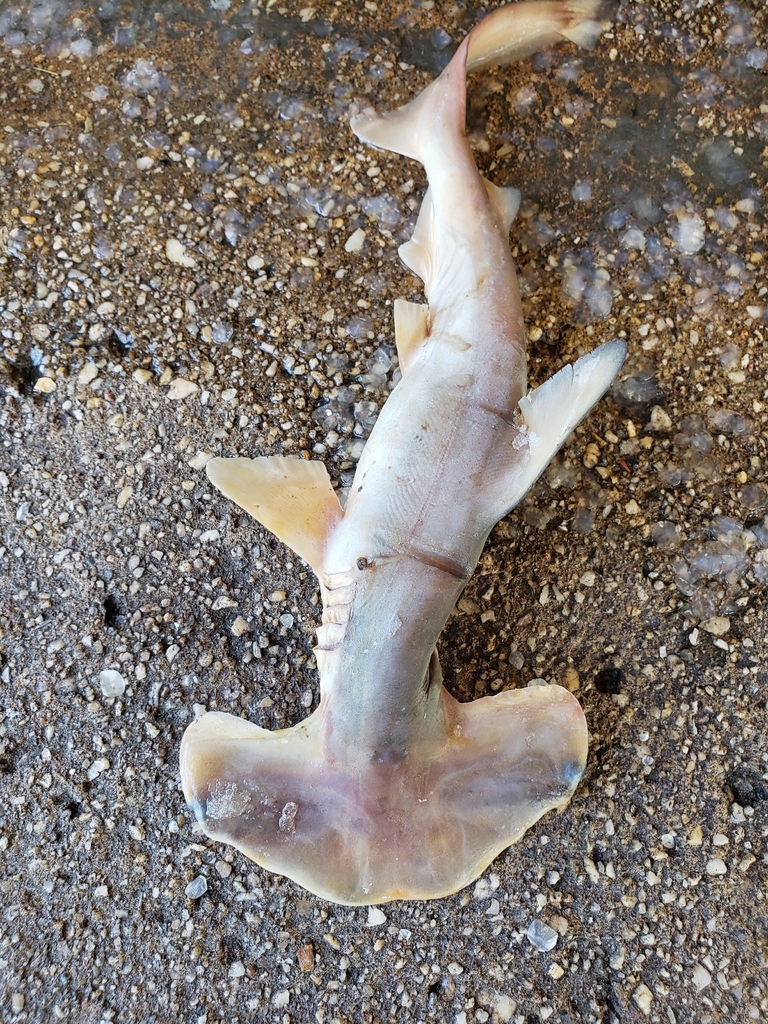
The Bonnet (Sphyrna tudes) is a saltwater fish of the family Sphyrnidae that grows up to 134 cm.
Description
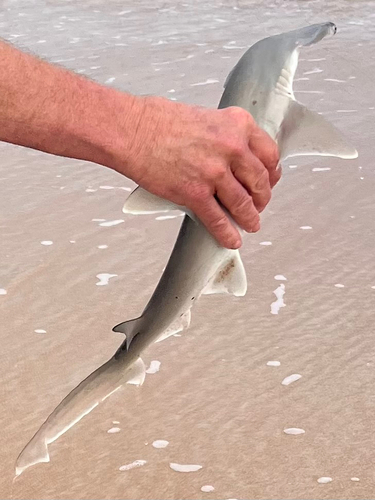
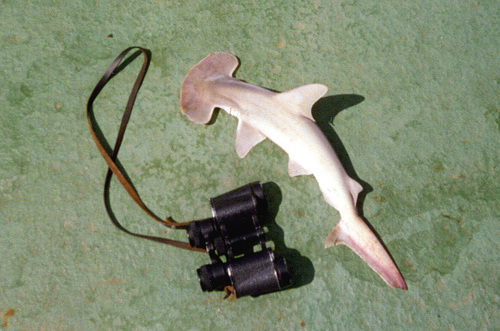
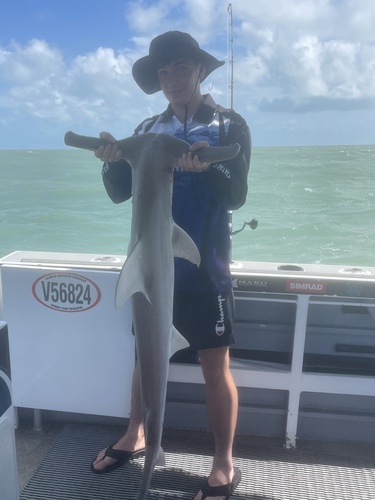
The smalleye hammerhead is a hammerhead shark (Sphyrnidae) from the western Atlantic Ocean. The species has the typical broadly expanded hammer-shaped head, with the eyes at the ends, and a conspicuous golden-yellow tint on the head, flanks and fins. It is a little-known inshore shark of the turbid continental shelf, down to at least twelve metres depth. It hunts small fishes, shrimps, crabs and squids. Owing to heavy fishing pressure it is considered critically endangered. It can bite with sharp teeth but is of little danger to humans.
Frequently asked questions
How do you recognise the Bonnet?
The Bonnet has an elongate, eel-like body, is mainly yellow-gold and shows a plain pattern.
Where does the Bonnet live?
The Bonnet lives in the sea (marine waters) and is mostly found around mixed bottom.
How big does the Bonnet get?
The Bonnet grows to a maximum of about 134 cm.
Is the Bonnet dangerous to humans?
No, the Bonnet is harmless to humans.
Is the Bonnet edible?
Yes, the Bonnet is commonly eaten.
Download Fin's Fish Guide
Identify fish in seconds, log your catches and dives. Join the TestFlight beta.
All data
Identification
Appearance
Habitat & distribution
Behaviour & biology
For anglers
Safety
Status & sources
Same genus Sphyrna
More from the family Sphyrnidae

Download Fin's Fish Guide
Identify fish in seconds, log your catches and dives. Join the TestFlight beta.