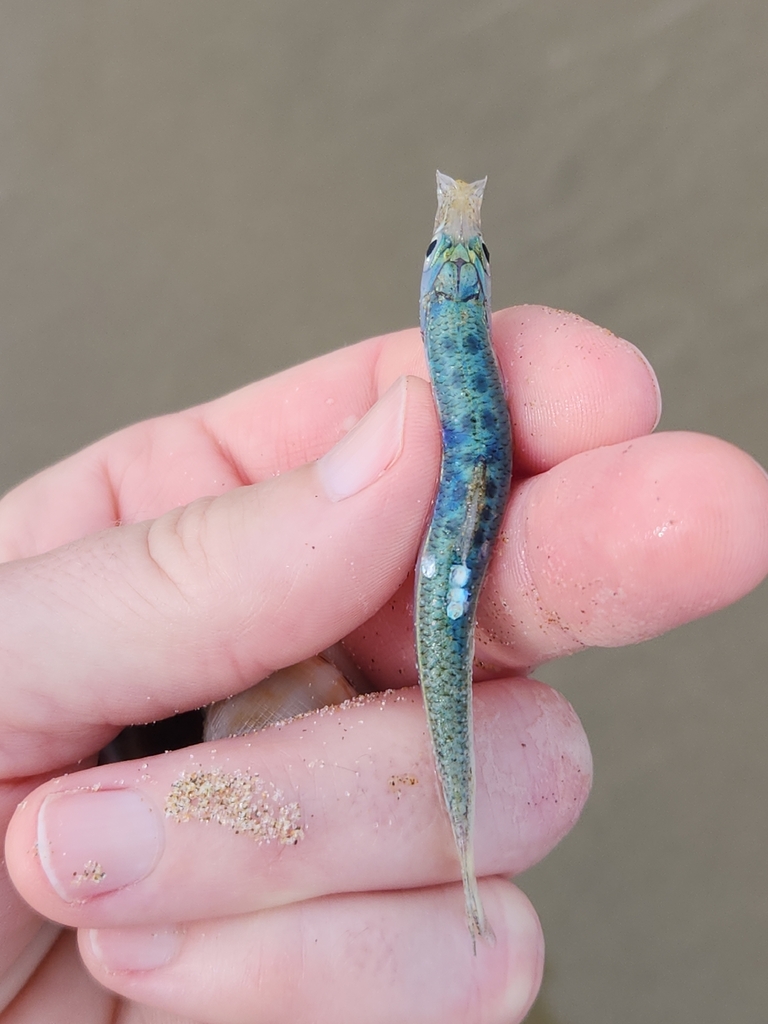
The South American pilchard (Sardinops sagax) is a saltwater fish of the family Clupeidae that grows up to 40 cm.
Description
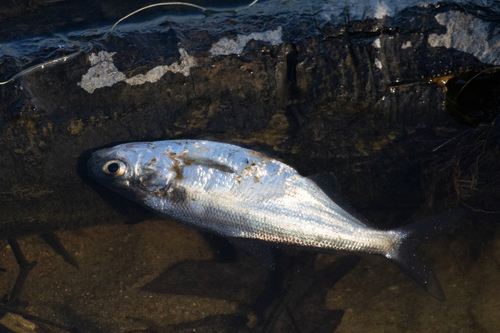
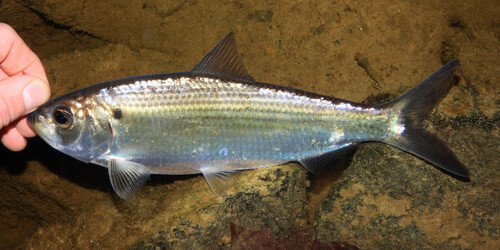
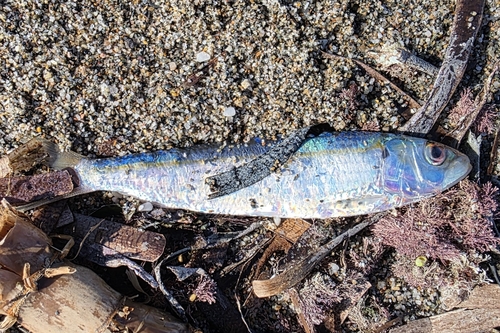
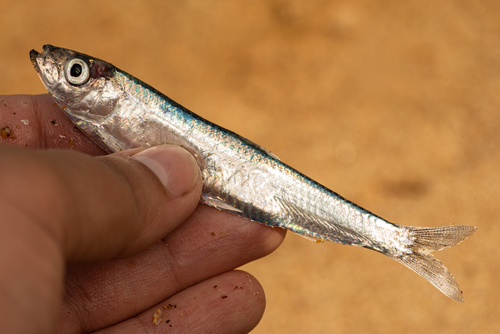
The South American pilchard (also pilchard or sardine) is a slender, strongly silvery sardine of the family Clupeidae reaching about 40 cm. The body has a blue-green back, a silver flank with a row of dark spots and fine ridges on the gill cover. The species forms enormous schools in productive, cooler coastal waters of the Pacific and Indian Oceans, along the Americas, southern Africa and Australasia, and filters animal and plant plankton. Through its gigantic numbers it is a key link in the ocean food web and the basis of some of the world's largest fisheries, for fresh consumption, canning, fish oil and bait. Its abundance swings strongly with ocean conditions.
Frequently asked questions
How do you recognise the South American pilchard?
The South American pilchard has a torpedo-shaped body, is mainly silver-grey and shows a spots pattern.
Where does the South American pilchard live?
The South American pilchard lives in the sea (marine waters) and is mostly found around open water.
How big does the South American pilchard get?
The South American pilchard grows to a maximum of about 40 cm. On average the species is around 20 cm.
Is the South American pilchard dangerous to humans?
No, the South American pilchard is harmless to humans.
Is the South American pilchard edible?
Yes, the South American pilchard is a highly prized food fish.
Download Fin's Fish Guide
Identify fish in seconds, log your catches and dives. Join the TestFlight beta.
All data
Identification
Appearance
Habitat & distribution
Behaviour & biology
For anglers
Safety
Status & sources
More from the family Clupeidae
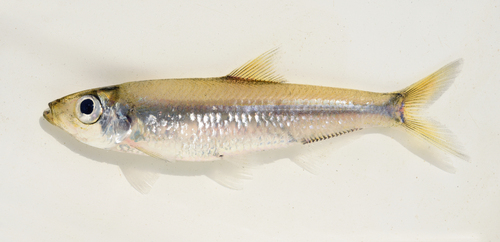
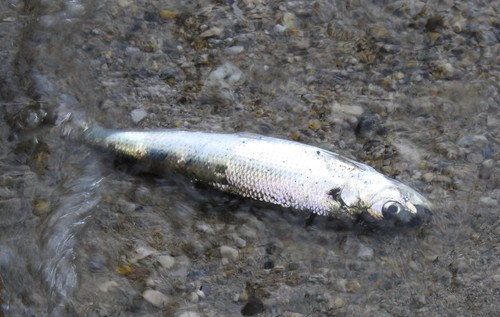

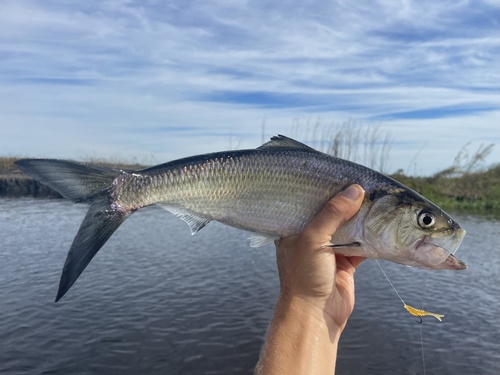
Download Fin's Fish Guide
Identify fish in seconds, log your catches and dives. Join the TestFlight beta.