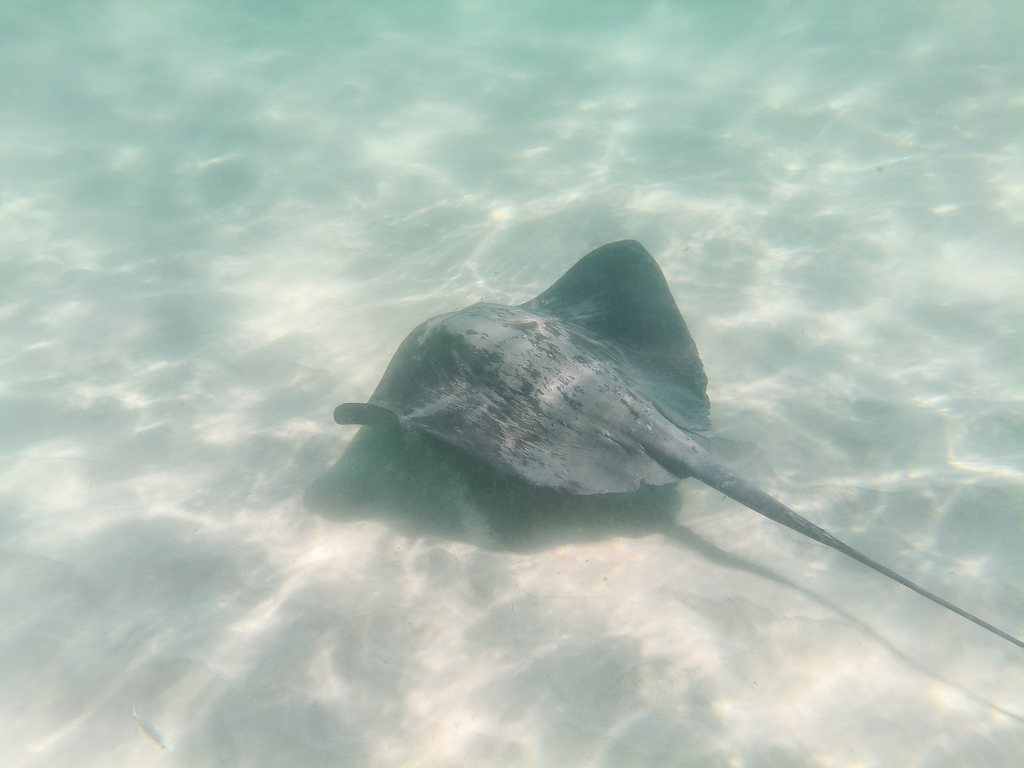
The Blue stingray (Pteroplatytrygon violacea) is a saltwater fish of the family Dasyatidae that grows up to 96 cm.
Description
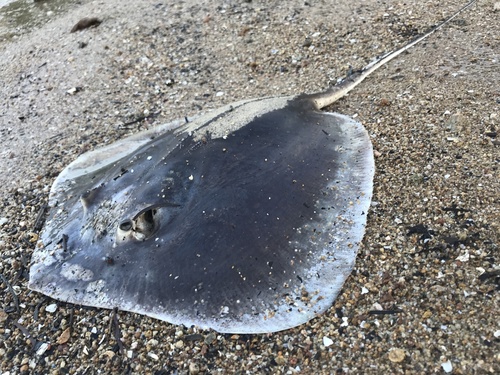
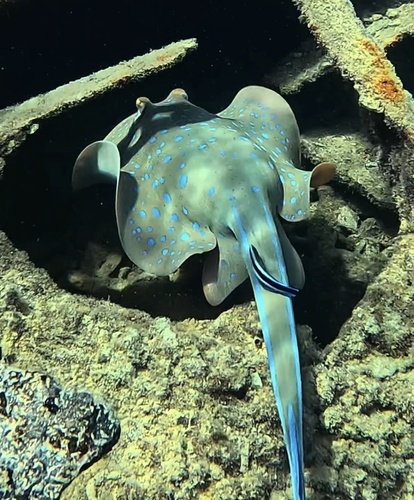
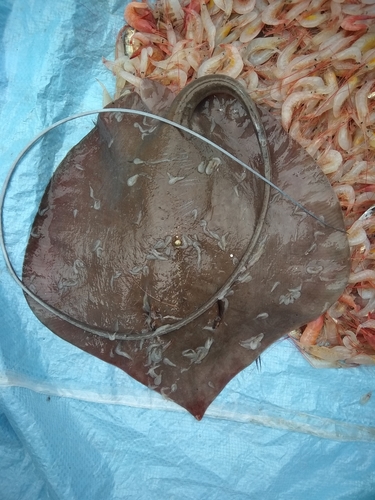
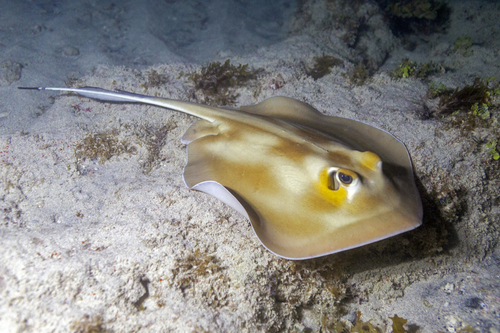
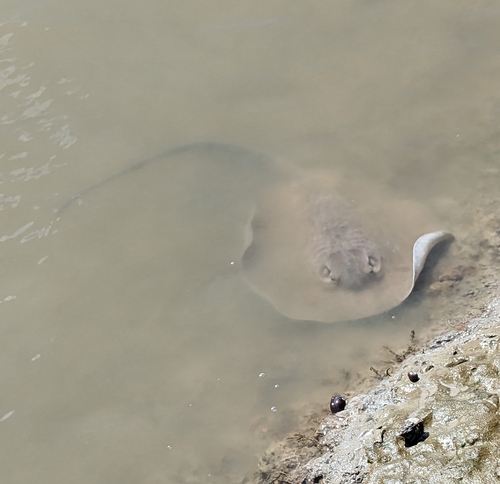
The pelagic stingray (Pteroplatytrygon violacea) is probably the only fully pelagic member of the stingray family (Dasyatidae). It occurs in open, tropical and warm-temperate waters, usually in the upper 100 metres, and has a deep purple to violet, diamond-shaped disc. On the tail it bears a venomous spine. The ray feeds on coelenterates such as jellyfishes, squid, decapod crustaceans and fish, and is ovoviviparous. The species is regularly taken as bycatch in the pelagic longline and driftnet fisheries for tuna and shark. The disc reaches about one metre across.
Frequently asked questions
How do you recognise the Blue stingray?
The Blue stingray has an irregular in shape body, is mainly pink-purple and shows a plain pattern.
Where does the Blue stingray live?
The Blue stingray lives in the sea (marine waters) and is mostly found around open water.
How big does the Blue stingray get?
The Blue stingray grows to a maximum of about 96 cm. On average the species is around 80 cm.
Is the Blue stingray dangerous to humans?
The Blue stingray is venomous — handle spines with care and seek medical help after a sting if needed.
Is the Blue stingray edible?
Yes, the Blue stingray is commonly eaten.
Download Fin's Fish Guide
Identify fish in seconds, log your catches and dives. Join the TestFlight beta.
All data
Identification
Appearance
Habitat & distribution
Behaviour & biology
For anglers
Safety
Status & sources
More from the family Dasyatidae
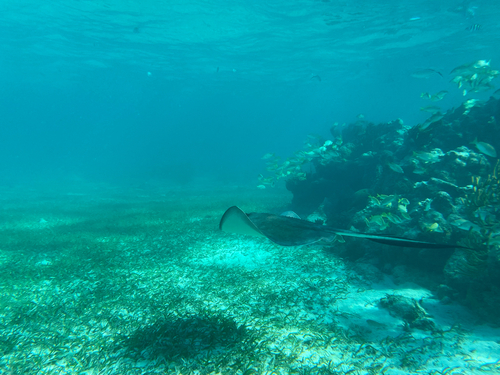
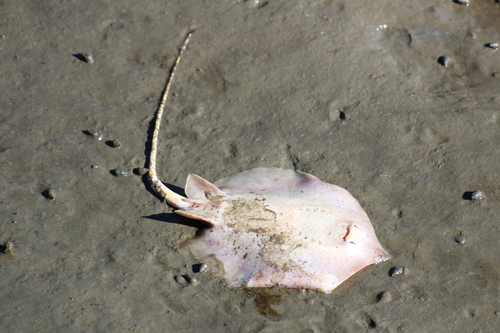
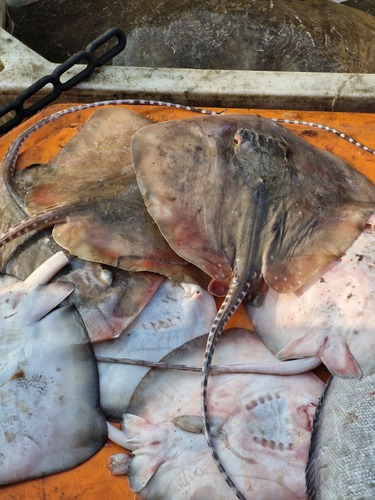
Download Fin's Fish Guide
Identify fish in seconds, log your catches and dives. Join the TestFlight beta.