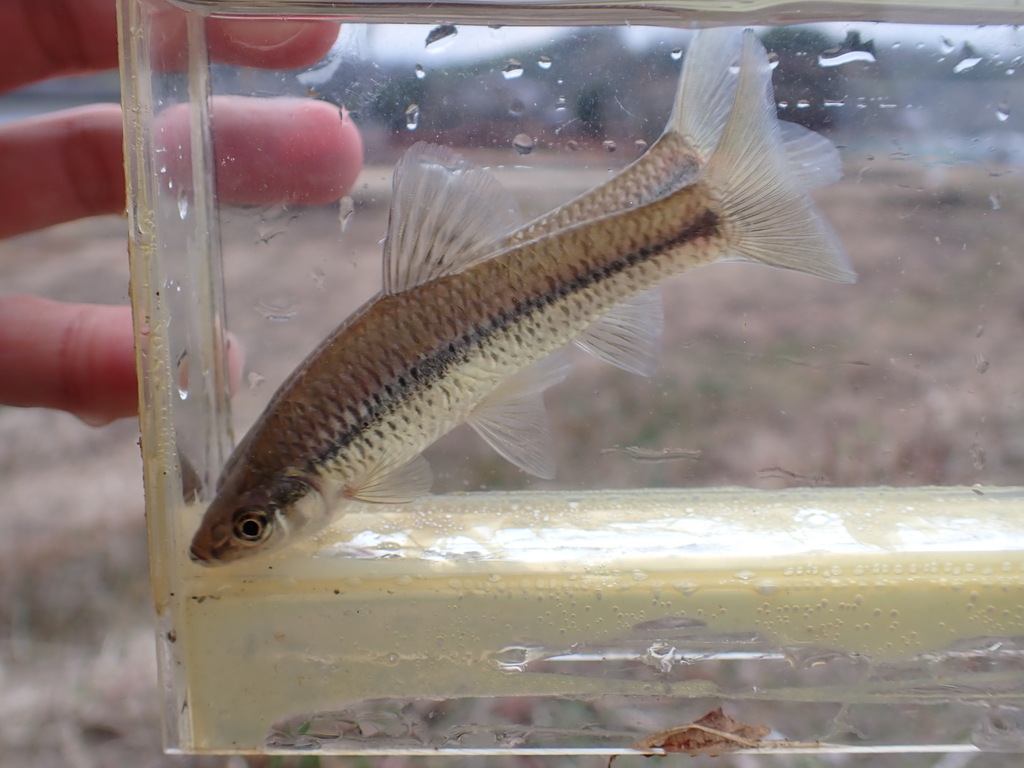
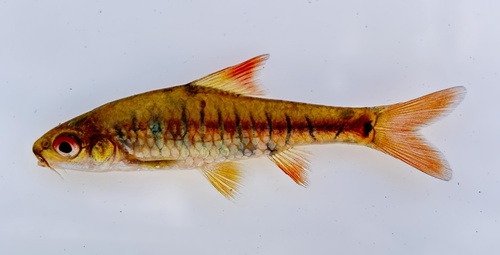
The False razbora (Pseudorasbora parva) is a brackish-water fish of the family Cyprinidae that grows up to 13 cm.
Description
The stone moroko is a small cyprinid (family Cyprinidae) growing to at most 12.5 cm. The slender, silvery-grey body has a superior, upturned mouth; juveniles and females show a dark lateral stripe, while breeding males darken and develop nuptial tubercles. Native to East Asia, the species has been widely introduced across Europe, where it is invasive, can displace native fishes and also spreads a harmful parasite. Males guard the eggs, which adhere to stones, until they hatch. Stone moroko eat small insects, fish eggs, fry and plant material, and the fish has no value as food.
Frequently asked questions
How do you recognise the False razbora?
The False razbora has a torpedo-shaped body, is mainly silver-grey and shows a horizontal stripes pattern.
Where does the False razbora live?
The False razbora lives in brackish water and is mostly found around mixed bottom.
How big does the False razbora get?
The False razbora grows to a maximum of about 13 cm. On average the species is around 8 cm.
Is the False razbora dangerous to humans?
No, the False razbora is harmless to humans.
Is the False razbora edible?
The False razbora is not usually eaten.
Download Fin's Fish Guide
Identify fish in seconds, log your catches and dives. Join the TestFlight beta.
All data
Identification
Appearance
Habitat & distribution
Behaviour & biology
For anglers
Safety
Status & sources
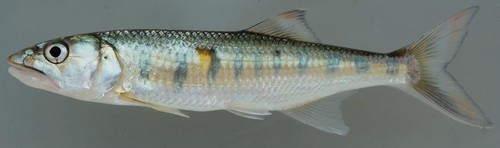
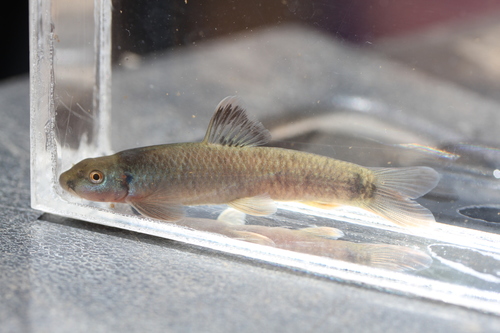
Same genus Pseudorasbora
More from the family Cyprinidae


Download Fin's Fish Guide
Identify fish in seconds, log your catches and dives. Join the TestFlight beta.