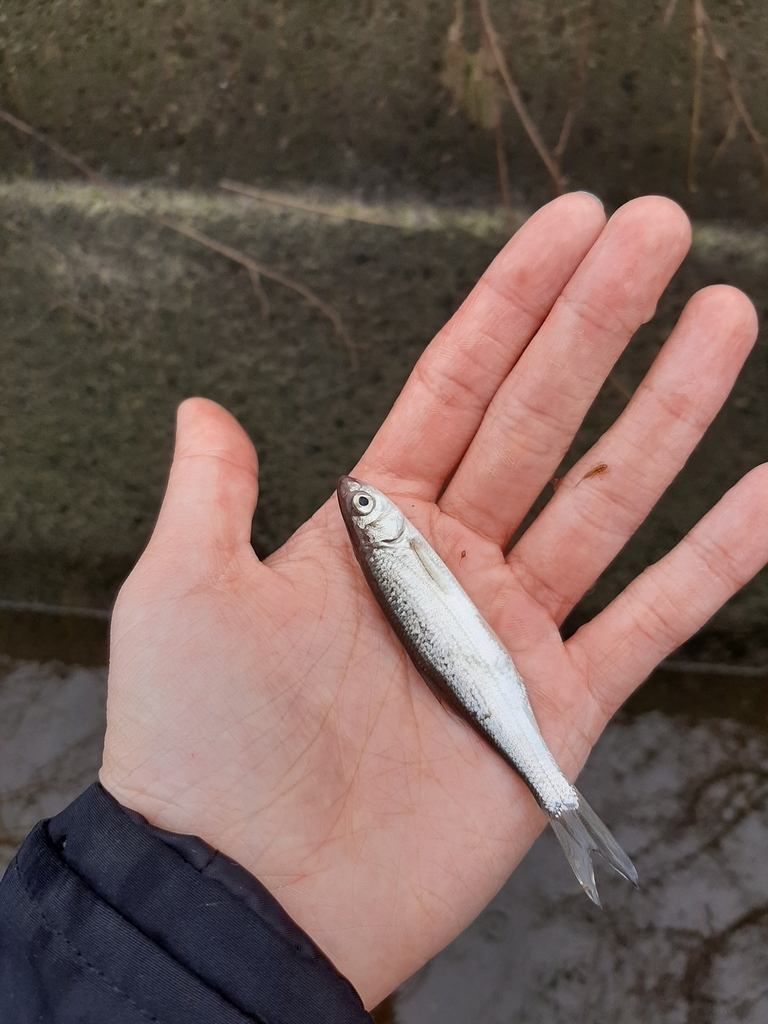
The South European nase (Protochondrostoma genei) is a freshwater fish of the family Cyprinidae that grows up to 30 cm.
Description
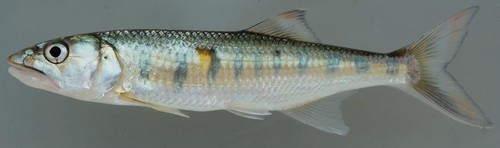
The South European nase, called lasca in Italy, is a slender cyprinid of the family Cyprinidae (Leuciscidae) reaching about 30 cm. The silvery-grey body has an inferior mouth with a straight, horny cutting edge on the lower lip, with which the fish scrapes algae and growth off stones. The species is endemic to the clear, flowing fresh water of northern and central Italy and adjacent Adriatic drainages, with gravel and stone bottoms. In schools it grazes the algal growth (aufwuchs) off the stones. In spring it migrates upstream to spawn on gravel. Through water pollution, water abstraction, river barriers and competition with introduced exotics it has declined sharply and is assessed as Vulnerable (VU); it is the subject of targeted conservation.
Frequently asked questions
How do you recognise the South European nase?
The South European nase has a torpedo-shaped body, is mainly silver-grey and shows a plain pattern.
Where does the South European nase live?
The South European nase lives in fresh water and is mostly found around sand or mud bottom.
How big does the South European nase get?
The South European nase grows to a maximum of about 30 cm. On average the species is around 15 cm.
Is the South European nase dangerous to humans?
No, the South European nase is harmless to humans.
Is the South European nase edible?
The South European nase is rarely eaten.
Download Fin's Fish Guide
Identify fish in seconds, log your catches and dives. Join the TestFlight beta.
All data
Identification
Appearance
Habitat & distribution
Behaviour & biology
For anglers
Safety
Status & sources
More from the family Cyprinidae


Download Fin's Fish Guide
Identify fish in seconds, log your catches and dives. Join the TestFlight beta.