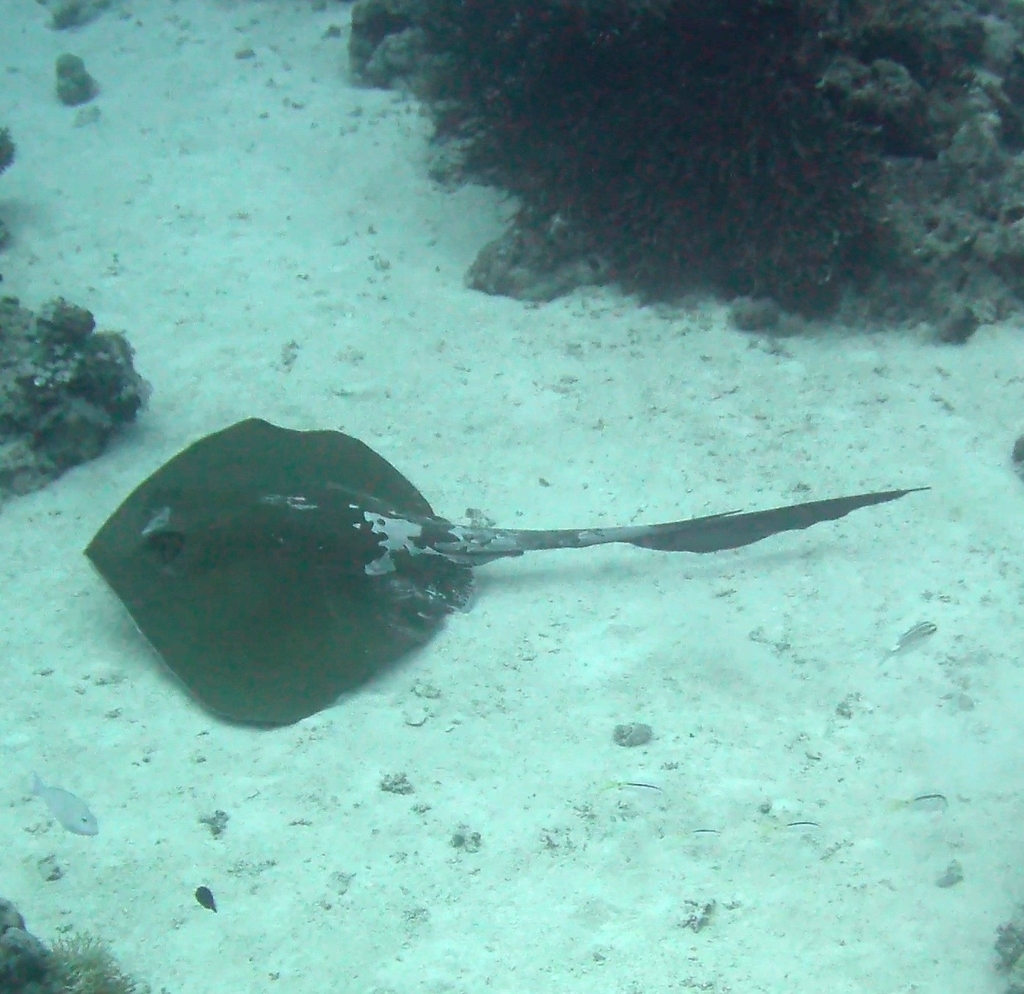
The Banana-tail ray (Pastinachus sephen) is a fish that lives in both fresh and salt water of the family Dasyatidae that grows up to 183 cm.
Description
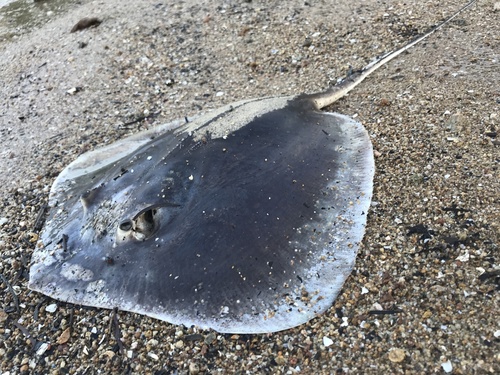
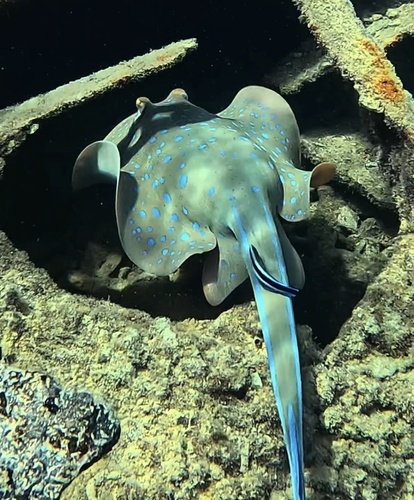
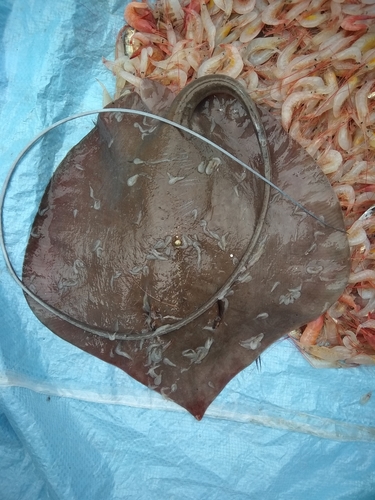
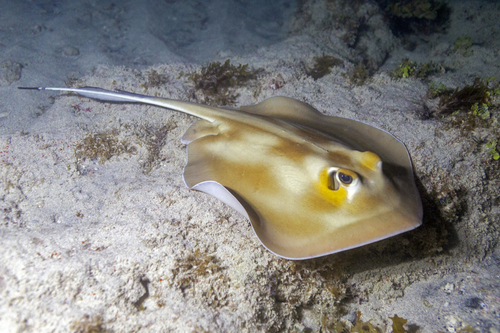
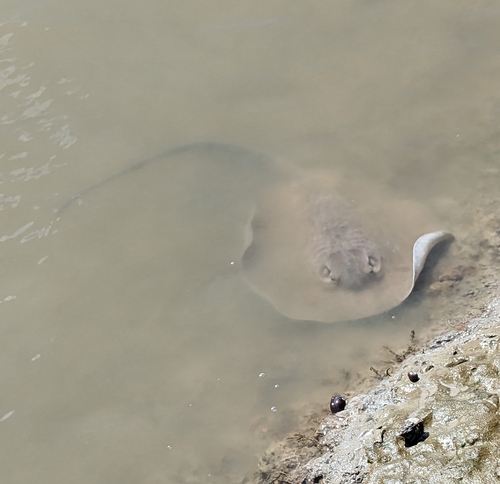
The cowtail stingray is a large stingray from the Indo-West Pacific, also in estuaries and river mouths. The species grows to about 1.8 metres wide and has a rhomboid, dark disc body and a long tail with a conspicuous, broad skin flap (the 'cowtail') behind the venomous spine. As a bottom-dweller it lies buried on sandy and muddy bottoms and eats crustaceans, molluscs and worms. In the tail it carries a serrated venomous spine that gives serious sting wounds. The IUCN status varies; often considered near threatened.
Frequently asked questions
How do you recognise the Banana-tail ray?
The Banana-tail ray has an irregular in shape body, is mainly black and shows a plain pattern.
Where does the Banana-tail ray live?
The Banana-tail ray lives in both fresh and salt water and is mostly found around stony or rocky ground.
How big does the Banana-tail ray get?
The Banana-tail ray grows to a maximum of about 183 cm. On average the species is around 65 cm.
Is the Banana-tail ray dangerous to humans?
The Banana-tail ray is venomous — handle spines with care and seek medical help after a sting if needed.
Is the Banana-tail ray edible?
The Banana-tail ray is rarely eaten.
Download Fin's Fish Guide
Identify fish in seconds, log your catches and dives. Join the TestFlight beta.
All data
Identification
Appearance
Habitat & distribution
Behaviour & biology
For anglers
Safety
Status & sources
More from the family Dasyatidae
Download Fin's Fish Guide
Identify fish in seconds, log your catches and dives. Join the TestFlight beta.