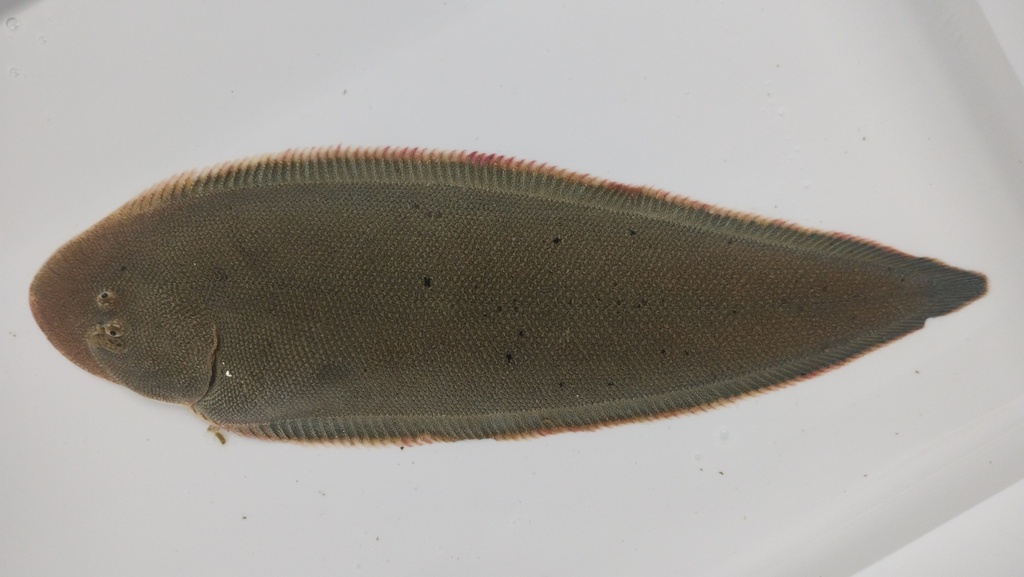
The Black cow-tongue (Paraplagusia japonica) is a saltwater fish of the family Cynoglossidae that grows up to 36 cm.
Description
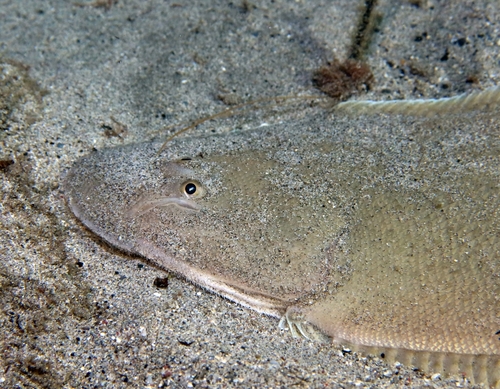
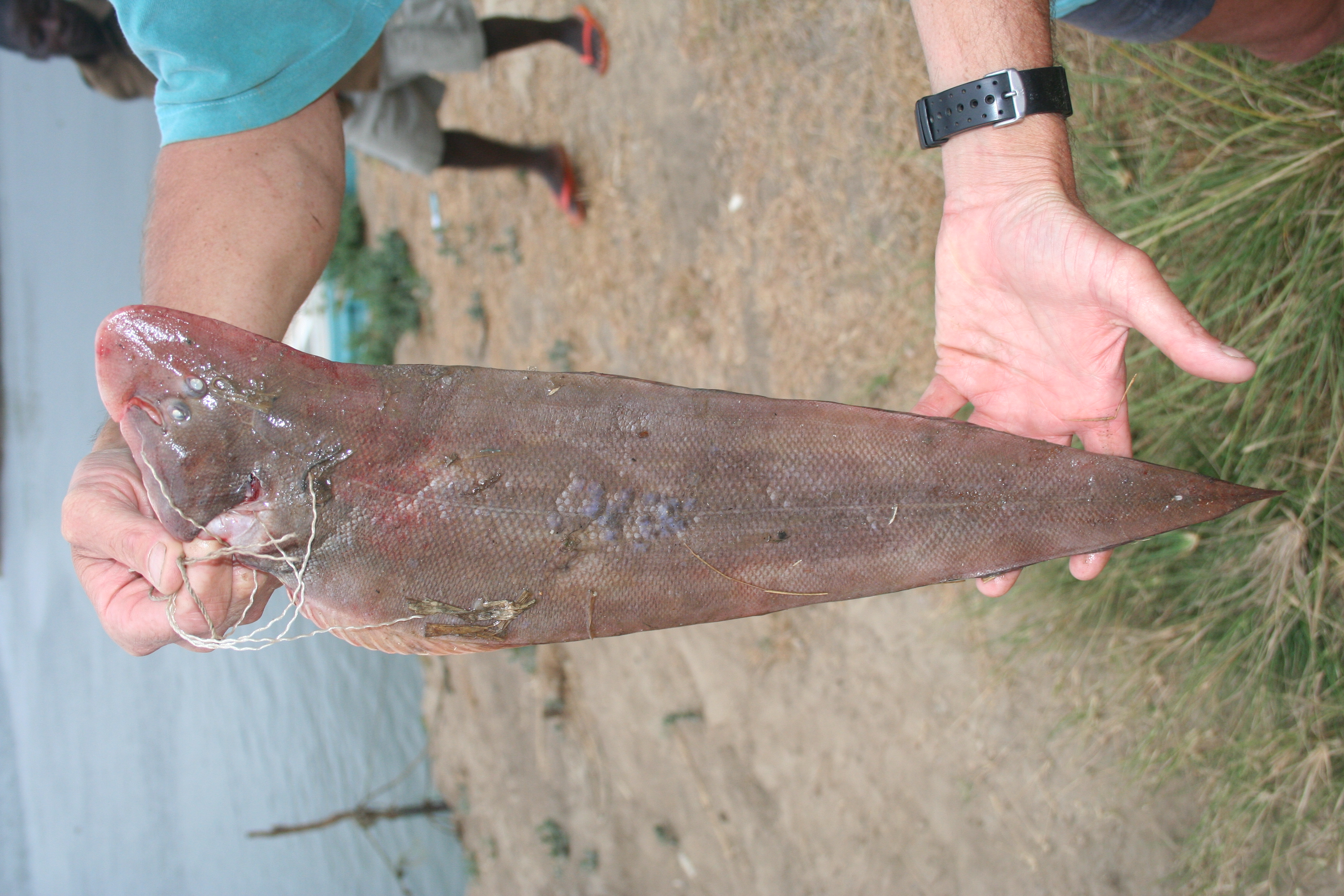
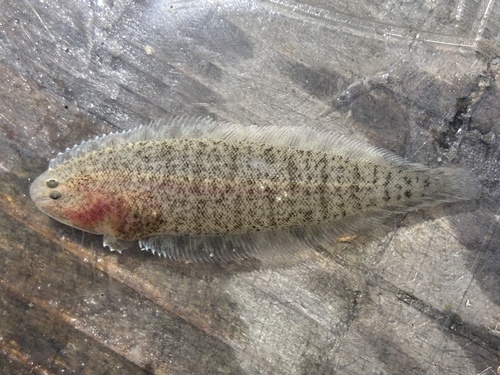
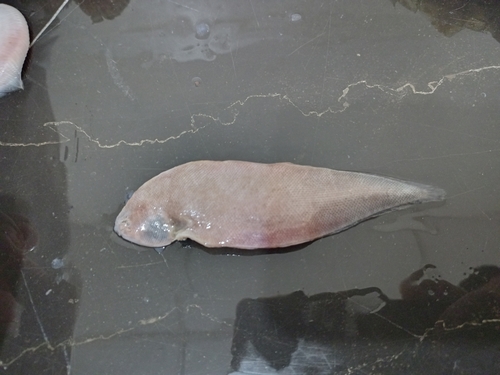
The Japanese tongue sole is a tongue sole from the northwest Pacific, off Japan, Korea and China. The species grows to about 36 cm and has a strongly flattened, tongue-shaped, dark-brown body with both eyes on the same side and fringed lips. As a bottom-dweller it lies half-buried in sand and mud bottoms of coastal water, between about 20 and 65 metres, and searches for small worms and crustaceans. It is a valued food fish. The IUCN has not evaluated the species.
Frequently asked questions
How do you recognise the Black cow-tongue?
The Black cow-tongue has an elongate, eel-like body, is mainly brown and shows a plain pattern.
Where does the Black cow-tongue live?
The Black cow-tongue lives in the sea (marine waters) and is mostly found around sand or mud bottom.
How big does the Black cow-tongue get?
The Black cow-tongue grows to a maximum of about 36 cm.
Is the Black cow-tongue dangerous to humans?
No, the Black cow-tongue is harmless to humans.
Is the Black cow-tongue edible?
Yes, the Black cow-tongue is commonly eaten.
Download Fin's Fish Guide
Identify fish in seconds, log your catches and dives. Join the TestFlight beta.
All data
Identification
Appearance
Habitat & distribution
Behaviour & biology
For anglers
Safety
Status & sources
Same genus Paraplagusia


More from the family Cynoglossidae


Download Fin's Fish Guide
Identify fish in seconds, log your catches and dives. Join the TestFlight beta.