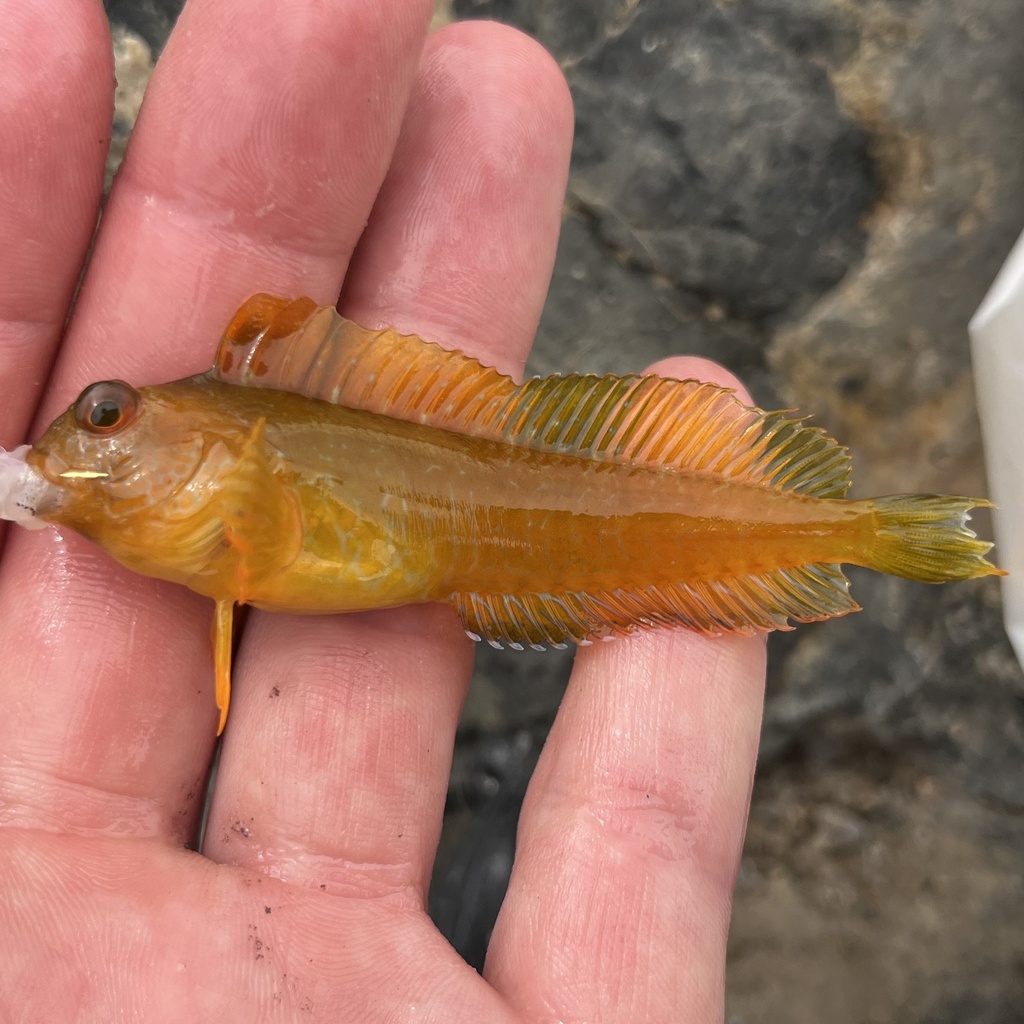
The Ringneck blenny (Parablennius pilicornis) is a saltwater fish of the family Blenniidae that grows up to 13 cm.
Description
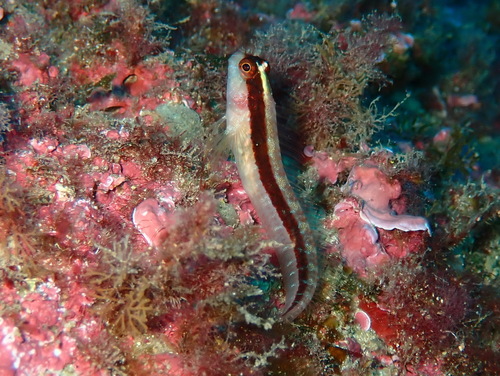
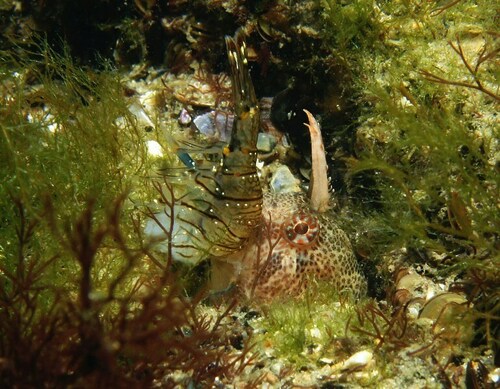
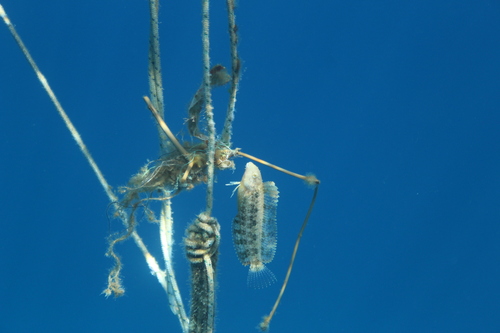
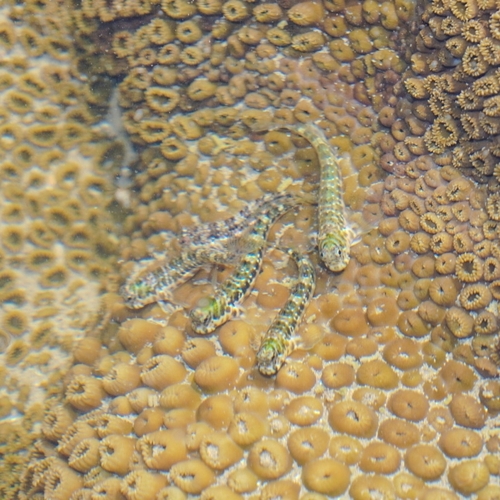
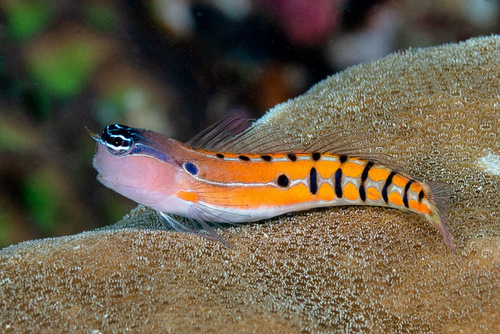
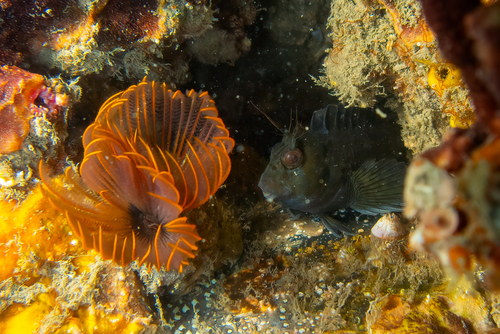
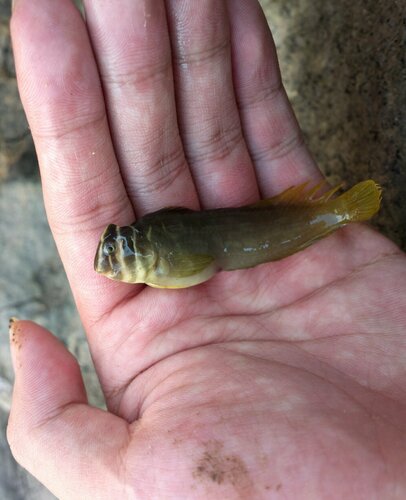
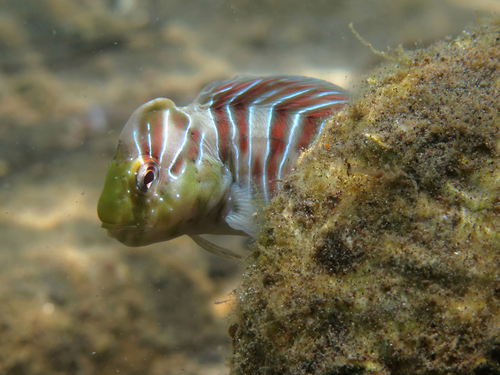
The ringneck blenny is a small, scaleless rock fish of the family Blenniidae reaching about 13 cm. Above each eye the fish bears a small feathery skin flap; the colour is strikingly variable, occurring in dark, yellow and striped forms, sometimes with a dark band across the neck. The species lives on shallow rocky shores of the eastern Atlantic and the Mediterranean, and is also found in other warm seas. As a bottom-dweller it grazes on algae and small invertebrates among the stones. The male defends a territory and guards the eggs laid in a cavity or crevice until they hatch. Because of its small size it has no fishery importance, but it is a common sight on rocky shores.
Frequently asked questions
How do you recognise the Ringneck blenny?
The Ringneck blenny has a torpedo-shaped body, is mainly brown and shows a plain pattern.
Where does the Ringneck blenny live?
The Ringneck blenny lives in the sea (marine waters) and is mostly found around sand or mud bottom.
How big does the Ringneck blenny get?
The Ringneck blenny grows to a maximum of about 13 cm.
Is the Ringneck blenny dangerous to humans?
No, the Ringneck blenny is harmless to humans.
Is the Ringneck blenny edible?
The Ringneck blenny is not usually eaten.
Download Fin's Fish Guide
Identify fish in seconds, log your catches and dives. Join the TestFlight beta.
All data
Identification
Appearance
Habitat & distribution
Behaviour & biology
For anglers
Safety
Status & sources
Same genus Parablennius
More from the family Blenniidae
Download Fin's Fish Guide
Identify fish in seconds, log your catches and dives. Join the TestFlight beta.