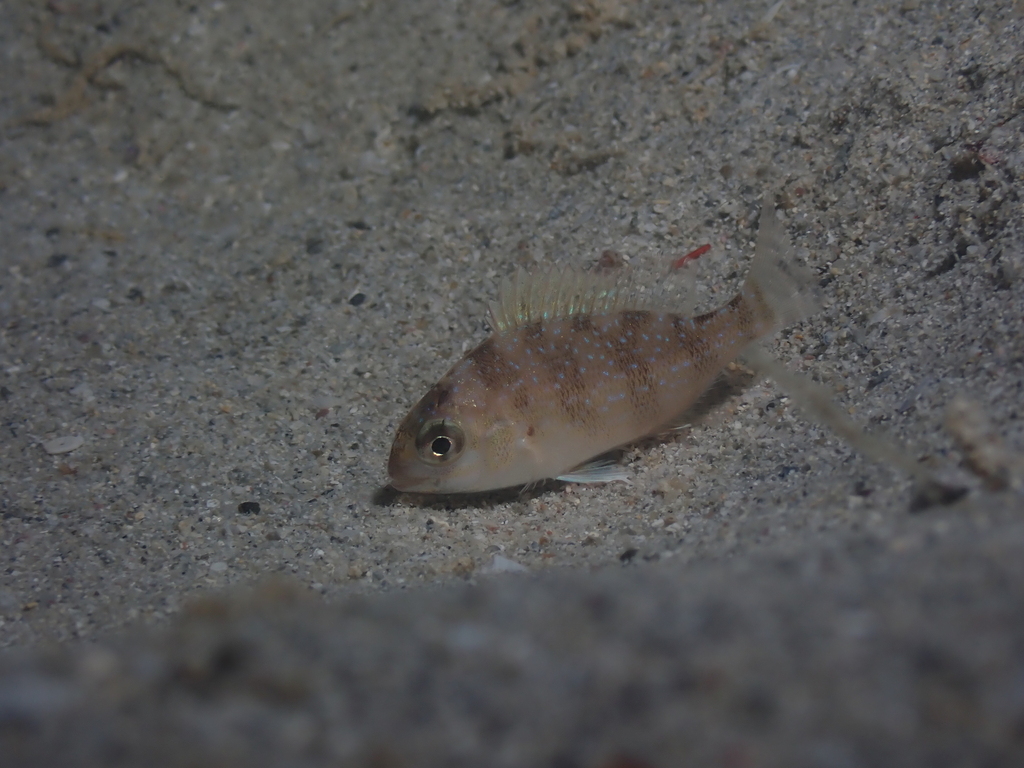
The Common sea bream (Pagrus pagrus) is a saltwater fish of the family Sparidae that grows up to 91 cm.
Description
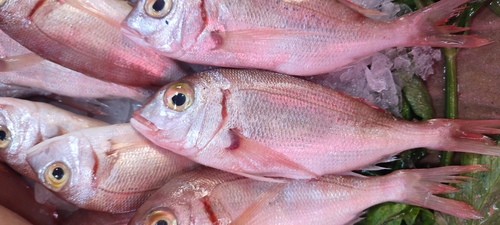
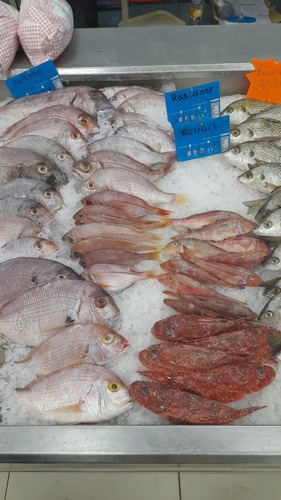
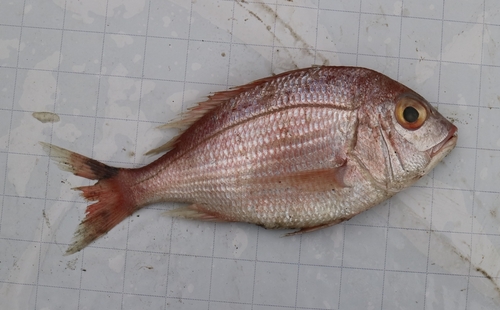
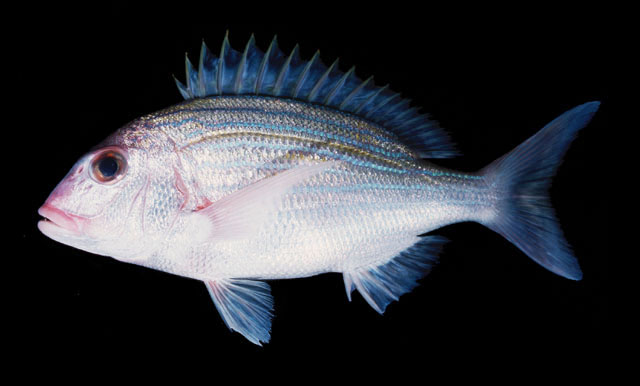
The red porgy is a prized sea bream of the family Sparidae reaching about 91 cm. The body is pink with silvery reflections, paler on the belly, and the head is darker from nape to mouth. The jaws carry strong canine teeth. The species is a protogynous hermaphrodite: individuals begin as females and change into males at around three years old. It lives over rock, rubble and sand bottoms in the eastern Atlantic and Mediterranean, feeding on crustaceans, fish and molluscs. The red porgy is a highly valued food fish and can locally cause ciguatera poisoning when eaten.
Frequently asked questions
How do you recognise the Common sea bream?
The Common sea bream has a torpedo-shaped body, is mainly pink-purple and shows a plain pattern.
Where does the Common sea bream live?
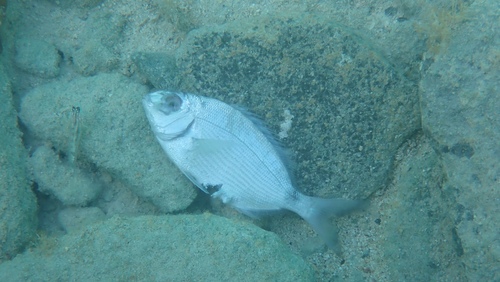
The Common sea bream lives in the sea (marine waters) and is mostly found around mixed bottom.
How big does the Common sea bream get?
The Common sea bream grows to a maximum of about 91 cm. On average the species is around 35 cm.
Is the Common sea bream dangerous to humans?
The Common sea bream is venomous — handle spines with care and seek medical help after a sting if needed.
Is the Common sea bream edible?
Yes, the Common sea bream is a highly prized food fish.
Download Fin's Fish Guide
Identify fish in seconds, log your catches and dives. Join the TestFlight beta.
All data
Identification
Appearance
Habitat & distribution
Behaviour & biology
For anglers
Safety
Status & sources
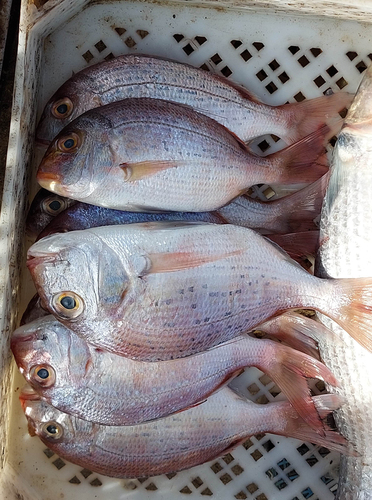
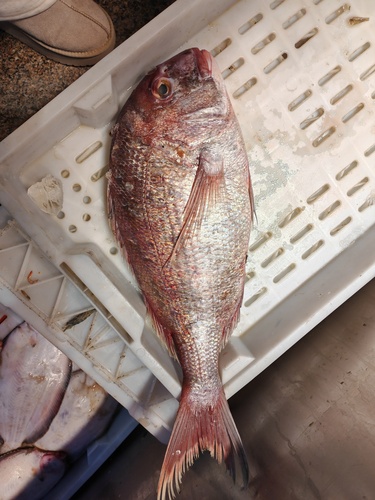
Same genus Pagrus
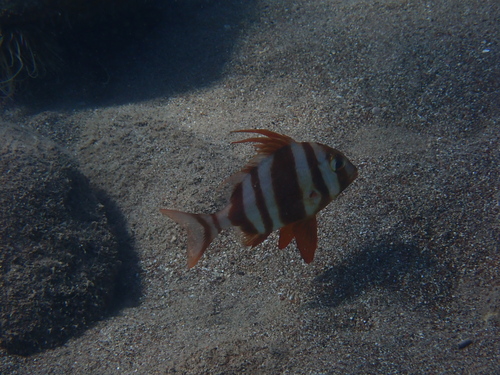
More from the family Sparidae


Download Fin's Fish Guide
Identify fish in seconds, log your catches and dives. Join the TestFlight beta.