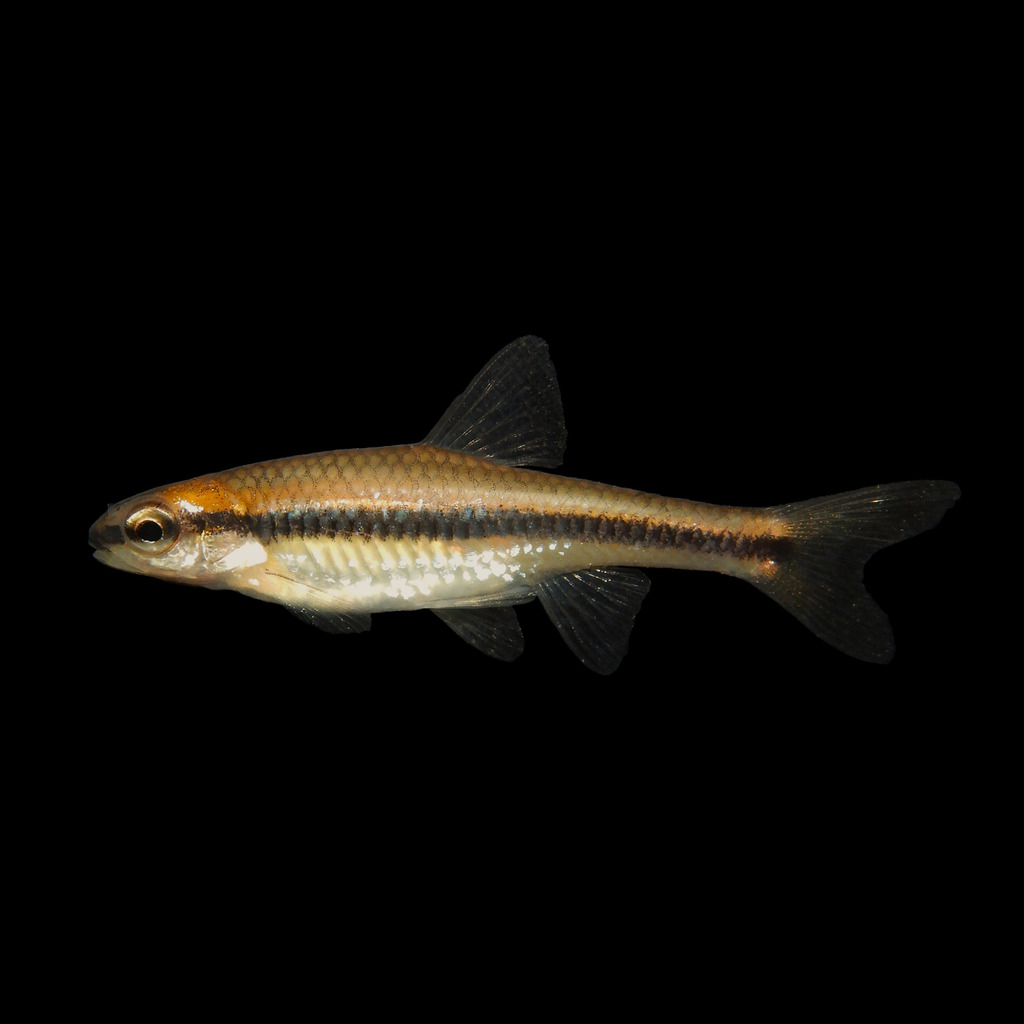
The Bridle shiner (Notropis bifrenatus) is a freshwater fish of the family Cyprinidae that grows up to 7 cm.
Description
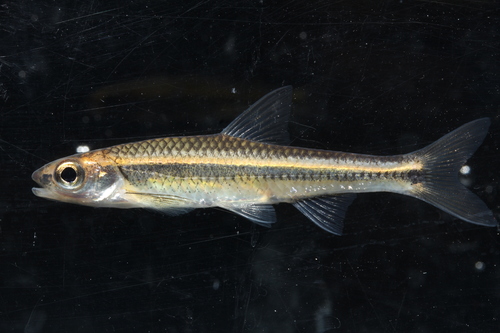
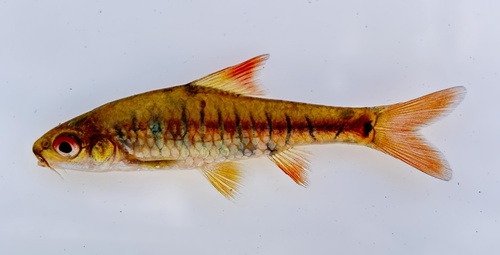
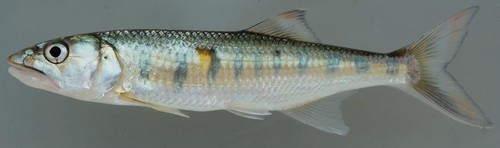
The bridle shiner is a small North American cyprinid. The species grows to only about 6 cm and has a slender, silvery body with a conspicuous dark lateral band from the snout to the tail. It inhabits ponds, lakes and sluggish, mud-bottomed pools of creeks and small to medium rivers, often among water plants. As a small schooling fish it feeds on small crustaceans and insects. The bridle shiner is sensitive to turbidity and habitat loss, so populations decline locally. Owing to its small size the species has no fishery value and is harmless to humans.
Frequently asked questions
How do you recognise the Bridle shiner?
The Bridle shiner has an elongate, eel-like body, is mainly silver-grey and shows a horizontal stripes pattern.
Where does the Bridle shiner live?
The Bridle shiner lives in fresh water and is mostly found around mixed bottom.
How big does the Bridle shiner get?
The Bridle shiner grows to a maximum of about 7 cm.
Is the Bridle shiner dangerous to humans?
No, the Bridle shiner is harmless to humans.
Is the Bridle shiner edible?
The Bridle shiner is not usually eaten.
Download Fin's Fish Guide
Identify fish in seconds, log your catches and dives. Join the TestFlight beta.
All data
Identification
Appearance
Habitat & distribution
Behaviour & biology
For anglers
Safety
Status & sources
Same genus Notropis

More from the family Cyprinidae


Download Fin's Fish Guide
Identify fish in seconds, log your catches and dives. Join the TestFlight beta.