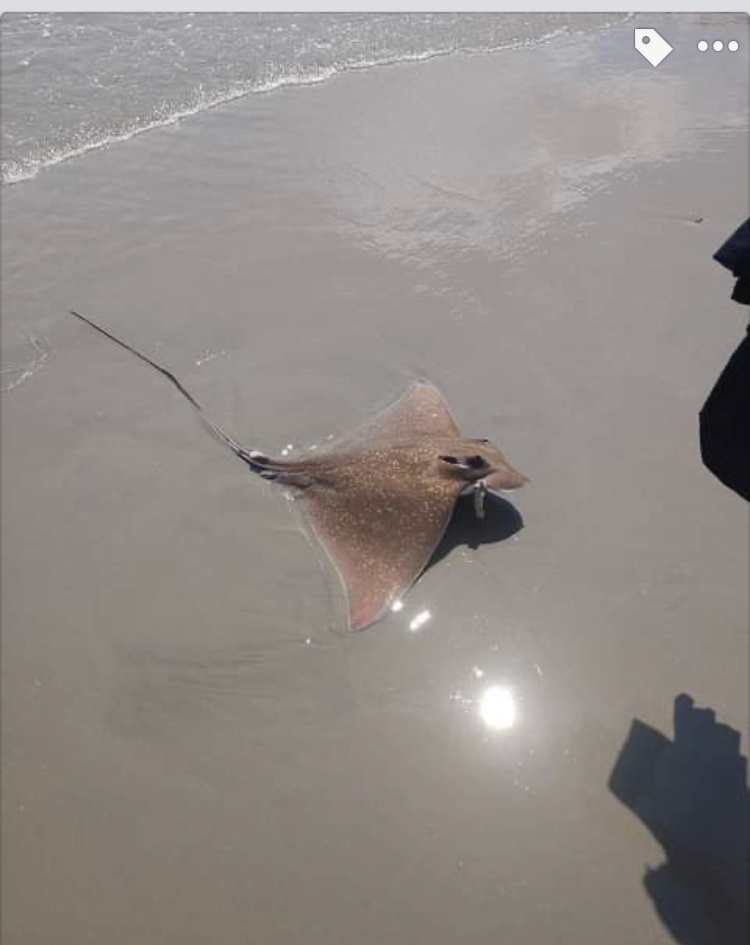
The Blue-nosed ray (Myliobatis freminvillei) is a brackish-water fish of the family Myliobatidae that grows up to 129 cm.
Description
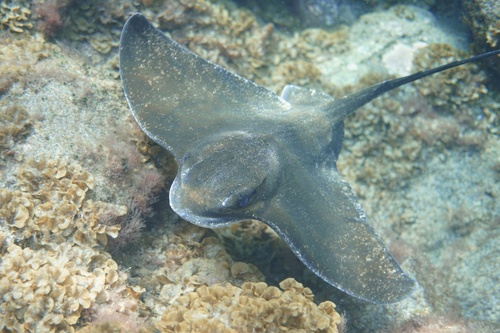
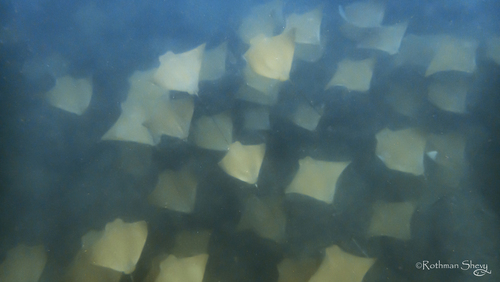
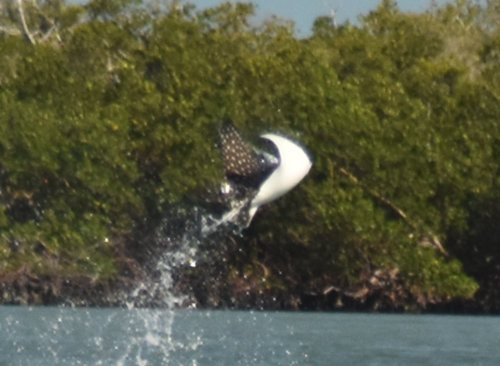
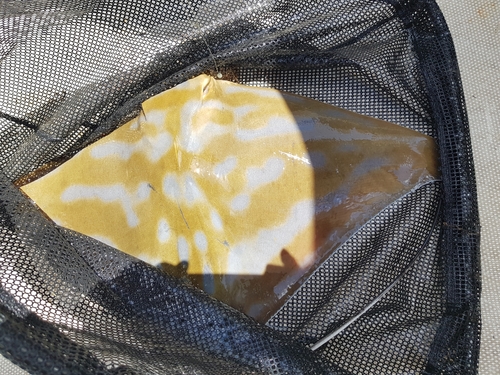
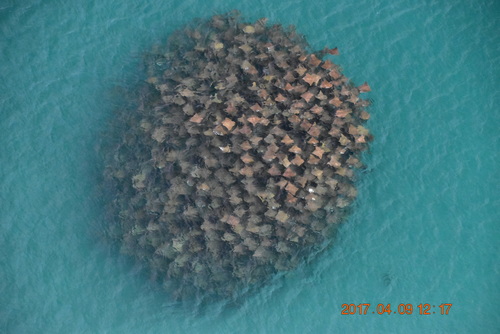
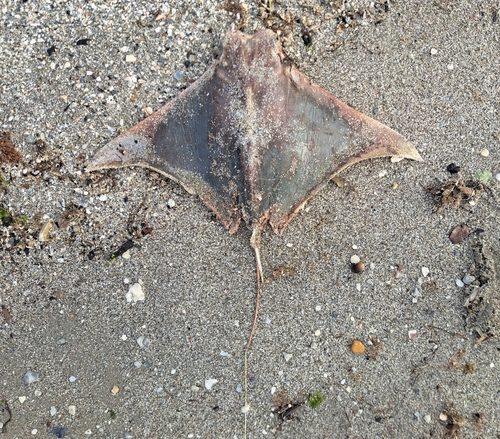
The bullnose eagle ray is an eagle ray (Myliobatidae) from the western Atlantic Ocean. The species has a broad, rhomboid, wing-like body disc and a blunt, projecting head, to which the name refers, behind which is a long, whip-like tail with a serrated, venomous spine. It frequently occurs in shallow coastal waters and estuaries to about 10 m deep, can travel long distances and sometimes leaps from the water. With its flat crushing teeth it crushes shellfish and crustaceans on the bottom. Owing to fishing the species is considered vulnerable. The tail spine can inflict a deep, very painful sting.
Frequently asked questions
How do you recognise the Blue-nosed ray?
The Blue-nosed ray has an irregular in shape body, is mainly brown and shows a plain pattern.
Where does the Blue-nosed ray live?
The Blue-nosed ray lives in brackish water and is mostly found around mixed bottom.
How big does the Blue-nosed ray get?
The Blue-nosed ray grows to a maximum of about 129 cm. On average the species is around 70 cm.
Is the Blue-nosed ray dangerous to humans?
No, the Blue-nosed ray is harmless to humans.
Is the Blue-nosed ray edible?
The Blue-nosed ray is rarely eaten.
Download Fin's Fish Guide
Identify fish in seconds, log your catches and dives. Join the TestFlight beta.
All data
Identification
Appearance
Habitat & distribution
Behaviour & biology
For anglers
Safety
Status & sources
Same genus Myliobatis
More from the family Myliobatidae
Download Fin's Fish Guide
Identify fish in seconds, log your catches and dives. Join the TestFlight beta.