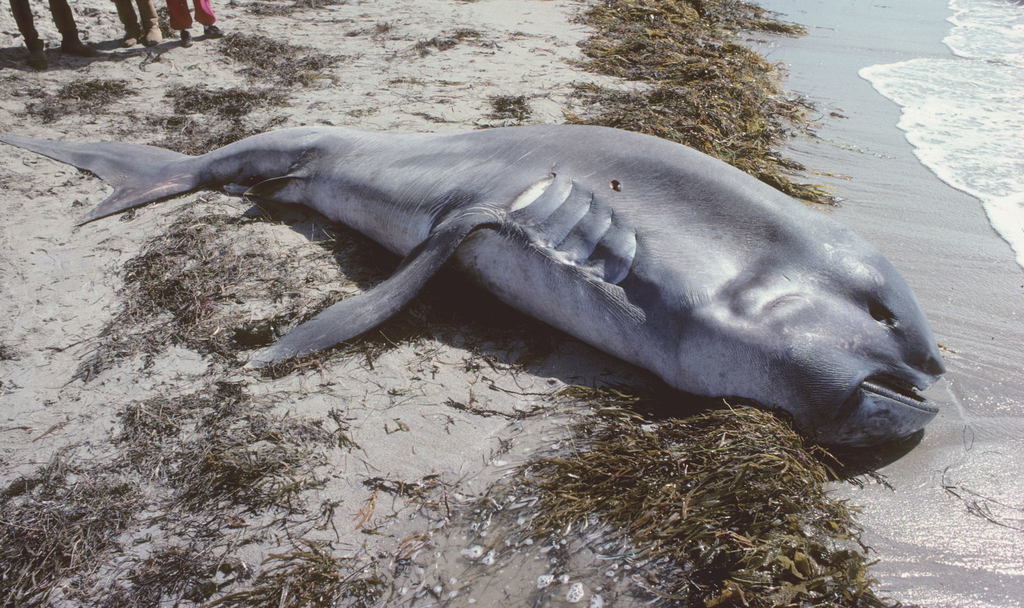
The Megamouth shark (Megachasma pelagios) is a saltwater fish of the family Megachasmidae that grows up to 549 cm.
Description
The megamouth shark is a very rare, large deep-sea shark (Megachasmidae) that occurs widely in tropical and temperate oceans but is rarely seen. The species grows to about 5.5 metres and has a sluggish, dark-grey body with an enormous, broad mouth and soft, rubbery lips. Like only two other sharks it is a filter feeder: it swims through the water column with its mouth open and strains small crustaceans and jellyfish. It migrates daily between deep and shallower water. The fish is harmless to humans.
Frequently asked questions
How do you recognise the Megamouth shark?
The Megamouth shark has an elongate, eel-like body and is mainly silver-grey.
Where does the Megamouth shark live?
The Megamouth shark lives in the sea (marine waters) and is mostly found around open water.
How big does the Megamouth shark get?
The Megamouth shark grows to a maximum of about 549 cm.
Is the Megamouth shark dangerous to humans?
No, the Megamouth shark is harmless to humans.
Download Fin's Fish Guide
Identify fish in seconds, log your catches and dives. Join the TestFlight beta.
All data
Identification
Appearance
Habitat & distribution
Behaviour & biology
For anglers
Safety
Status & sources
Download Fin's Fish Guide
Identify fish in seconds, log your catches and dives. Join the TestFlight beta.