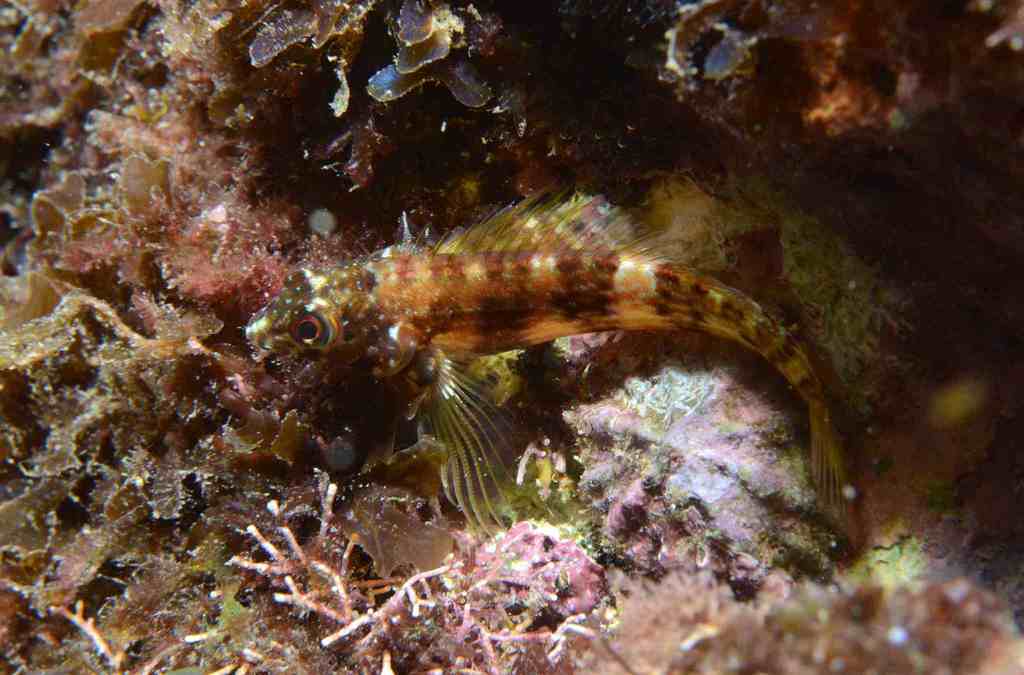
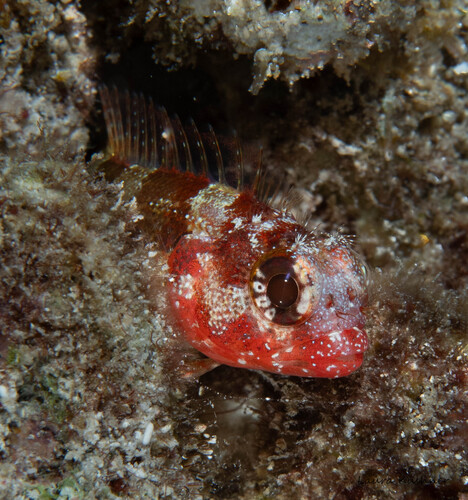
The Goldline blenny (Malacoctenus aurolineatus) is a saltwater fish of the family Labrisomidae that grows up to 6 cm.
Description
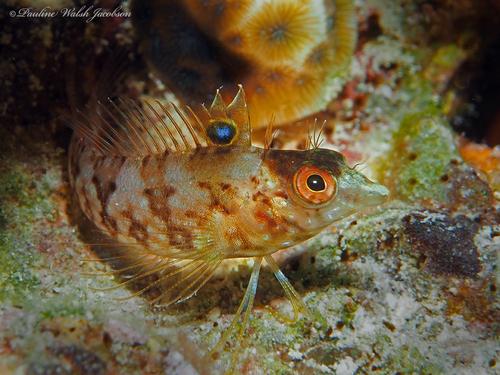
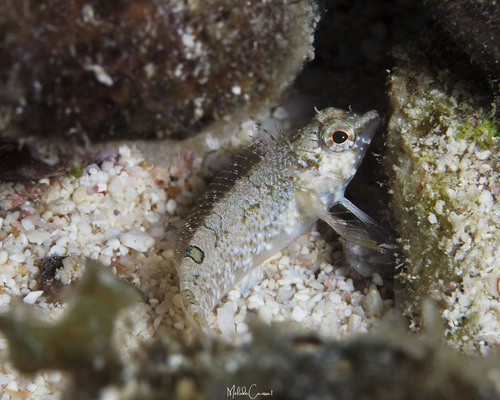
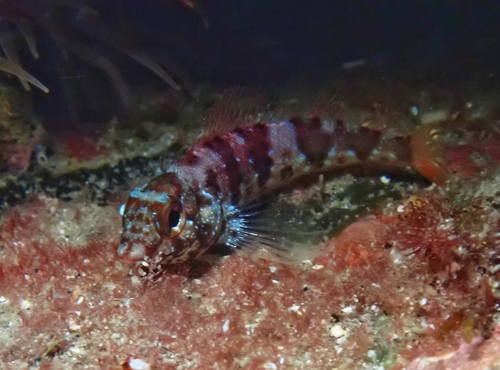
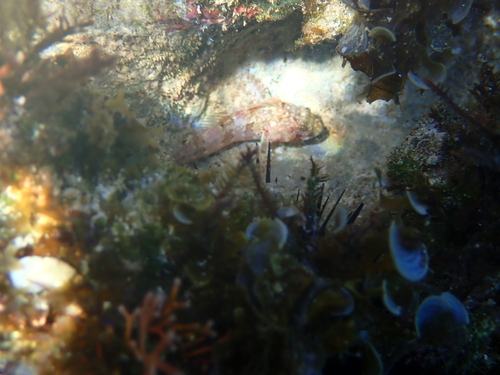
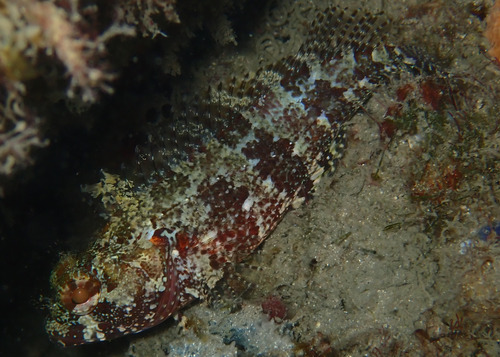
The goldline blenny is a small bottom fish of the scaled blenny family (Labrisomidae) from the western Atlantic and Caribbean. The species grows to about 6 cm and has a mottled body with fine golden lines and skin flaps (cirri) above the eyes. It inhabits areas of limestone, rubble and coral, often near sea anemones, where it shelters among the substrate. As a small bottom predator it feeds on small crustaceans and other invertebrates. Owing to its camouflage and small size it is barely noticed. The species is harmless to humans.
Frequently asked questions
How do you recognise the Goldline blenny?
The Goldline blenny has a torpedo-shaped body, is mainly brown and shows a marbled pattern.
Where does the Goldline blenny live?
The Goldline blenny lives in the sea (marine waters) and is mostly found around stony or rocky ground.
How big does the Goldline blenny get?
The Goldline blenny grows to a maximum of about 6 cm.
Is the Goldline blenny dangerous to humans?
No, the Goldline blenny is harmless to humans.
Is the Goldline blenny edible?
The Goldline blenny is not usually eaten.
Download Fin's Fish Guide
Identify fish in seconds, log your catches and dives. Join the TestFlight beta.
All data
Identification
Appearance
Habitat & distribution
Behaviour & biology
For anglers
Safety
Status & sources
Same genus Malacoctenus
More from the family Labrisomidae
Download Fin's Fish Guide
Identify fish in seconds, log your catches and dives. Join the TestFlight beta.