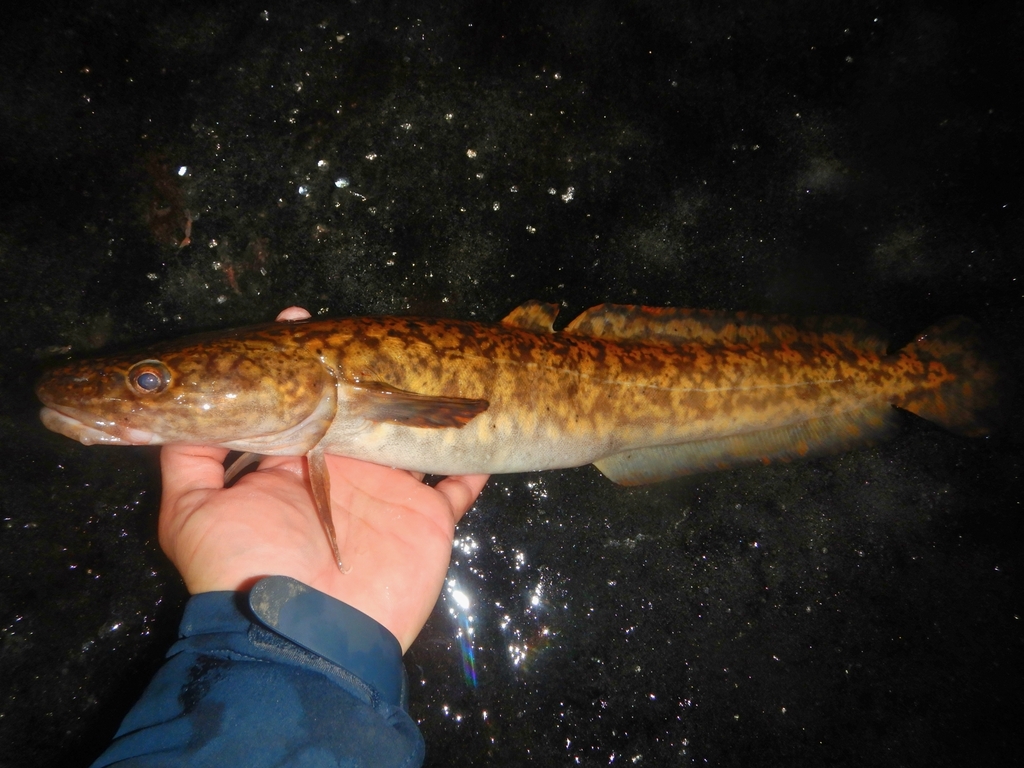
The Burbot (Lota lota) is a brackish-water fish of the family Lotidae that grows up to 152 cm.
Description
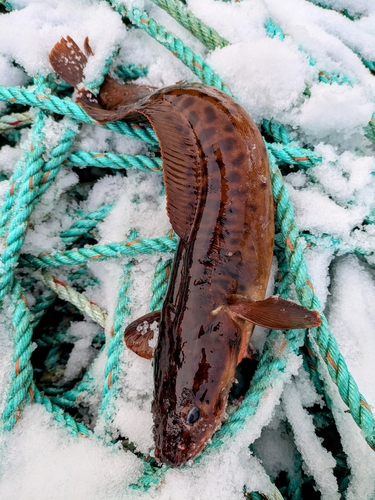
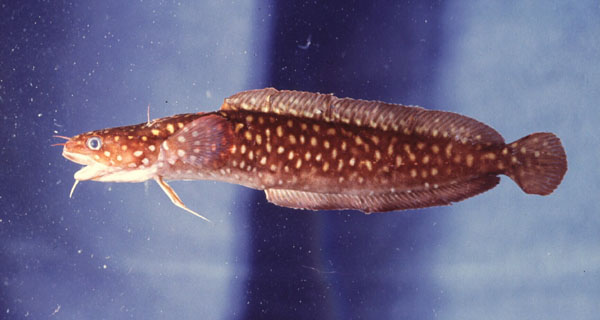
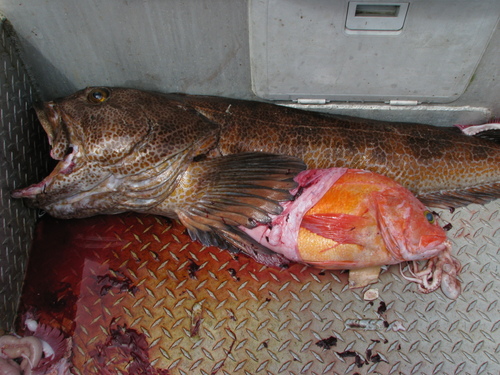
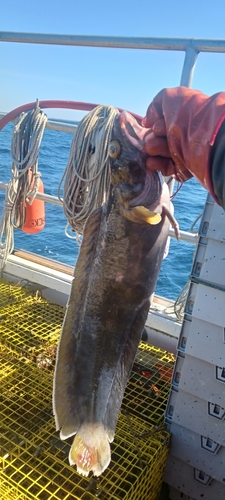
The burbot is the only freshwater member of the cod order and belongs to the family Lotidae; it reaches about 150 cm but usually stays much smaller. The elongate, eel-like body is yellow-brown and darkly mottled, with a broad flat head, a single barbel under the chin, a short first and a long second dorsal fin and a rounded tail. The species lives in cool, oxygen-rich rivers and lakes of the northern hemisphere and is active at night; by day it shelters under stones, roots and banks. As a predator it hunts fish, crayfish and insect larvae. Notably, the burbot spawns in midwinter under the ice. In the Netherlands it has become rare.
Frequently asked questions
How do you recognise the Burbot?
The Burbot has an elongate, eel-like body, is mainly brown and shows a marbled pattern.
Where does the Burbot live?
The Burbot lives in brackish water and is mostly found around sand or mud bottom.
How big does the Burbot get?
The Burbot grows to a maximum of about 152 cm. On average the species is around 40 cm.
Is the Burbot dangerous to humans?
No, the Burbot is harmless to humans.
Is the Burbot edible?
Yes, the Burbot is commonly eaten.
Download Fin's Fish Guide
Identify fish in seconds, log your catches and dives. Join the TestFlight beta.
All data
Identification
Appearance
Habitat & distribution
Behaviour & biology
For anglers
Safety
Status & sources
More from the family Lotidae
Download Fin's Fish Guide
Identify fish in seconds, log your catches and dives. Join the TestFlight beta.