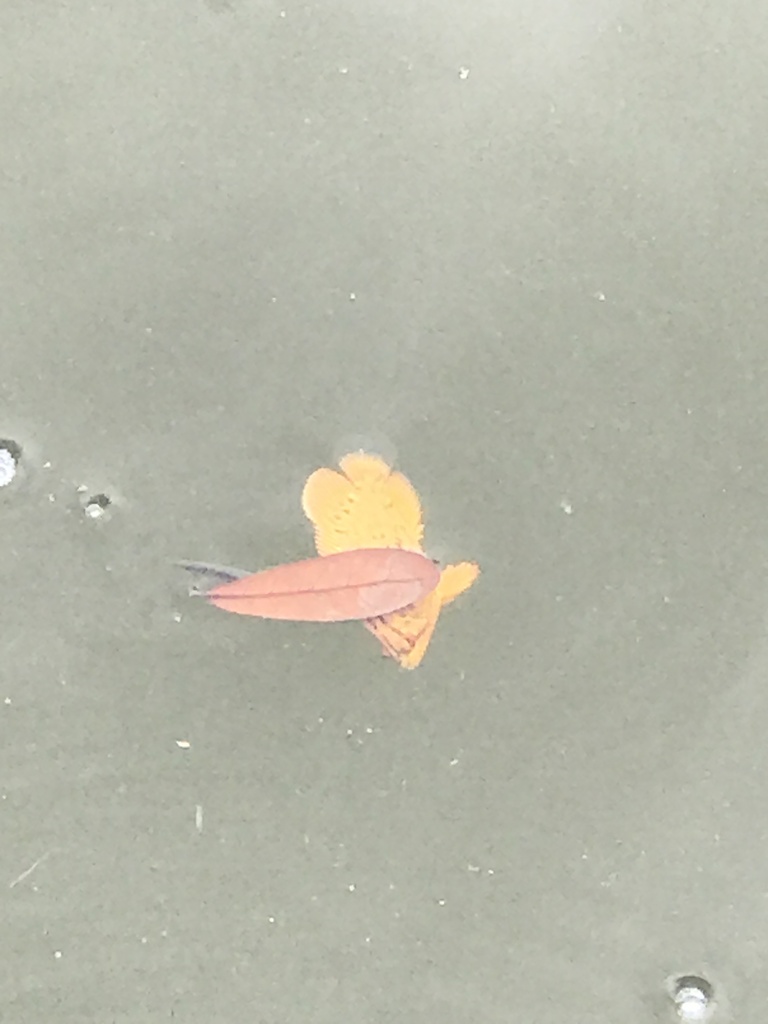
The Atlantic tripletail (Lobotes surinamensis) is a brackish-water fish of the family Lobotidae that grows up to 110 cm.
Description
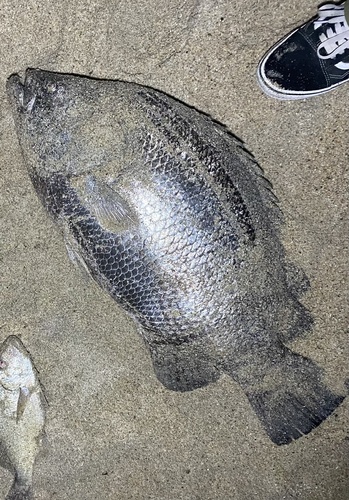
The Atlantic tripletail is a coastal fish (Lobotidae) from warm parts of the Atlantic Ocean. The species grows to about 1 metre and has a deep, brownish body whose rounded dorsal and anal fins, together with the tail, appear to form a 'triple tail'. Juveniles drift at an angle like a dead leaf among floating weed. As a predator it lives around wrecks, buoys and floating debris and hunts fish and crustaceans. It is a valued food fish. The fish is harmless to humans.
Frequently asked questions
How do you recognise the Atlantic tripletail?
The Atlantic tripletail has a flattened, disc-shaped body.
Where does the Atlantic tripletail live?
The Atlantic tripletail lives in brackish water and is mostly found around mixed bottom.
How big does the Atlantic tripletail get?
The Atlantic tripletail grows to a maximum of about 110 cm. On average the species is around 80 cm.
Is the Atlantic tripletail dangerous to humans?
No, the Atlantic tripletail is harmless to humans.
Is the Atlantic tripletail edible?
Yes, the Atlantic tripletail is commonly eaten.
Download Fin's Fish Guide
Identify fish in seconds, log your catches and dives. Join the TestFlight beta.
All data
Identification
Appearance
Habitat & distribution
Behaviour & biology
For anglers
Safety
Status & sources
Same genus Lobotes
More from the family Lobotidae
Download Fin's Fish Guide
Identify fish in seconds, log your catches and dives. Join the TestFlight beta.