
The Leaping mullet (Liza saliens) is a fish that lives in both fresh and salt water of the family Mugilidae that grows up to 40 cm.
Description
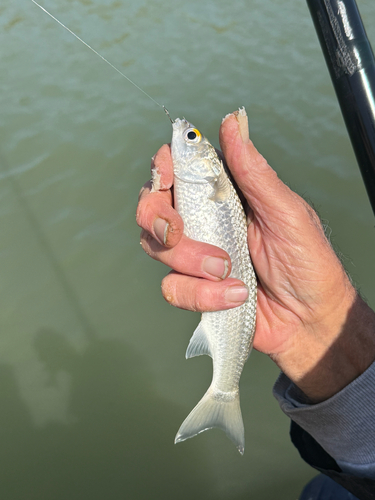
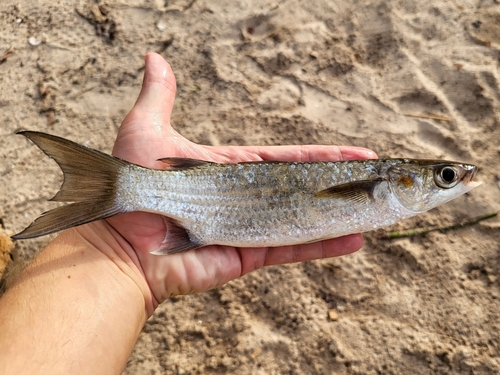
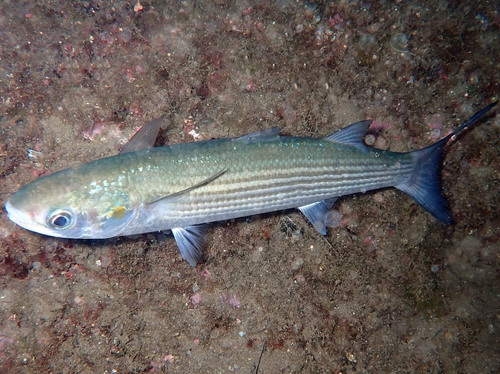
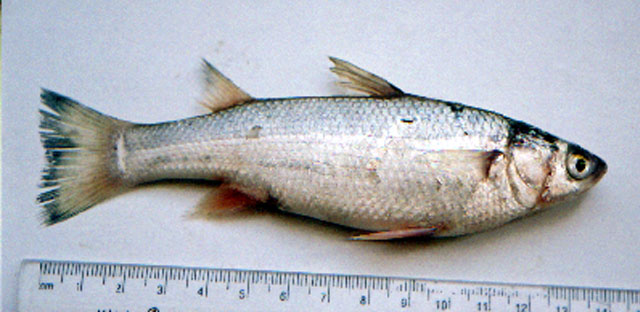
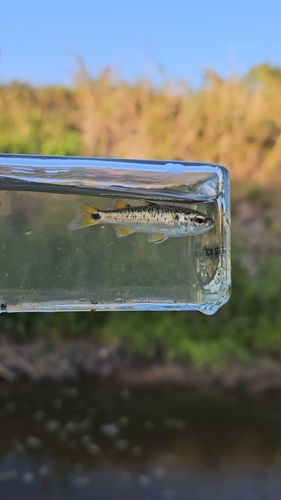
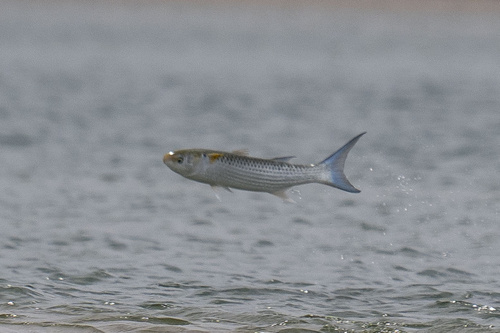
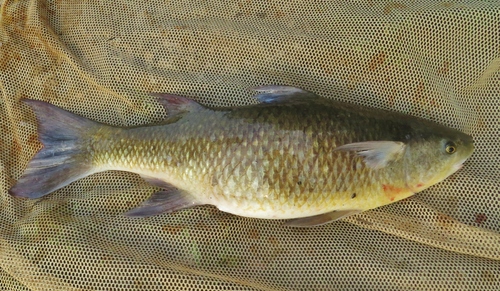
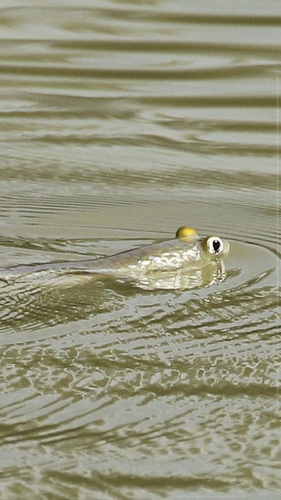
The leaping mullet is a slender mullet of the family Mugilidae reaching about 40 cm. The elongate, silvery-grey body has faint grey longitudinal stripes and a golden spot on the gill cover. The species owes its name to its behaviour: it repeatedly leaps from the water, especially when chased by predators or nets. The leaping mullet is euryhaline and lives in coastal waters, lagoons and estuaries of the Mediterranean, the Black Sea and the adjacent eastern Atlantic coast, entering brackish water in the warm months. It grazes organic silt, diatoms, algae and small bottom animals from the bottom, sieving them with fine gill rakers. The leaping mullet is a valued sport and food fish.
Frequently asked questions
How do you recognise the Leaping mullet?
The Leaping mullet is mainly silver-grey and shows a horizontal stripes pattern.
Where does the Leaping mullet live?
The Leaping mullet lives in both fresh and salt water and is mostly found around sand or mud bottom.
How big does the Leaping mullet get?
The Leaping mullet grows to a maximum of about 40 cm.
Is the Leaping mullet dangerous to humans?
No, the Leaping mullet is harmless to humans.
Is the Leaping mullet edible?
Yes, the Leaping mullet is commonly eaten.
Download Fin's Fish Guide
Identify fish in seconds, log your catches and dives. Join the TestFlight beta.
All data
Identification
Appearance
Habitat & distribution
Behaviour & biology
For anglers
Safety
Status & sources
Same genus Liza


More from the family Mugilidae


Download Fin's Fish Guide
Identify fish in seconds, log your catches and dives. Join the TestFlight beta.