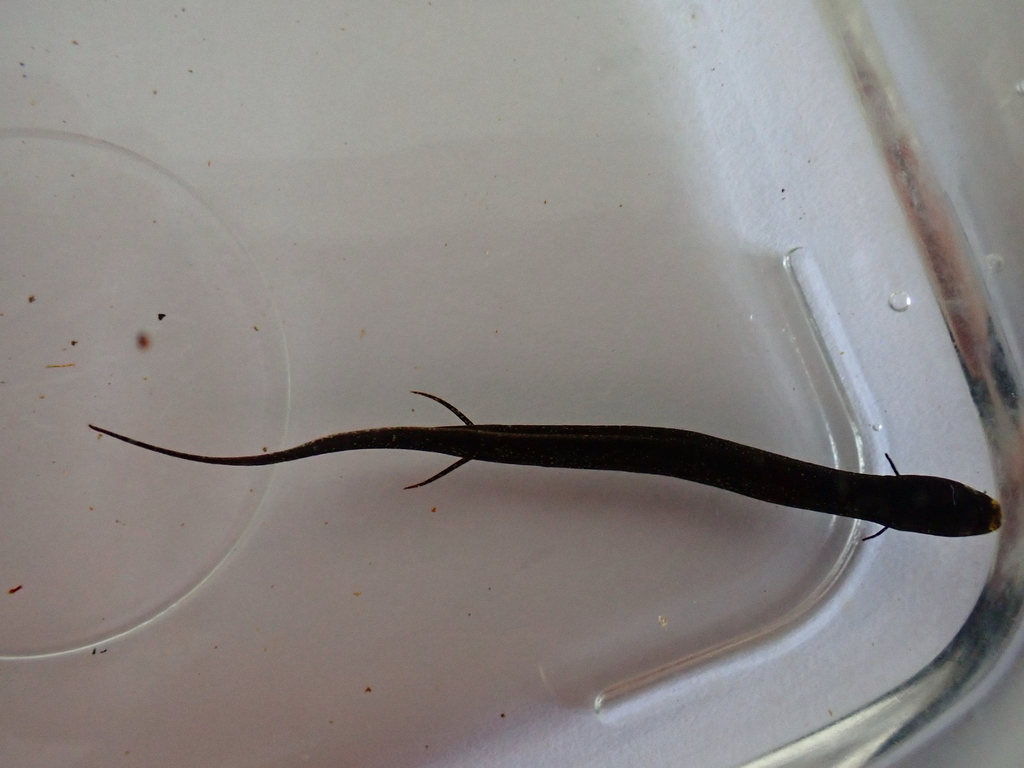
The South American lungfish (Lepidosiren paradoxa) is a freshwater fish of the family Lepidosirenidae that grows up to 125 cm.
Description
The South American lungfish is an ancient freshwater fish of the family Lepidosirenidae, the only lungfish of South America. The species grows to about 1.25 metres and has an elongate, eel-like body with thread-like, greatly reduced pectoral and pelvic fins. It prefers stagnant waters with little current, such as swamps and floodplains. Notably it breathes air with a pair of true lungs and must come to the surface; in the dry season it can burrow into a moist mud cavity and survive in dormancy (aestivation). Juveniles eat insect larvae and snails, adults also plant matter. The species is harmless to humans.
Frequently asked questions
How do you recognise the South American lungfish?
The South American lungfish has an elongate, eel-like body, is mainly brown and shows a plain pattern.
Where does the South American lungfish live?
The South American lungfish lives in fresh water and is mostly found around sand or mud bottom.
How big does the South American lungfish get?
The South American lungfish grows to a maximum of about 125 cm.
Is the South American lungfish dangerous to humans?
No, the South American lungfish is harmless to humans.
Is the South American lungfish edible?
The South American lungfish is rarely eaten.
Download Fin's Fish Guide
Identify fish in seconds, log your catches and dives. Join the TestFlight beta.
All data
Identification
Appearance
Habitat & distribution
Behaviour & biology
For anglers
Safety
Status & sources
Download Fin's Fish Guide
Identify fish in seconds, log your catches and dives. Join the TestFlight beta.