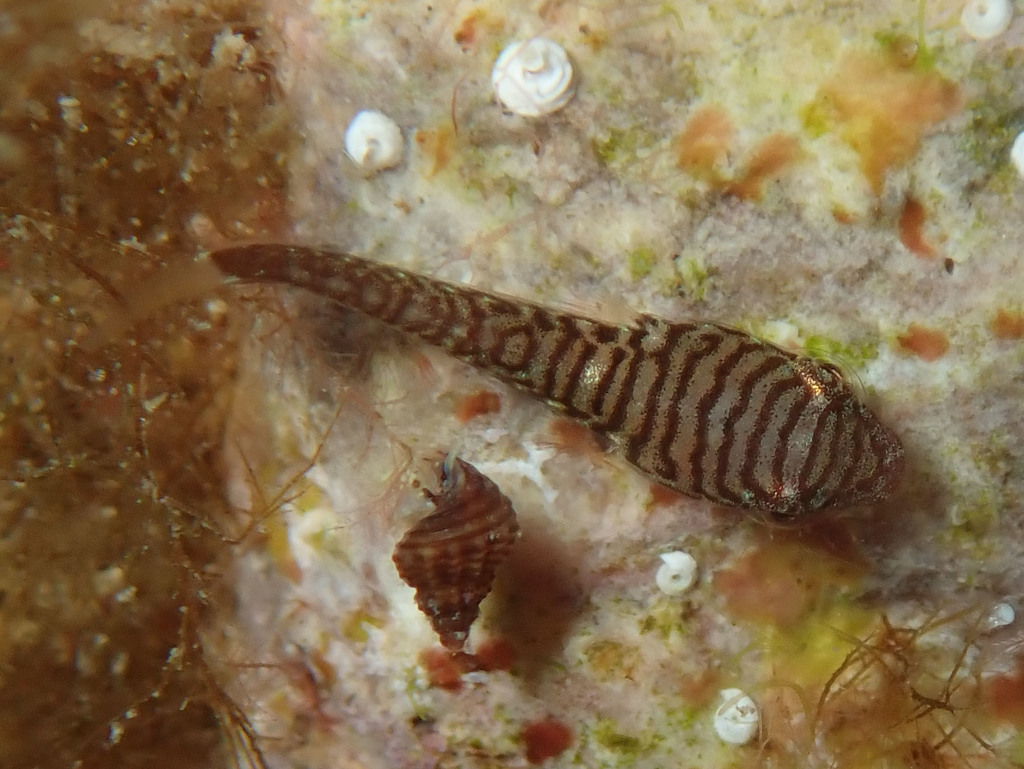
The Connemara clingfish (Lepadogaster candolii) is a saltwater fish of the family Gobiesocidae that grows up to 8 cm.
Description
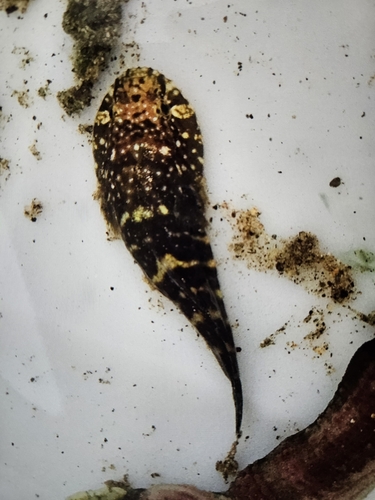
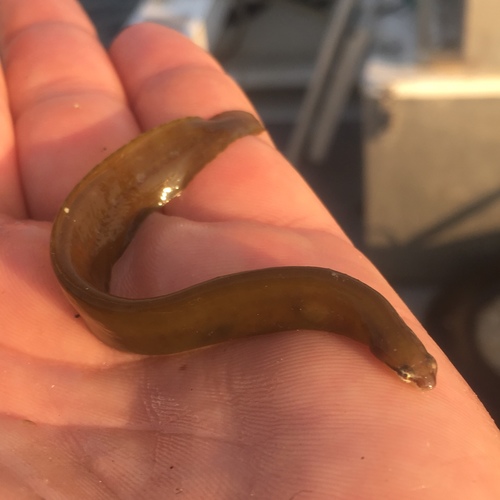
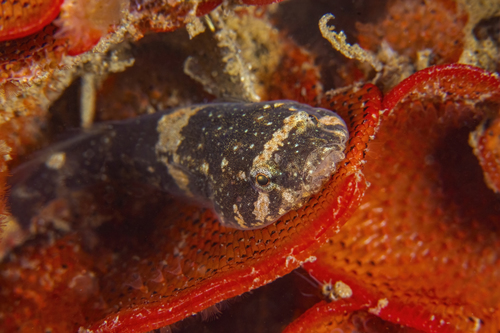
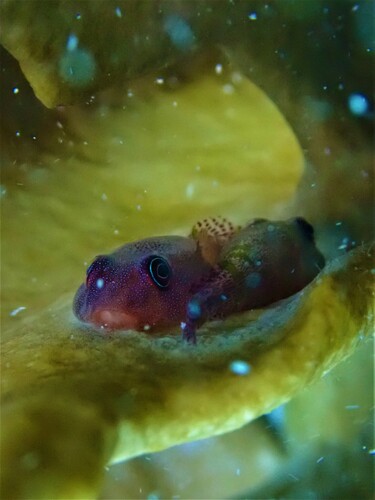
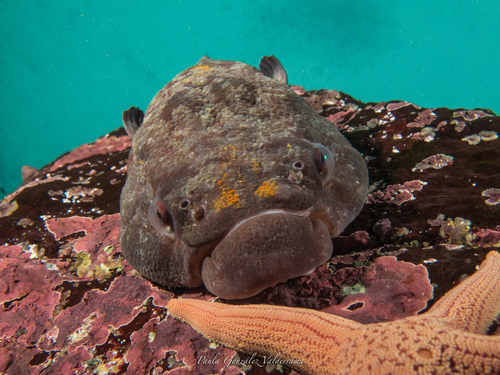
This is a small, flat rock fish of the family Gobiesocidae (clingfishes) reaching about 7.5 cm. The flattened head tapers into a flat snout, and on the belly is a strong sucking disc, formed from the fused pelvic fins, with which the fish clings firmly to stones in the surf. The body is red-brown to greenish and blotched, good camouflage among stones and weeds. The species lives in tide pools and under stones on rocky shores of the eastern Atlantic and the Mediterranean. As a bottom-dweller it hunts small crustaceans and worms. The pair lays the eggs under a stone and guards them. Because of its small size it has no fishery importance.
Frequently asked questions
How do you recognise the Connemara clingfish?
The Connemara clingfish has an elongate, eel-like body, is mainly red-orange and shows a spots pattern.
Where does the Connemara clingfish live?
The Connemara clingfish lives in the sea (marine waters) and is mostly found around sand or mud bottom.
How big does the Connemara clingfish get?
The Connemara clingfish grows to a maximum of about 8 cm.
Is the Connemara clingfish dangerous to humans?
No, the Connemara clingfish is harmless to humans.
Is the Connemara clingfish edible?
The Connemara clingfish is not usually eaten.
Download Fin's Fish Guide
Identify fish in seconds, log your catches and dives. Join the TestFlight beta.
All data
Identification
Appearance
Habitat & distribution
Behaviour & biology
For anglers
Safety
Status & sources
Same genus Lepadogaster
More from the family Gobiesocidae

Download Fin's Fish Guide
Identify fish in seconds, log your catches and dives. Join the TestFlight beta.