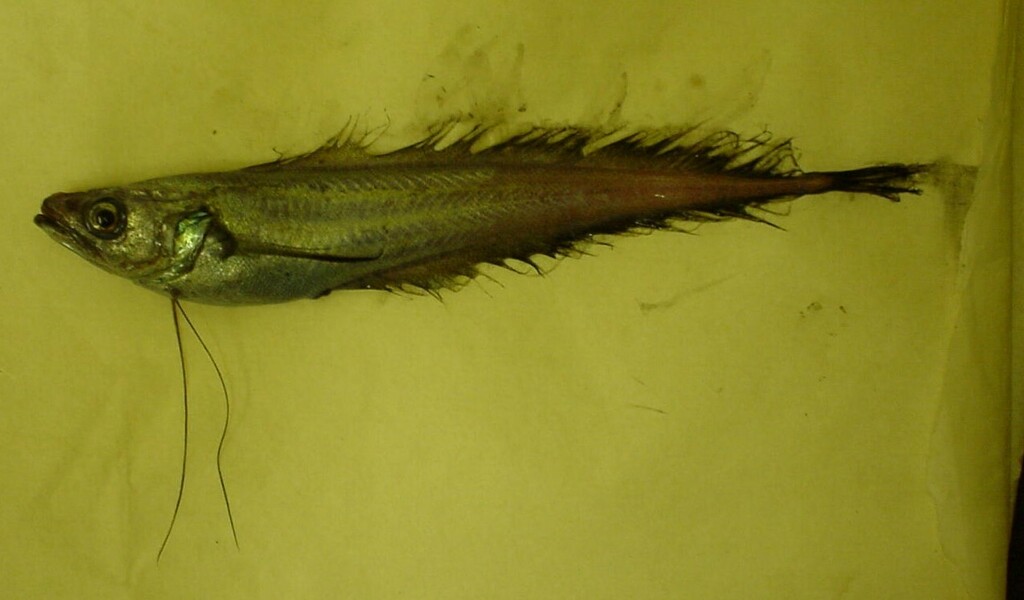
The Longfin codling (Laemonema longipes) is a saltwater fish of the family Moridae that grows up to 72 cm.
Description
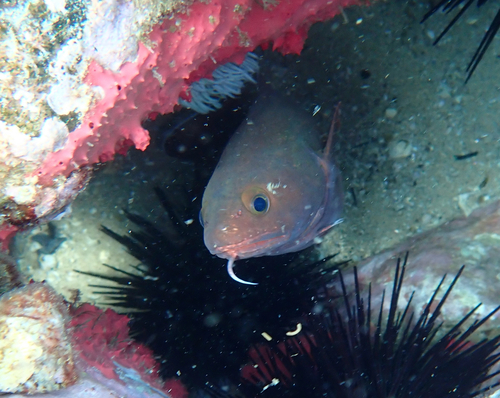
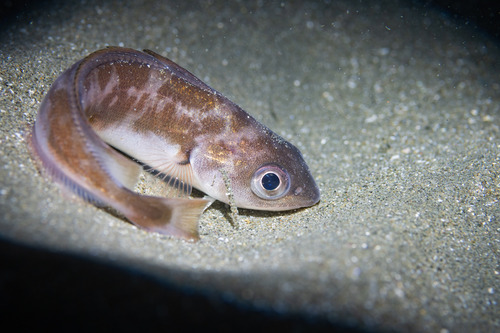
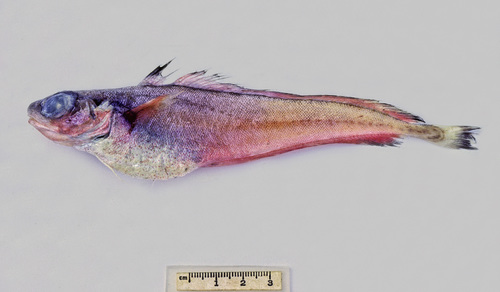
The longfin codling is a deep-water cod relative of the family Moridae (deep-sea cods) reaching about 72 cm. It has a small chin barbel, like many cod relatives, and stands out for greatly elongated front rays of the pelvic and dorsal fins, which act as feelers to detect prey in the dark. The brownish-bodied fish lives benthopelagically above the deep bottom of the continental slope of the northern and western Pacific, around Japan and the Bering Sea. In schools it hunts small fish, crustaceans and squid. Unlike many deep-sea fish it is of local commercial importance and is fished and eaten in the Pacific. It is a distant relative of the true cods.
Frequently asked questions
How do you recognise the Longfin codling?
The Longfin codling has an elongate, eel-like body, is mainly brown and shows a plain pattern.
Where does the Longfin codling live?
The Longfin codling lives in the sea (marine waters) and is mostly found around sand or mud bottom.
How big does the Longfin codling get?
The Longfin codling grows to a maximum of about 72 cm. On average the species is around 50 cm.
Is the Longfin codling dangerous to humans?
No, the Longfin codling is harmless to humans.
Is the Longfin codling edible?
Yes, the Longfin codling is commonly eaten.
Download Fin's Fish Guide
Identify fish in seconds, log your catches and dives. Join the TestFlight beta.
All data
Identification
Appearance
Habitat & distribution
Behaviour & biology
For anglers
Safety
Status & sources
Same genus Laemonema
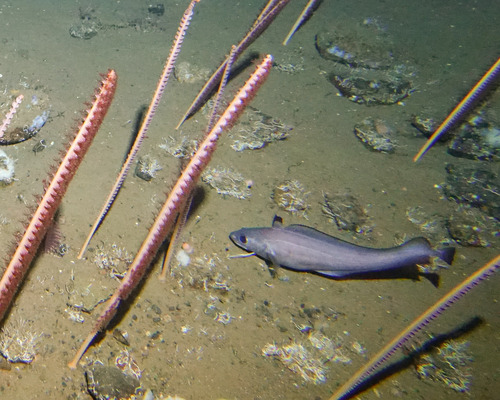
More from the family Moridae



Download Fin's Fish Guide
Identify fish in seconds, log your catches and dives. Join the TestFlight beta.