
The Spotfin blenny (Hypsoblennius maculipinna) is a freshwater fish of the family Blenniidae that grows up to 6 cm.
Description
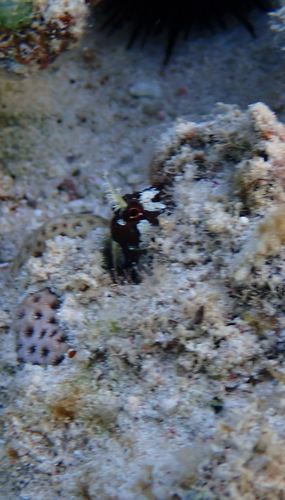
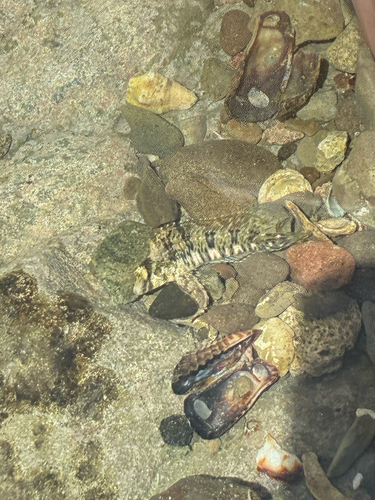
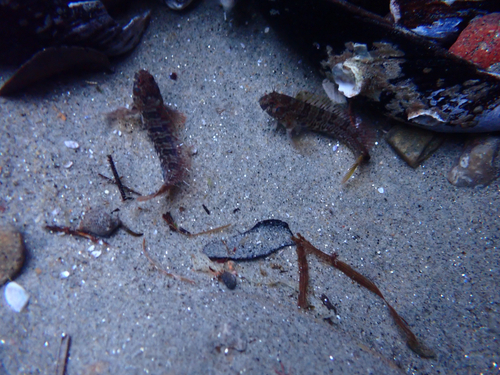
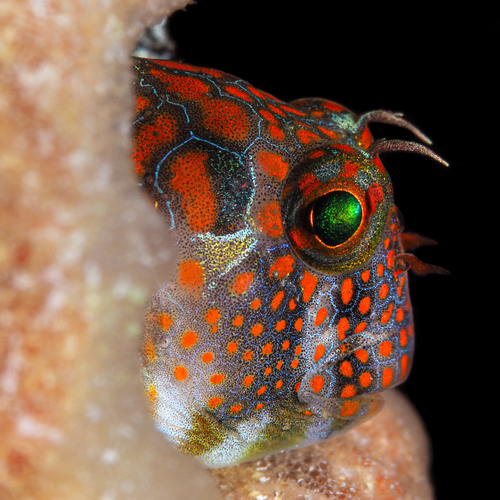
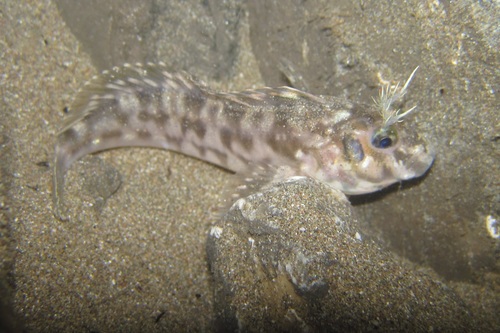
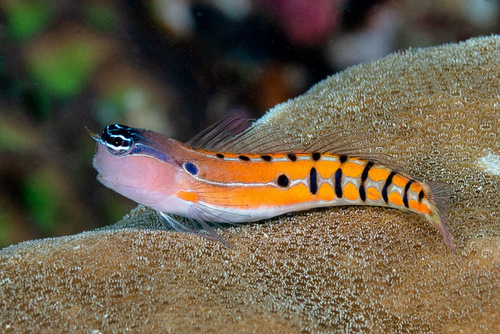
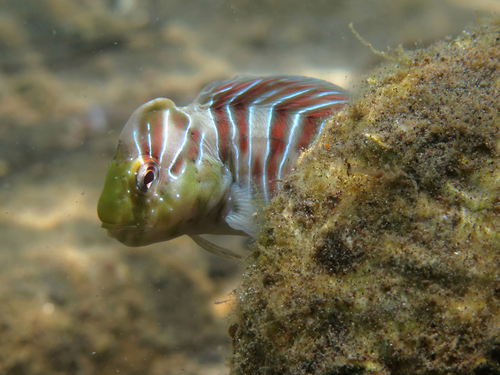
The spotfin blenny is a blenny (Blenniidae) from the eastern Pacific, ranging from Costa Rica to Ecuador; the type specimen was collected in the Rio Durango in northwestern Ecuador. The species has an elongate, scaleless body with a blunt head, crest-like skin flaps above the eyes and spotted fins, to which the name refers. It lives on shallow rocky and intertidal bottoms of coastal waters. It feeds on small benthic invertebrates and algae. It is a demersal spawner: the adhesive eggs attach to the substrate via a filamentous adhesive pad. Owing to scarce data the species is regarded as data deficient. It is harmless to humans.
Frequently asked questions
How do you recognise the Spotfin blenny?
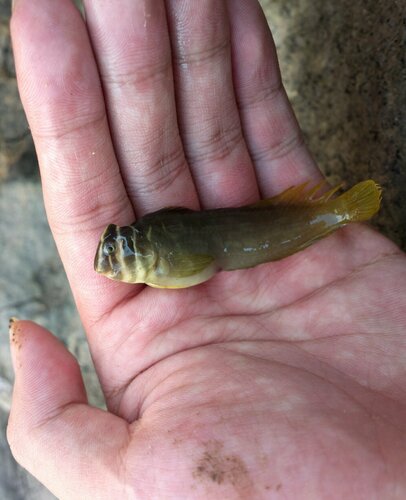
The Spotfin blenny has an elongate, eel-like body, is mainly brown and shows a spots pattern.
Where does the Spotfin blenny live?
The Spotfin blenny lives in fresh water and is mostly found around sand or mud bottom.
How big does the Spotfin blenny get?
The Spotfin blenny grows to a maximum of about 6 cm.
Is the Spotfin blenny dangerous to humans?
No, the Spotfin blenny is harmless to humans.
Is the Spotfin blenny edible?
The Spotfin blenny is not usually eaten.
Download Fin's Fish Guide
Identify fish in seconds, log your catches and dives. Join the TestFlight beta.
All data
Identification
Appearance
Habitat & distribution
Behaviour & biology
For anglers
Safety
Status & sources
Same genus Hypsoblennius
More from the family Blenniidae
Download Fin's Fish Guide
Identify fish in seconds, log your catches and dives. Join the TestFlight beta.