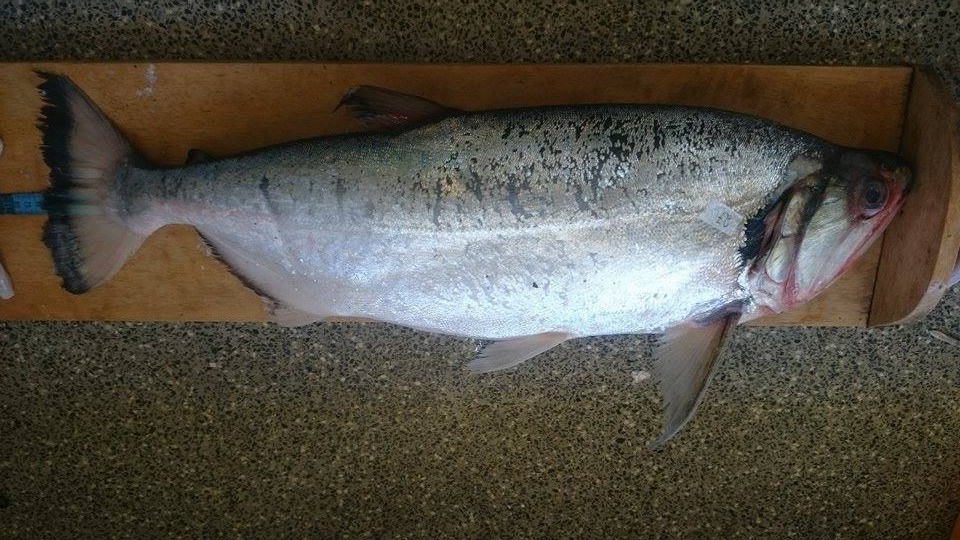
The Payara (Hydrolycus armatus) is a freshwater fish of the family Cynodontidae that grows up to 89 cm.
Description
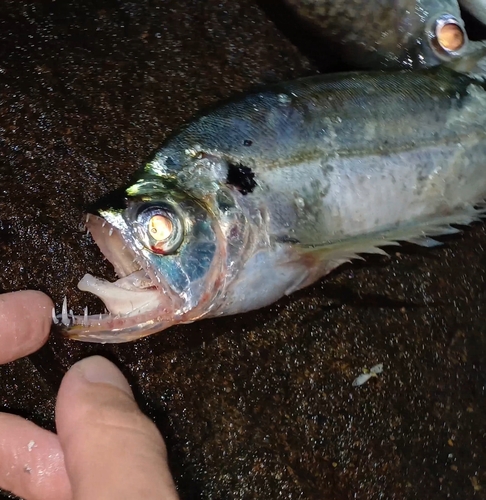
The Payara is a large predatory characin (Cynodontidae) from fresh water of the Amazon and Orinoco basins in South America. The species grows to about 89 cm and has a streamlined, silvery body and a lower jaw with two enormous, dagger-like fangs that fit into holes in the upper skull. It is one of the largest payaras. As a fast open-water hunter it darts at smaller fish in rapids, impaling them with the fangs. It is a valued sport fish. The fish poses no danger to swimmers.
Frequently asked questions
How do you recognise the Payara?
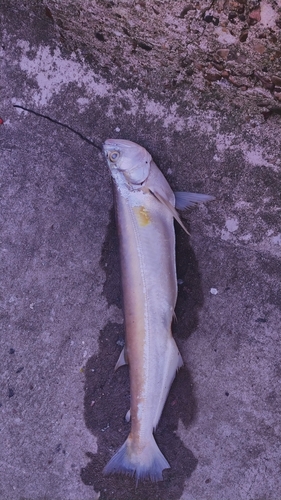
The Payara has an elongate, eel-like body and is mainly silver-grey.
Where does the Payara live?
The Payara lives in fresh water and is mostly found around open water.
How big does the Payara get?
The Payara grows to a maximum of about 89 cm.
Is the Payara dangerous to humans?
No, the Payara is harmless to humans.
Download Fin's Fish Guide
Identify fish in seconds, log your catches and dives. Join the TestFlight beta.
All data
Identification
Appearance
Habitat & distribution
Behaviour & biology
For anglers
Safety
Status & sources
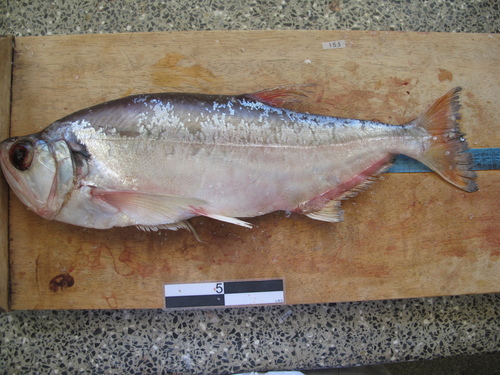
Same genus Hydrolycus
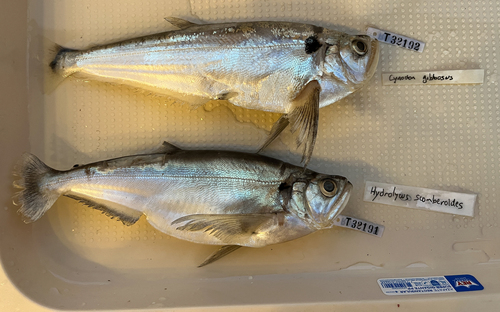
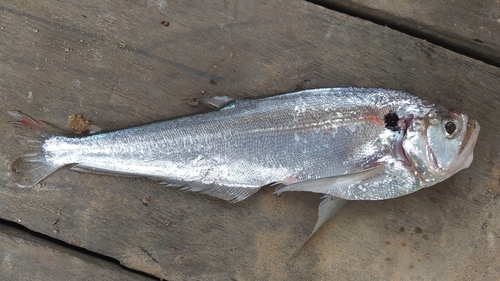
More from the family Cynodontidae
Download Fin's Fish Guide
Identify fish in seconds, log your catches and dives. Join the TestFlight beta.