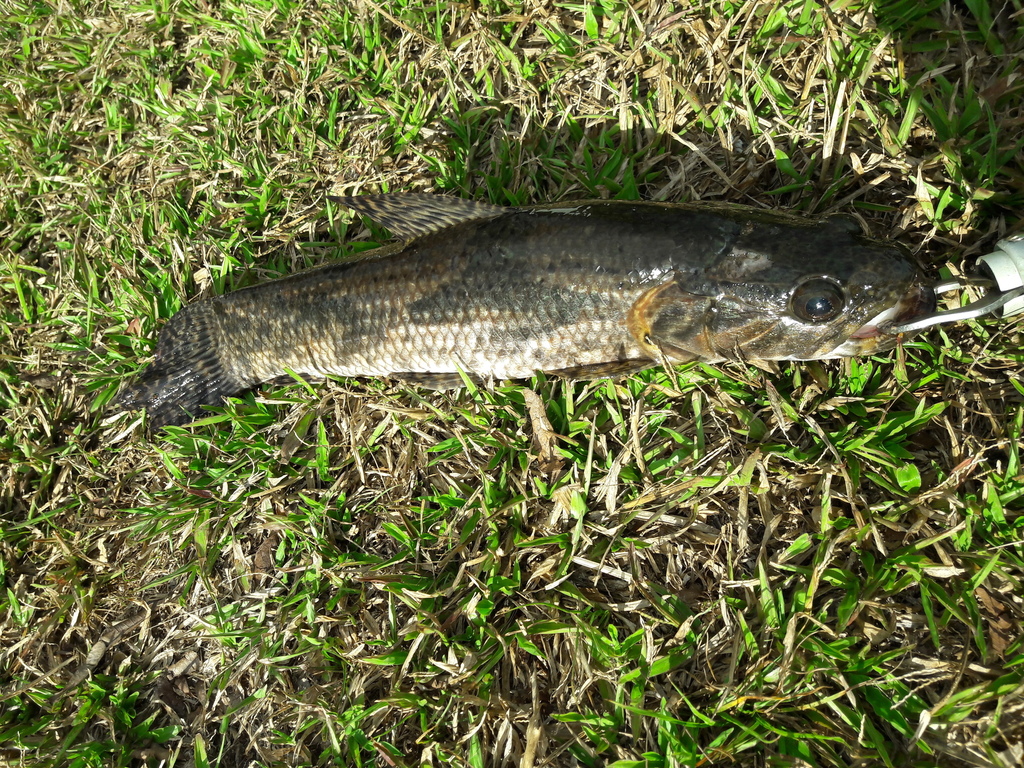
The Aimara (Hoplias macrophthalmus) is a freshwater fish of the family Erythrinidae that grows up to 100 cm.
Description
The giant trahira is a large predatory characin of the trahira family (Erythrinidae) from the north of South America. The species grows to about one metre and has a robust, cylindrical, dark body with a large head and a broad mouth full of sharp teeth. It inhabits rivers, creeks and pools, often in quiet water. As an ambush apex predator it lies motionless in wait and seizes fishes and other prey. Trahiras can endure oxygen-poor water for short periods with an accessory air-breathing ability. The giant trahira is an important food fish. The powerful jaws with sharp teeth can give a nasty bite; handle a caught specimen with care.
Frequently asked questions
How do you recognise the Aimara?
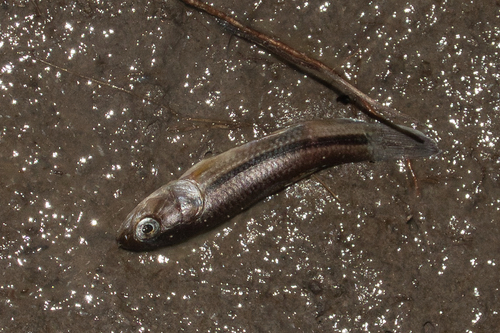
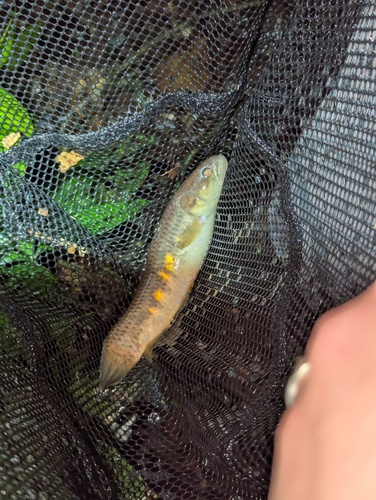
The Aimara has an elongate, eel-like body, is mainly brown and shows a marbled pattern.
Where does the Aimara live?
The Aimara lives in fresh water and is mostly found around mixed bottom.
How big does the Aimara get?
The Aimara grows to a maximum of about 100 cm.
Is the Aimara dangerous to humans?
No, the Aimara is harmless to humans.
Is the Aimara edible?
Yes, the Aimara is commonly eaten.
Download Fin's Fish Guide
Identify fish in seconds, log your catches and dives. Join the TestFlight beta.
All data
Identification
Appearance
Habitat & distribution
Behaviour & biology
For anglers
Safety
Status & sources
Same genus Hoplias
More from the family Erythrinidae
Download Fin's Fish Guide
Identify fish in seconds, log your catches and dives. Join the TestFlight beta.