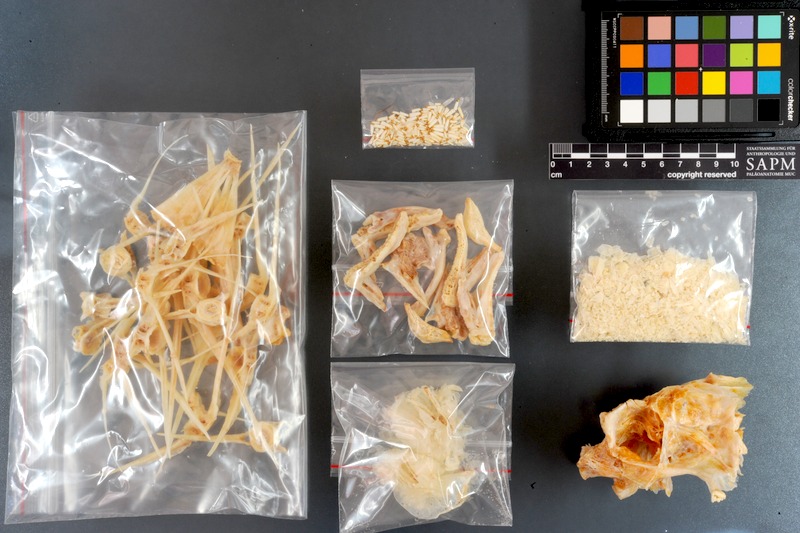
The Kissing gourami (Helostoma temminkii) is a fish of the family Helostomatidae that grows up to 30 cm.
Description
The kissing gourami is a labyrinth fish (Helostomatidae) from Southeast Asia. The species has a deep, laterally compressed, grey-pink to greenish body and conspicuous, thick lips with fine horny teeth; it has a labyrinth organ to breathe air at the surface. It inhabits slow-flowing and standing, often turbid waters with dense vegetation. With its lips it scrapes algae and growth from surfaces and filters plankton. The 'kissing' behaviour between two fish is a trial of strength, not affection. It is a popular aquarium and food fish and is harmless to humans.
Frequently asked questions
How do you recognise the Kissing gourami?
The Kissing gourami is mainly pink-purple and shows a plain pattern.
Where does the Kissing gourami live?
The Kissing gourami is mostly found around algae or seagrass beds.
How big does the Kissing gourami get?
The Kissing gourami grows to a maximum of about 30 cm.
Is the Kissing gourami dangerous to humans?
No, the Kissing gourami is harmless to humans.
Is the Kissing gourami edible?
Yes, the Kissing gourami is commonly eaten.
Download Fin's Fish Guide
Identify fish in seconds, log your catches and dives. Join the TestFlight beta.
All data
Identification
Appearance
Habitat & distribution
Behaviour & biology
For anglers
Safety
Status & sources
Download Fin's Fish Guide
Identify fish in seconds, log your catches and dives. Join the TestFlight beta.