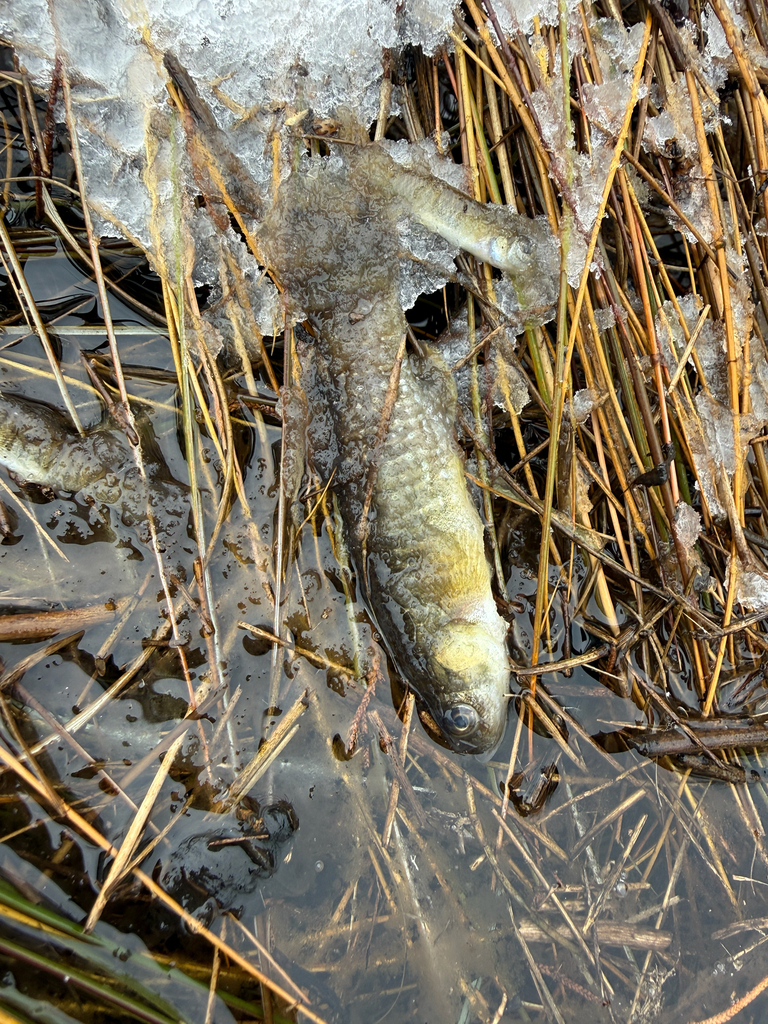
The Killifish (Fundulus heteroclitus) is a fish that lives in both fresh and salt water of the family Fundulidae that grows up to 15 cm.
Description
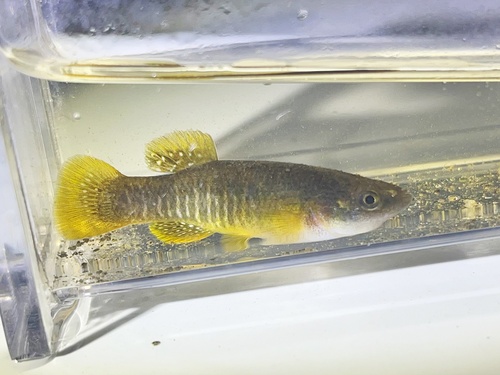
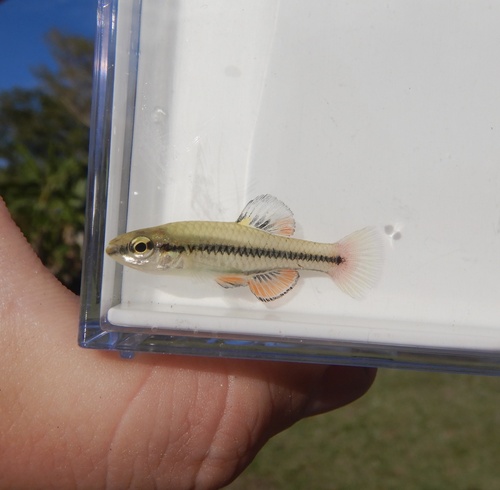
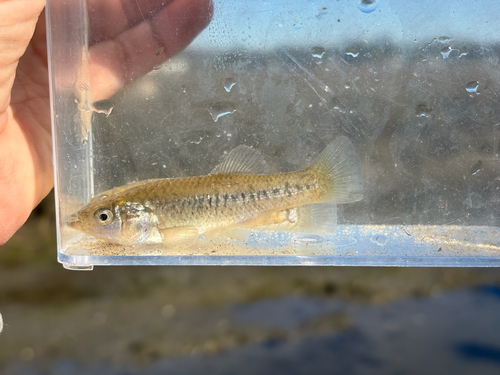
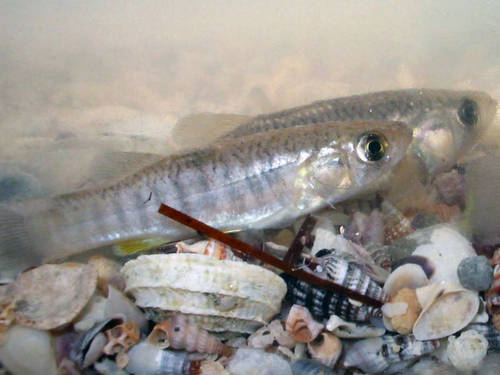
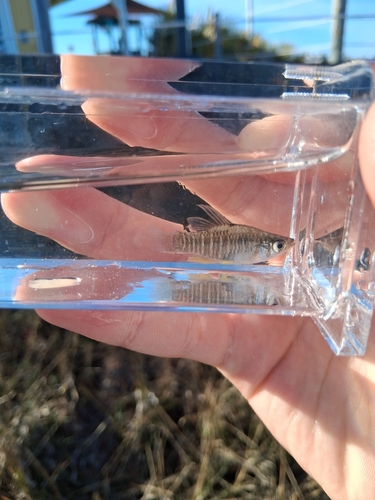
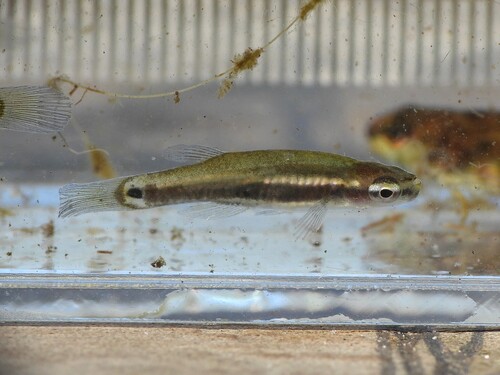
The mummichog or killifish is a small, robust fish of the family Fundulidae reaching about 15 cm. The stout body is olive-green to silvery, with faint silvery cross-bars in males and a yellow tinge in the breeding season; the mouth is upturned for feeding at the surface. The species is native to estuaries and salt marshes along the east coast of North America and has been locally introduced outside that range. It is famously tolerant of strongly varying salinity, temperature, pollution and low oxygen. It eats algae, detritus and small invertebrates. Because of its hardiness the mummichog is a widely used model in biological and environmental research, and has even been studied in space.
Frequently asked questions
How do you recognise the Killifish?
The Killifish has a torpedo-shaped body, is mainly green and shows a vertical stripes pattern.
Where does the Killifish live?
The Killifish lives in both fresh and salt water and is mostly found around mixed bottom.
How big does the Killifish get?
The Killifish grows to a maximum of about 15 cm. On average the species is around 9 cm.
Is the Killifish dangerous to humans?
No, the Killifish is harmless to humans.
Is the Killifish edible?
The Killifish is not usually eaten.
Download Fin's Fish Guide
Identify fish in seconds, log your catches and dives. Join the TestFlight beta.
All data
Identification
Appearance
Habitat & distribution
Behaviour & biology
For anglers
Safety
Status & sources
Same genus Fundulus
More from the family Fundulidae
Download Fin's Fish Guide
Identify fish in seconds, log your catches and dives. Join the TestFlight beta.