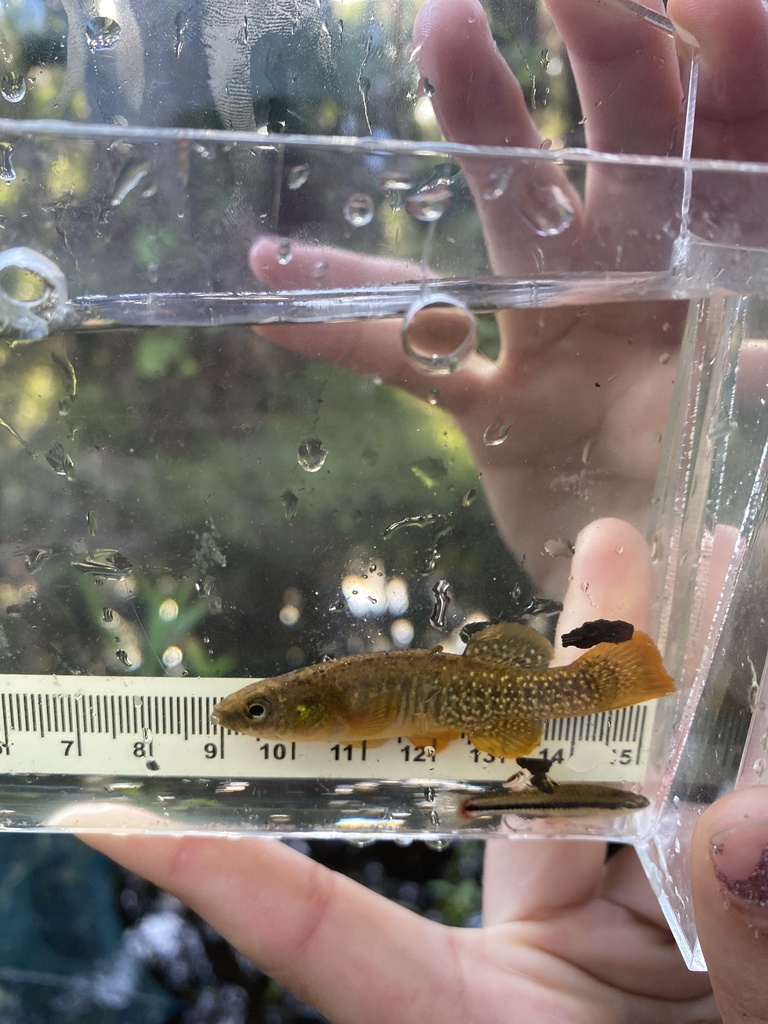
The Killifish (Fundulus confluentus) is a fish that lives in both fresh and salt water of the family Fundulidae that grows up to 8 cm.
Description
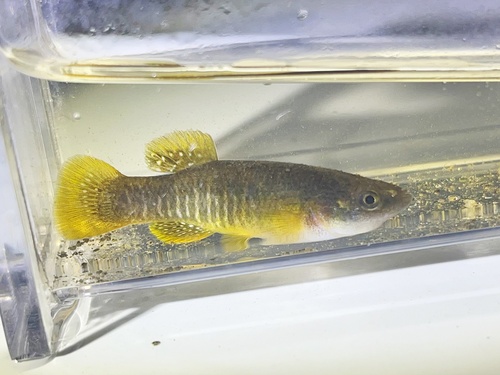
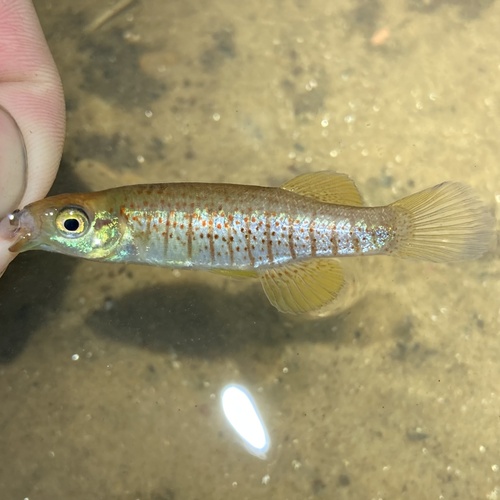
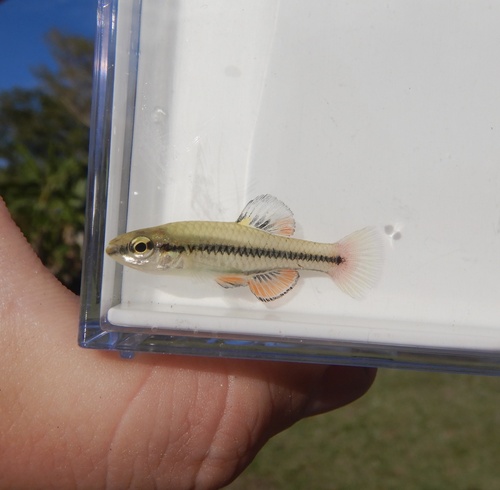
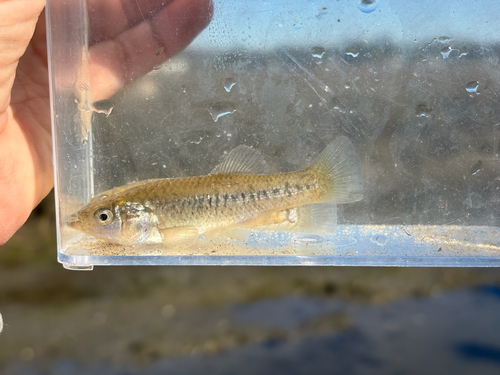
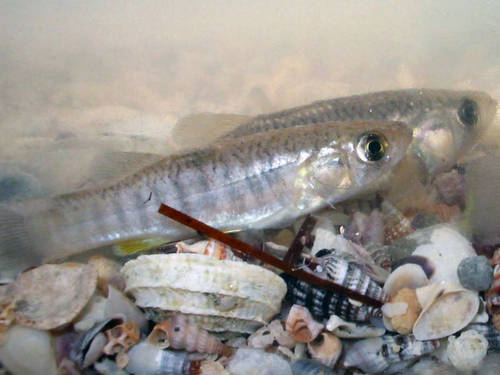
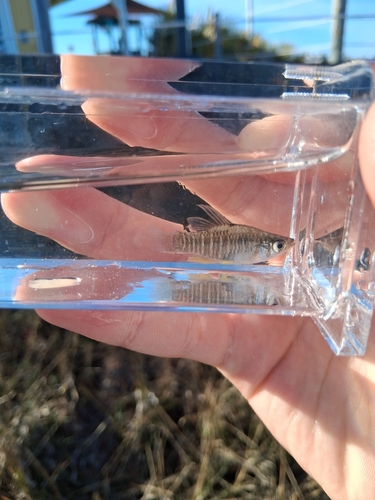
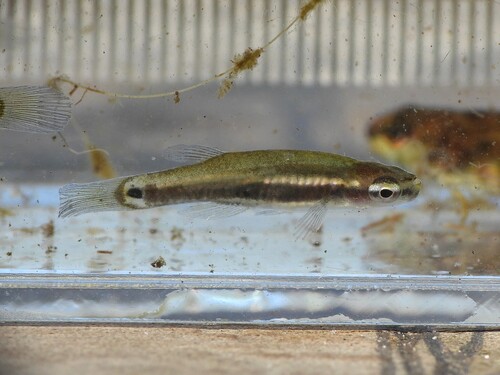
The marsh killifish is a small killifish of the brackish coastal marshes of the eastern United States. The species reaches about 8 cm and shows clear sexual dimorphism: males are dark green with pearly spots, females olive-brown with black dots and narrow bars. It lives in shallow fresh and brackish water and is an omnivore that eats small fishes, insects, crustaceans, worms, molluscs and plant matter. The eggs can survive out of water for long periods, making the species resistant to drying marshes. The fish is harmless to humans, is not eaten and is only of interest to the aquarium trade.
Frequently asked questions
How do you recognise the Killifish?
The Killifish has an elongate, eel-like body, is mainly green and shows a spots pattern.
Where does the Killifish live?
The Killifish lives in both fresh and salt water and is mostly found around mixed bottom.
How big does the Killifish get?
The Killifish grows to a maximum of about 8 cm.
Is the Killifish dangerous to humans?
No, the Killifish is harmless to humans.
Is the Killifish edible?
The Killifish is not usually eaten.
Download Fin's Fish Guide
Identify fish in seconds, log your catches and dives. Join the TestFlight beta.
All data
Identification
Appearance
Habitat & distribution
Behaviour & biology
For anglers
Safety
Status & sources
Same genus Fundulus
More from the family Fundulidae
Download Fin's Fish Guide
Identify fish in seconds, log your catches and dives. Join the TestFlight beta.